


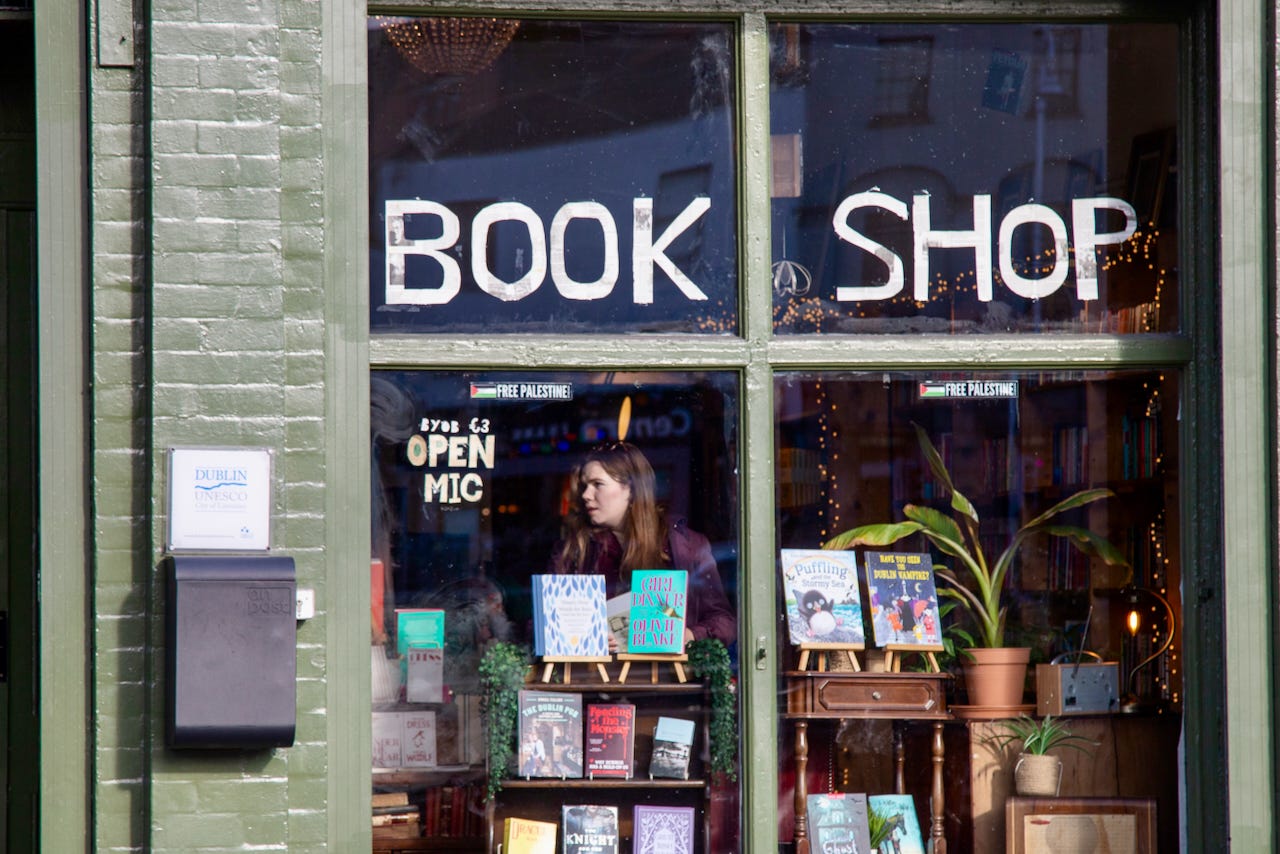
Every year around this time, I sit down with my notebook (and some coffee) and finalize the books I want to read in the year ahead. Ones I’ve been recommended by others (and since joining Substack less than six months ago, that list has grown faster than expected!), ones I’ve scribbled down during trips to Daunt, Foyle’s, Hatchards or other bookstores I’ve stumbled through, and the ones I’ve already picked up along the way and thought: I really need to read this next year.
Reading brings so much joy to my life, and I’m always looking for the next book that will surprise me, challenge me, or teach me something new about the world. I wanted to offer something like that for you, too.
These aren’t just “good books.” They’re ones that expanded my perspective. Some gave me frameworks for understanding power and history. Some are exceptional in how they interpret regional cultures and identity. Some contain writing I could only dream of producing.
This isn’t a ranked list, and it’s definitely not confined to one genre. It starts with big-picture ideas about how societies work, then moves through regional histories, memoir, travel writing, and fiction — shifting between China, Africa, the Middle East, Latin America, Southeast Asia, and the Pacific.
I hope you find a new book here to read, and I hope you’ll leave a few of your own favorites in the comments so others can discover them too. And for the writers who are on Substack, I’ve linked their pages so you can follow their work here too.

Political Order & Political Decay – Francis Fukuyama
A sweeping study of how states form, evolve, and fall apart. It reads like serious history, but the clarity it gives you about how societies work is worth it.
Why Nations Fail – Daron Acemoglu & James Robinson
A sharp argument that political and economic inclusivity, not geography or culture, determines national success. It rewired how I interpret prosperity, inequality, and the places I travel. The Narrow Corridor by Acemoglu & Robinson is also excellent, but start here.
Guns, Germs & Steel – Jared Diamond
Diamond reframes world history through geography and ecology rather than destiny or genius. It widens the lens, forcing you to rethink why human societies diverged in the first place.
Seeing Like a State – James C. Scott
Scott shows how top-down planning can distort the lived realities of people on the ground. It makes you look at cities, governments, and even tourist infrastructure with new skepticism.
Dominion: The Making of the Western Mind – Tom Holland
A sweeping argument about how Christian values shaped Western moral frameworks, even for secular societies. It is essential for understanding why “the West” behaves the way it does.
The Silk Roads – Peter Frankopan
Frankopan recenters world history along the trade routes that connected continents long before the concept of globalization existed. It expands your map of the world both literally and intellectually.
American Nations – Colin Woodard
Woodard maps the U.S. as a set of distinct cultural “nations” with centuries-deep roots, a framework that makes today’s divides far more legible, and all the more remarkable for having been published fifteen years ago. He’s recently published Nations Apart, a continuation I haven’t read yet but am excited to.
Kiss, Bow, or Shake Hands – Terri Morrison & Wayne Conaway
A concise guide to global etiquette and business culture. Best read in chapters for the places you’re visiting, it’s less a cover-to-cover book than a practical travel tool, and a reminder that small cultural missteps often point to much bigger differences in worldview.

Born in Blackness – Howard W. French
French restores Africa to the center of global history, especially in the rise of the modern world. It challenges every assumption you carry from Western textbooks.
King Leopold’s Ghost – Adam Hochschild
A gripping narrative of colonial violence in the Congo. Essential reading for grasping the long shadows that still shape African and European relationships today.
We Wish to Inform You That Tomorrow We Will Be Killed With Our Families – Philip Gourevitch
A clear-eyed and deeply humane look at the Rwandan genocide. It makes you sit with the reality of what happened while reminding you how limited an outsider’s grasp can ever be.
Age of Ambition – Evan Osnos
Osnos captures China in the moment it was accelerating into modernity, ambition, and contradiction. It’s a masterclass in observing people navigating national transformation.
River Town – Peter Hessler
Hessler’s memoir of life in a small Chinese river town remains one of the most empathetic accounts of cultural immersion I’ve ever read.
China After Mao – Frank Dikötter
Dikötter presents a stark, unvarnished history of China’s reform era. Whether you agree with all his interpretations or not, it pushes you to interrogate narratives of progress.
The Half Known Life – Pico Iyer
Iyer wanders through places shaped by faith, pilgrimage, and longing. It’s a book about searching, both geographically and spiritually, and how travel reveals the worlds inside us.
Behind the Beautiful Forevers – Katherine Boo
A deeply reported portrait of life in a Mumbai slum, written with the energy of a novel. It challenges every easy assumption about poverty, resilience, and urban life.
The Bookseller of Kabul – Åsne Seierstad

Things Fall Apart – Chinua Achebe (Fiction)
Achebe’s masterpiece portrays precolonial Igbo life and the violent arrival of empire. It’s essential for unlearning the clichés Western readers inherit about Africa.
One Hundred Years of Solitude – Gabriel García Márquez (Fiction)
A foundational novel of magical realism that reveals the cycles of memory, myth, and political upheaval in Latin America. It expands your sense of what storytelling can do.
The Quiet American – Graham Greene (Fiction)
A novel about innocence, interference, and the costs of idealism in Vietnam. It shows how foreign presence (well-meaning or not) can reshape an entire country.
When We Were Orphans – Kazuo Ishiguro (Fiction)
A detective story folded into a meditation on memory and colonial Shanghai. It deepens your sense of how personal histories become tangled with national ones and places me back in Shanghai every time I pick it up.
In Patagonia – Bruce Chatwin
Part travelogue, part fever dream, Chatwin’s classic has had an indelible impact on the genre. It reminds you that travel is as much about imagination as it is about geography.
In a Sunburned Country – Bill Bryson
Bryson’s funniest book also happens to be one of his most observant, capturing Australia’s vastness, absurdities, and charm. It proves humor can be a form of cultural insight.
The Happy Isles of Oceania – Paul Theroux
Theroux’s solo journey through the Pacific is prickly, reflective, and full of unexpected beauty. It celebrates wandering off the main paths of the world and does an excellent job representing an under-reported part of the world.
The Poisonwood Bible – Barbara Kingsolver (Fiction)
This novel about a missionary family in the Congo is an indictment of cultural arrogance and good intentions gone wrong. It underlines to me why humility is the traveler’s first responsibility. 🌎
If you liked this, there's more where it came from. Nothing to Declare opens a window somewhere new every week —travel essays, photography, cultural observations, and books worth reading. Once a week, sometimes more. Free to subscribe.


Helluva list, a few I've read, a few I'm eager to read. Colin Woodard is an underappreciated writer, happy to hear he has a new book. American Character is a terrific book as well.
I think I've read just about all of Graham Greene's works.
A couple of authors I might add to the list - VS Naipaul and Ryszard Kapuściński
(though let me check your India list, he might be on there)
What a great list Scott and some of my favourite books on here, which I recommend over and over again (behind the beautiful forevers and poisonwood bible, especially). Going to check out some of the ones I haven't read now.