


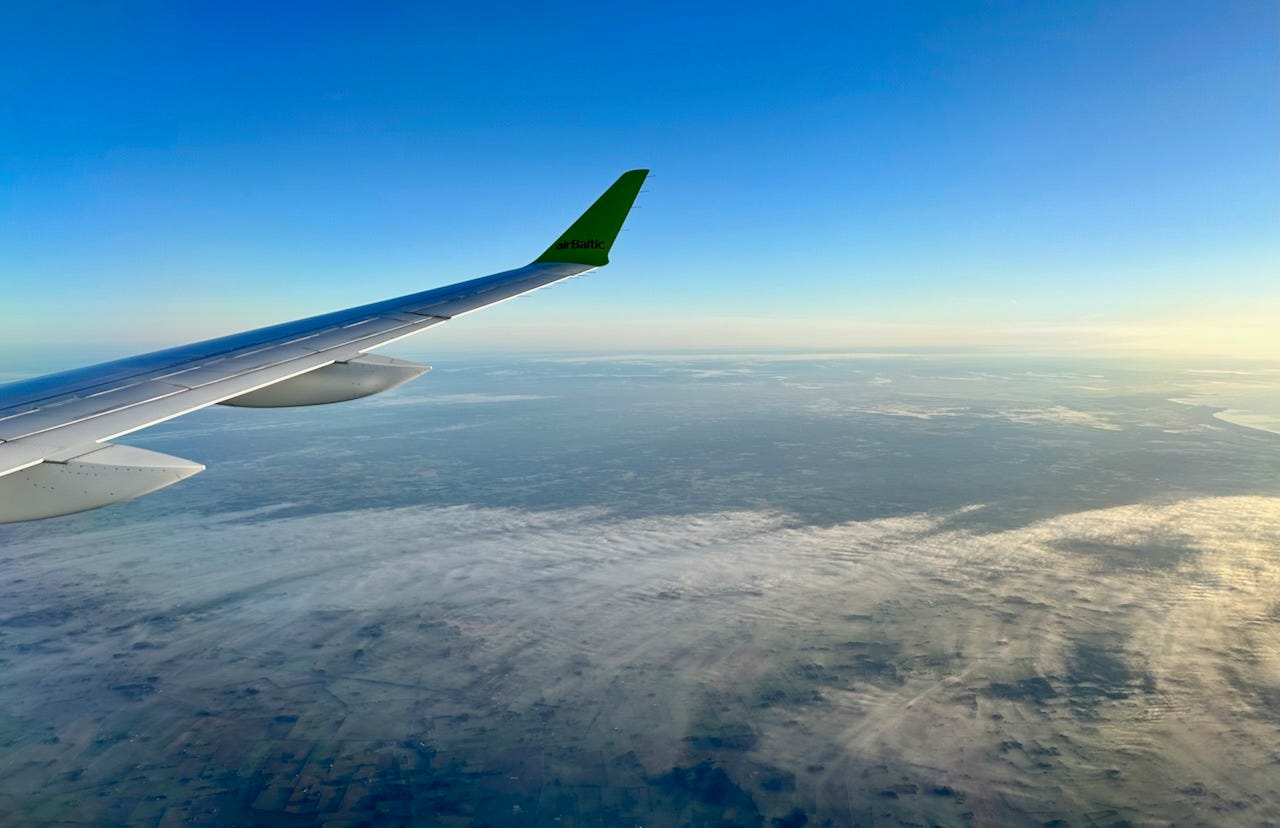
The modern infrastructure of travel in the Global North is built around the expectation of frictionless motion. We have engineered our air borders to behave like automatic doors at a supermarket wherein you approach, present a passport with a microchip, and the glass slides open. Borders are no longer barriers, but instead brief, administrative pauses in our otherwise uninterrupted forward momentum.
This is why, when the friction returns, it feels less like a delay and more like an insult.
My passport is currently broken. From what I gather, it is a physical failure of the electronics in the cover, likely from being stuffed in a variety of bags and pockets over the years. The booklet itself is valid, and there is no visible damage. It is now a dumb object in a smart world.
For the last month, as I wait for a gap in my schedule long enough to surrender the document for replacement and meanwhile waffle at the replacement cost, I have been exiled from the eGates. I am forced to “Seek Assistance”.
By the time I reach this queue, I already recognize the people around me. I first stood with them at check-in. My passport wouldn’t scan at the kiosk for my boarding pass in Hong Kong’s modern terminal, so I was sent to a staffed counter which was serving several different flights.
Global mobility is not a mystery. It is ranked, indexed, and published every year. Some passports allow visa-free or visa-on-arrival access to most of the world, while others require advance applications, in-person interviews, financial disclosures, and proof of intent to return home. The difference is not subtle and can be measured in weeks of paperwork, hundreds of dollars in fees, and hours spent assembling evidence that you do not intend to disappear.
In the line at the staffed counter, I saw Indian families holding folders of paper thick enough to be novels while a Chinese couple flipped through hotel confirmations and return tickets. As we inched forward, an African businessman behind me pulled a sample product out of his backpack in case his pieces of paper were not enough to confirm he was just attending a trade show. These travelers are not just preparing for travel; they are preparing to answer questions I’ve never been asked in my life.
For many travelers, that preparation never ends. Borders don’t appear as isolated events but as a permanent condition, something to plan around, and something they must absorb the cost of long before a ticket is ever bought.
I was reminded of this not long before my passport went analog. A few years ago, my wife and I planned a trip to South Africa with friends. We bought a discounted fare, which was cheap enough not to hesitate. We were visa-free. They weren’t. Despite holding EU passports, they needed an online eVisa. The website for them failed repeatedly. Emails took weeks to get answers, and phone calls led nowhere. There was talk of mailing passports to an embassy, and the unease of them doing so, given their previous efforts and lack of prompt responses.
I was unconcerned. It was still months before the trip, and I told them it would be sorted. That I could even make calls, and if by nothing of my sheer force of will, it would work out. But they were already done. After the initial effort, they pulled out of the trip. The flights went unused, and the money was lost. The border had already done its work.
Access is distributed unequally, and so is exposure. Those who move most easily are rarely required to think about what movement costs, and the new automation we now face on every trip we take separates those who must account for borders from those who breeze past them. Standing in those lines, it became obvious how little space this part of travel ever occupies in the stories we tell about it.
Most contemporary travel writing is produced by people like me, people for whom borders are usually a formality rather than a condition. From that position, borders become forgettable, and often they sit outside of the narrative.
For now, I am still in that line. I talk to the people around me. I watch what they carry and what they prepare to explain. In these conversations, I have realized that the border is not something they pass through once, but hundreds of times in their head before they ever approach the kiosk.
At some point, I will replace this booklet and return to the land of green lights and silent glass barriers. It will not be, however, because I am better, but because the system assumes I am. 🛂
If you liked this, there's more where it came from. Nothing to Declare opens a window somewhere new every week —travel essays, photography, cultural observations, and books worth reading. Once a week, sometimes more. Free to subscribe.
I had a similar experience with the line you describe when I had an O1 visa to work in the US. The mounds of paper, products and pleas of the people definitely made me realize my privilege.
This was a nice reminder. I've had 60+ years crossing borders, and most often, because of my privileges, it is indeed a formality. But it wasn't always, and sometimes it isn't now. There's always a level of unpredictability. Your piece reminded me of a night spent at JFK immigration about 3 years ago. My wife and I arrived at midnight. Here Global Entry had expired, but she had a provisional, and they purportedly would do an appointment for renewal in person. So, given that our flight wasn't until 11am the next morning, we asked and were sent down immigrations hallways to the desks (like a police department bullpen). There we were told to wait. So we did. We spent the next three hours watching the Immigration team deal with those in the slow lane. Those with stories and no papers; with stack and stacks of papers, but no credible stories; with families and all of their earthly belongings, claiming their purpose was a visit to Niagara Falls; with stacks of unexplained currency. When all else was decided, they got around to asking my wife a few perfunctory questions before renewing her Global entry. By this time it was indeed too late to go to the hotel, and we decided to go claim our bags, and watch the sunrise from the terminal, and count our privileged blessings.