



Most trees offer shade. This one offered pirate ships, dragons, and more than six million plastic bricks. The Tree of Creativity is the centerpiece of LEGO House, and like any good tree, people can’t help circling it. You drop your coat, crane your neck, and follow the spiral ramp that curls around the trunk. At every turn there’s another scene tucked into the branches, another reminder that even the most ordinary materials can grow into something extraordinary.
Only later did the sounds reach me: the clatter of bricks spilling across tables, the squeals of children, the low murmur of bargaining for “just five more minutes.” By then, I was already immersed, reliving my own childhood.
What struck me wasn’t just the spectacle but the posture of everyone inside. Children, parents, grandparents, all leaning forward, heads bent toward piles of bricks. It felt less like play than a ritual: the human urge to take what is scattered and make it whole.


Growing up in suburban Chicago, I didn’t have shelves of toys or new sets every weekend like some kids do now. My mom was always finding ways to keep me building, picking up wooden blocks from garage sales and schools when they upgraded their supplies. My grandfather joined in too, introducing me to Tinker Toys, where rods and spools bent into leaning towers. LEGO came later, and because it arrived rarely — birthdays, Christmas, a good report card — it felt ceremonial.
The scarcity mattered. One set wasn’t just a toy, it was a cycle: follow the instructions, see the jumble of pieces click into something recognizable, then take it apart and make something new without any instructions. That rhythm of building and undoing was the point. Today, it feels different. So many kids never have to pull apart their creations, never need to start over. When another toy is waiting on the shelf, why learn to make the same one new again?
One sleepover at my house with my cousin really stands out. He had Mario Kart for SNES at his house. I didn’t. So we made do with what we had since we wanted to play it. We raided every toy box in my basement and built our own circuit: K’nex carts with Beanie Babies as drivers, LEGO obstacles, and a track drawn on rolls of paper. It wasn’t the real game, but that was the fun of it. The joy came from making it up ourselves.
Eventually, I stopped building with toys, but I couldn’t stop building. Architecture became the adult version of the same impulse. In China, I worked on projects that towered over city blocks. Steel and concrete replaced plastic, but the logic was the same.
When I moved to Sweden years later, that childhood thread tugged again. Billund, the birthplace of LEGO, was only a few hours away by car. I knew it was only a matter of time before I made the pilgrimage.
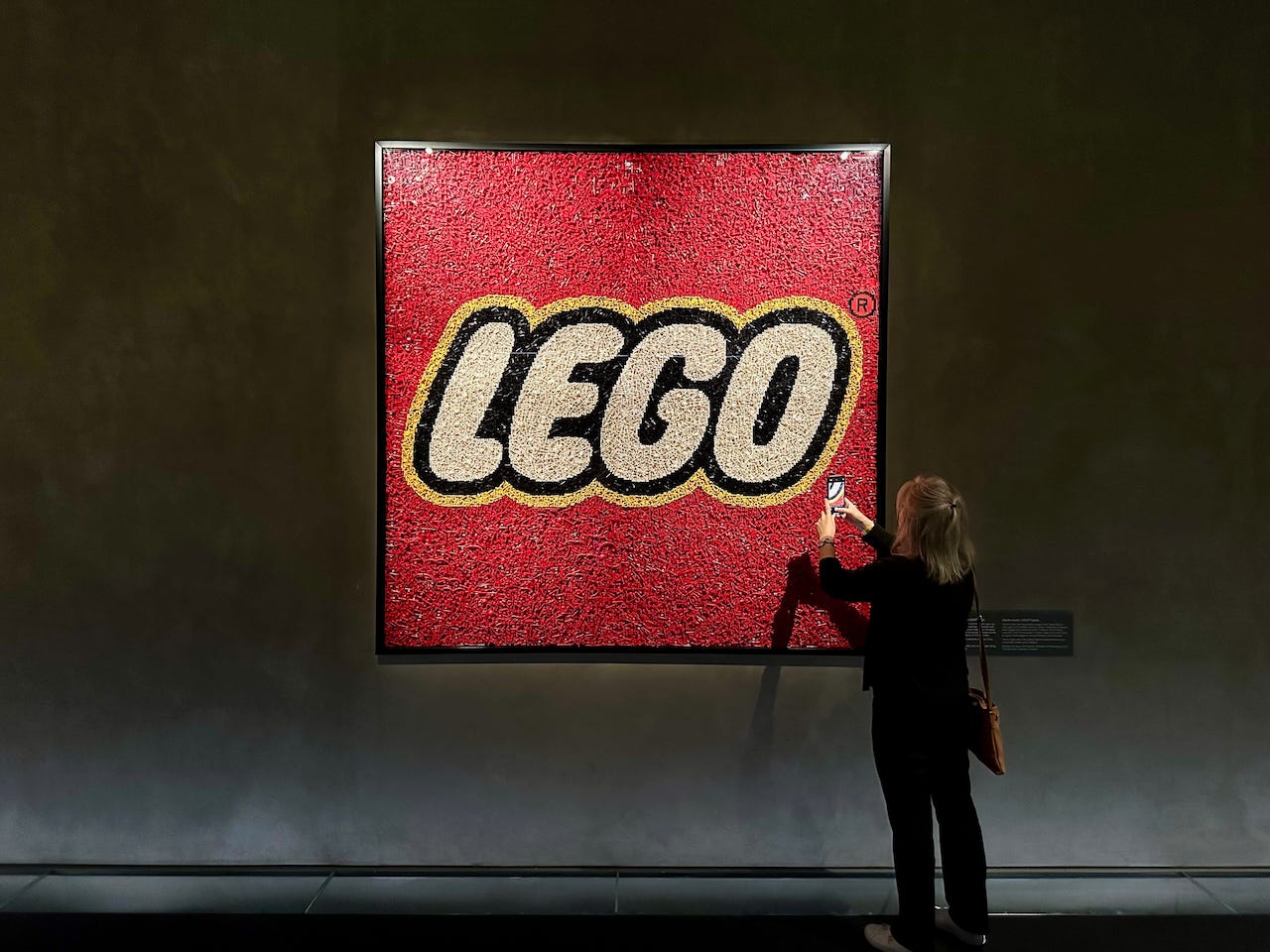
The story of LEGO itself is almost as improbable as the structures it inspires. The company began in 1932, when Ole Kirk Christiansen, a carpenter in Billund, started making wooden toys. The name came a few years later from the Danish words leg godt (play well). The plastic brick we recognize today arrived in 1958, and from there the system became a global language. A brick made in the 1960s still clicks neatly into one made today. Few inventions are so enduring, or so quietly radical, or so painful to step on barefoot.
In 1968, the first LEGOLAND opened in Billund. It was modest at first, miniature towns and railways, carefully arranged gardens, but it marked LEGO’s shift from toy to experience. Today, there are LEGOLANDs across Europe, Asia, and the U.S., but this small town in Jutland remains the original pilgrimage site.
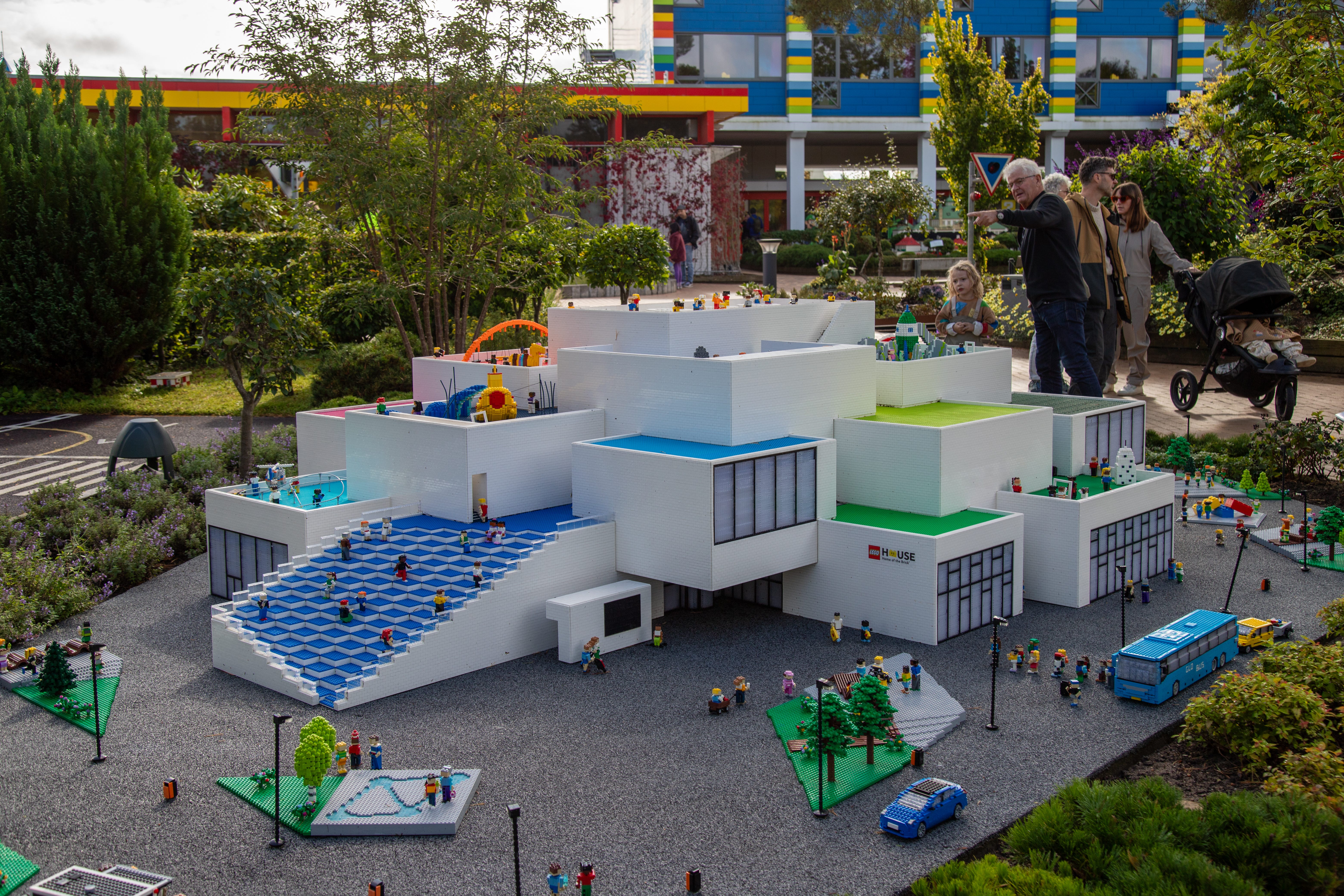
Billund’s most striking landmark now isn’t the theme park but LEGO House, completed in 2017 and designed by Bjarke Ingels Group. Ingels, Denmark’s most famous architect, has long used LEGO to test form and massing. Designing LEGO House was both natural and audacious: a building that resembles 21 white bricks stacked on top of each other, each one containing exhibitions, play zones, or creative labs.


Inside, the scale hits you first. A dinosaur built entirely from yellow bricks roars across a gallery. A floor down, whole skylines rise in miniature, with hidden surprises tucked into each model. Further still, children cluster around tables like apprentices, their hands moving quickly through avalanches of bricks. The clatter is constant. Buckets spill like waterfalls, fingers sort and snap them together one piece at a time.
One gallery offered an assignment to design shelters for sea turtles. Families huddled in circles, brainstorming with astonishing seriousness. “They need shade,” one child announced, stacking arches onto arches. “And water to slide in from,” another said, laying down blue tiles. For a moment, the room looked less like a play area than a design studio, full of people solving problems without budgets or constraints.
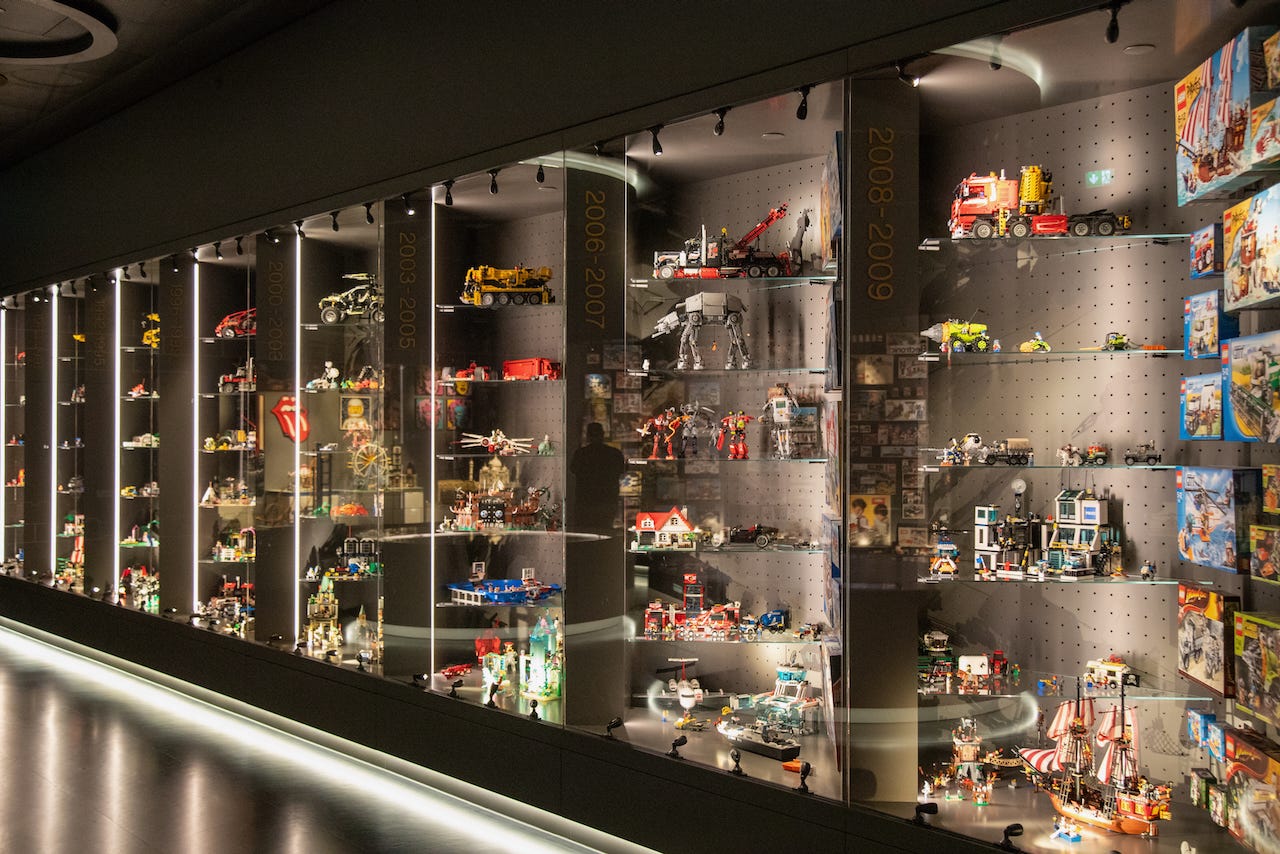
Downstairs, the nostalgia was overwhelming. A museum of what seemed like every LEGO set ever produced lined the walls, arranged by year, each box glowing in its alcove. I recognized the pirate ship I begged for but never got, the spaceship I built and rebuilt, even the island retreat I once showed my mom with pride. The nostalgia was undeniable, but so was the contrast. Upstairs, people were improvising habitats for sea turtles. Down here, the boxes told you exactly what to build.


Later, at LEGOLAND next door, the focus shifted outward. Entire cities and landmarks shrank into brick form: Copenhagen’s Nyhavn, Taipei 101, even Billund’s own airport, just a few miles away, complete with motorized planes taxiing to the runway. The world was simplified into plastic, orderly and precise, as if everything could be managed if only we had the right set of instructions.
It was impressive, but I couldn’t help but notice the contrast with the sea turtle gallery. Upstairs, children were imagining domes and lagoons with no blueprint. Here, every brick was locked into its prescribed place. Both versions had their charm, but they revealed two very different ideas of what building means.
Walking out, I kept circling the same question: why do we build at all? The easy answer is play, but that feels incomplete. Watching children huddle over their sea turtle habitats, or a man quietly constructing a bridge to nowhere, it struck me that building is never just about the object. It is about the act itself.
As children, we scatter the pieces and follow our imaginations. The joy is in the improvisation, in making something out of nothing. But somewhere along the way, we trade improvisation for instruction manuals. We want diagrams and piece counts. We want the finished product to look like the picture on the box.
Maybe that’s why LEGO has endured. It works for both versions of us: the child who builds to see what might appear, and the adult who builds to feel that something can hold together.


On the way out of LEGOLAND, I paused again at Miniland. The models still buzzed with motion: boats circling harbors, planes taxiing toward takeoff, space shuttles forever on the verge of launch. From a distance, it looked like a world that never comes apart. But I knew better. Every bridge, every façade, every mechanism needs constant repair. The illusion of permanence is only possible because someone is always rebuilding behind the scenes.
That, I realized, was the lesson I almost missed. My childhood LEGO sets didn’t endure because they stayed intact. They endured because they forced me to break them down, again and again, and find something new in the same old pile of bricks. Today, so many kids never have to. There is seemingly always another set waiting. Abundance makes rebuilding optional.
But rebuilding is the whole point. That is where imagination lives. LEGO was never about permanence or even novelty. It is about resilience.
That’s why it still matters. Because when the world falls apart, the future belongs to those who can piece it back together. 🏗️
If you liked this, there's more where it came from. Nothing to Declare opens a window somewhere new every week —travel essays, photography, cultural observations, and books worth reading. Once a week, sometimes more. Free to subscribe.
If you’d prefer to support through photography, I also sell prints. And if you spot a photo in a story that you like and isn’t listed, just reach out. I’m happy to do special runs at no extra cost.
I grew up with LEGOs and PlayMobile, so this was an interesting read. Being able to create and build brings a lot of gratification which is also why I think the toys have endured so long. My parents used to glue mine because they didn't want me to break down what they spent hours making for me on Christmas haha.
My 6-year-old loves Legos, and seems to prefer building from imagination rather than instructions, even though his constructions are remarkably practical. Yesterday he showed me a log truck he'd built straight from his own head, and the day before that he came downstairs with a perfectly self-engineered mini loader in his hands. I think the abundance and detail of modern Lego sets actually help him build better from imagination. The pieces let him get closer to what he envisions. Every time he claims he's bored – we don't run an entertainment service for bored kids under our roof – it takes about 5 bored minutes before he's back in the middle of his massive Lego pile.
Glad to have found your writing, thanks to Daniel Puzzo's kind recommendation!