


There is a saying that if you are not the expert, find the expert, and I think the best version of that is when you find someone who is not only good but willing to share how they do it.
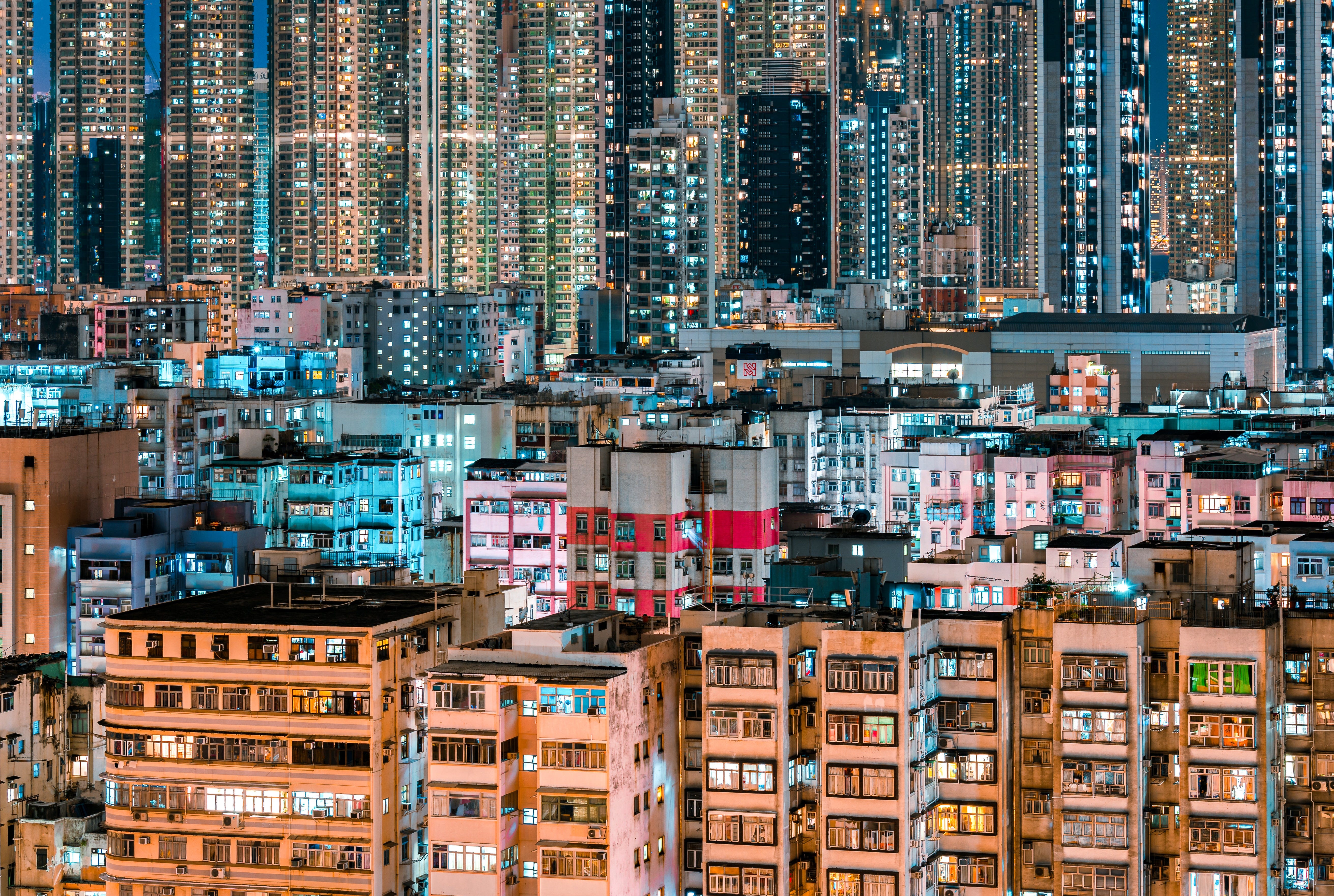
Hong Kong is one of the best cities in the world for photography. I have been there many times over the years, and I never run out of things to shoot, which is partly because the city is so dense that the visual material just stacks up in front of you — people, trams, signage, laundry, all compressed into the same frame with residential towers rising behind them. The light in Hong Kong matters more than it does in most places because the same street can look completely different depending on the hour, and some of the best conditions come when you would not expect them. Mong Kok in the rain, for instance, is better than Mong Kok on a clear night. Every neighborhood has its own feel, and because the MTR and the tram network connect everything, you can cover an enormous amount of ground in a day on foot.
Manson is a Hong Kong-based photographer I have been following for a while, and he is that expert. I asked him to pick eight of his favorite locations and tell you how to photograph them, and he came back with the kind of detail you only get from someone who has spent years shooting the same streets. You could hit all eight in a long weekend, if you wanted. And even if you are not carrying a camera (or a professional one), these are just great vantage points of the city.
Daytime
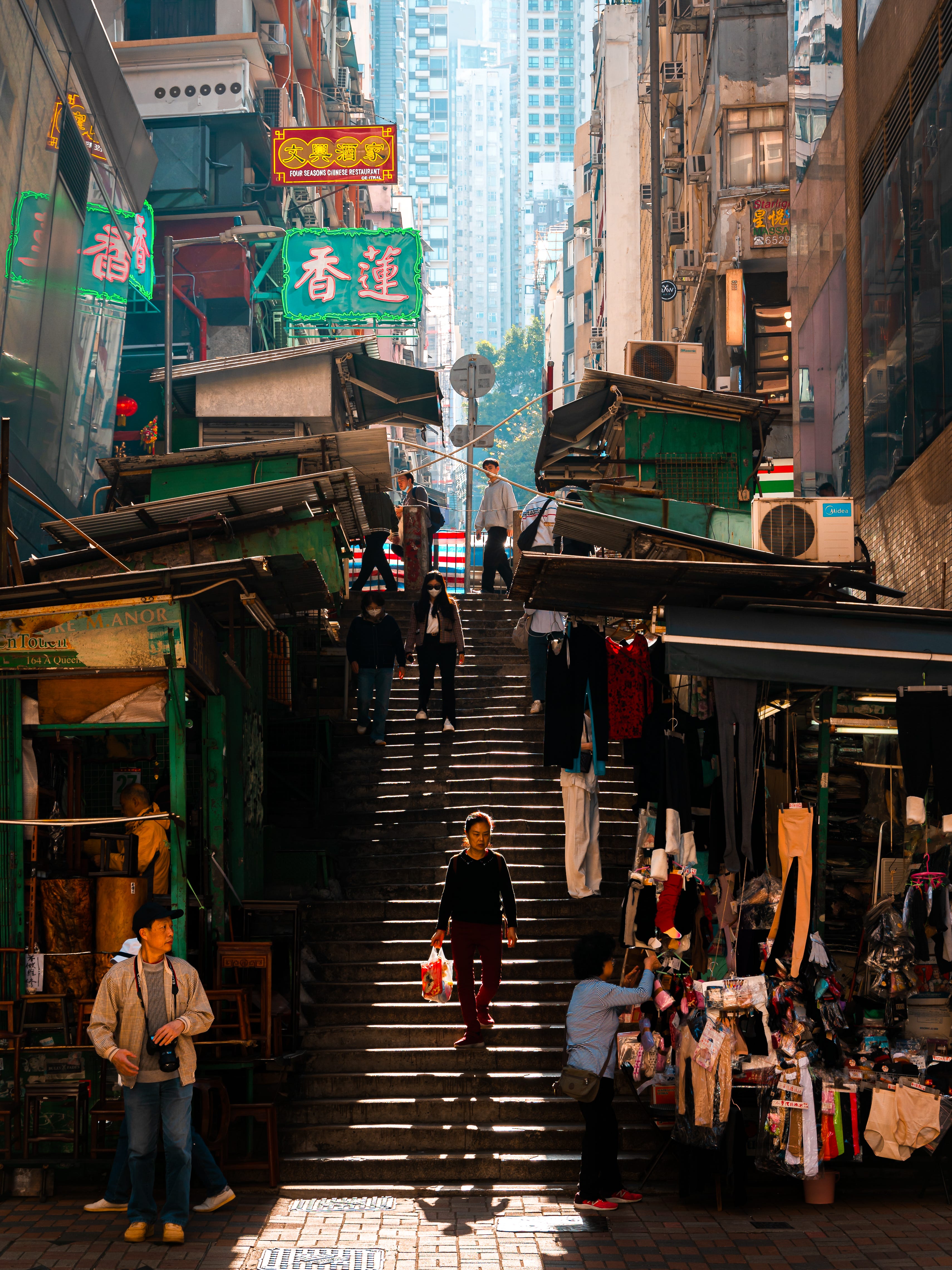
Aberdeen Street Steps – Central
Best Time to Visit: Afternoon on a sunny day, around 12–2:00 PM. During this window, the sun is high enough to spill into the narrow alley, creating dramatic highlights on the stone steps and the people walking down, while keeping the old shop stalls in moody shadow.
How to Photograph the Spot: Position yourself at the bottom of the steps looking up. This angle emphasizes the steepness of the street and allows you to frame your subjects against the vertical backdrop of the city’s dense architecture.
Technique: Use a wide-to-medium aperture, around f/4 or f/5.6, to maintain sharp detail throughout the scene. Wait for a lone subject to enter the shaft of light on the stairs to create a strong focal point and a sense of story.
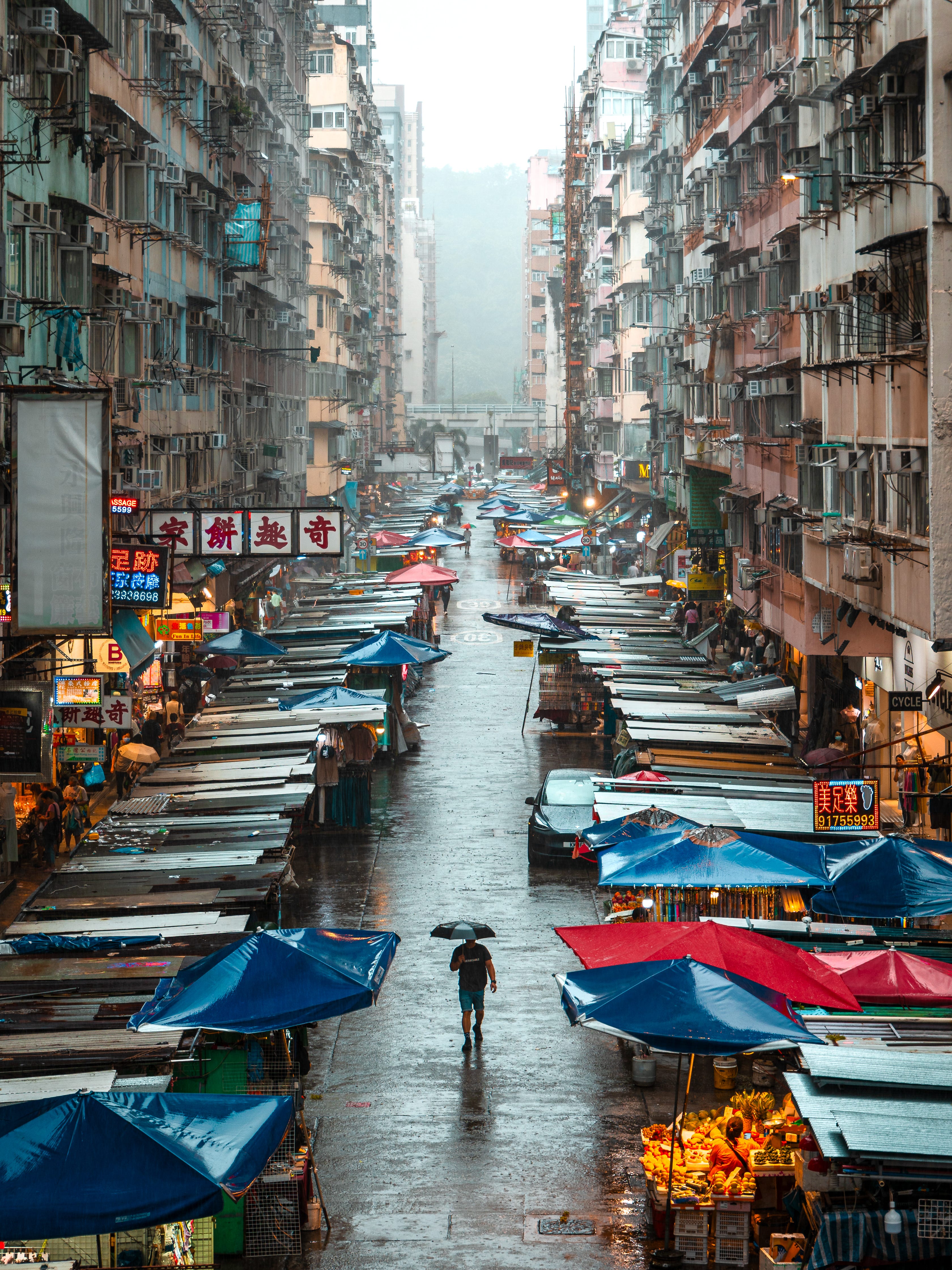
Fa Yuen Street Market – Mong Kok
Best Time to Visit: Mid-afternoon, around 3:00–5:00 PM, is ideal for capturing the peak energy of the market. Overcast or rainy days are actually better for creating a moody and cinematic look.
How to Photograph the Spot: Head to the Mong Kok Road Footbridge that crosses over Fa Yuen Street. Shoot from the center of the bridge to get a perfectly symmetrical view of the market stalls stretching into the distance.
Technique: Use a medium telephoto lens, like an 85mm, to compress the perspective. This makes the tall buildings feel like they are leaning in, emphasizing the urban canyon effect.
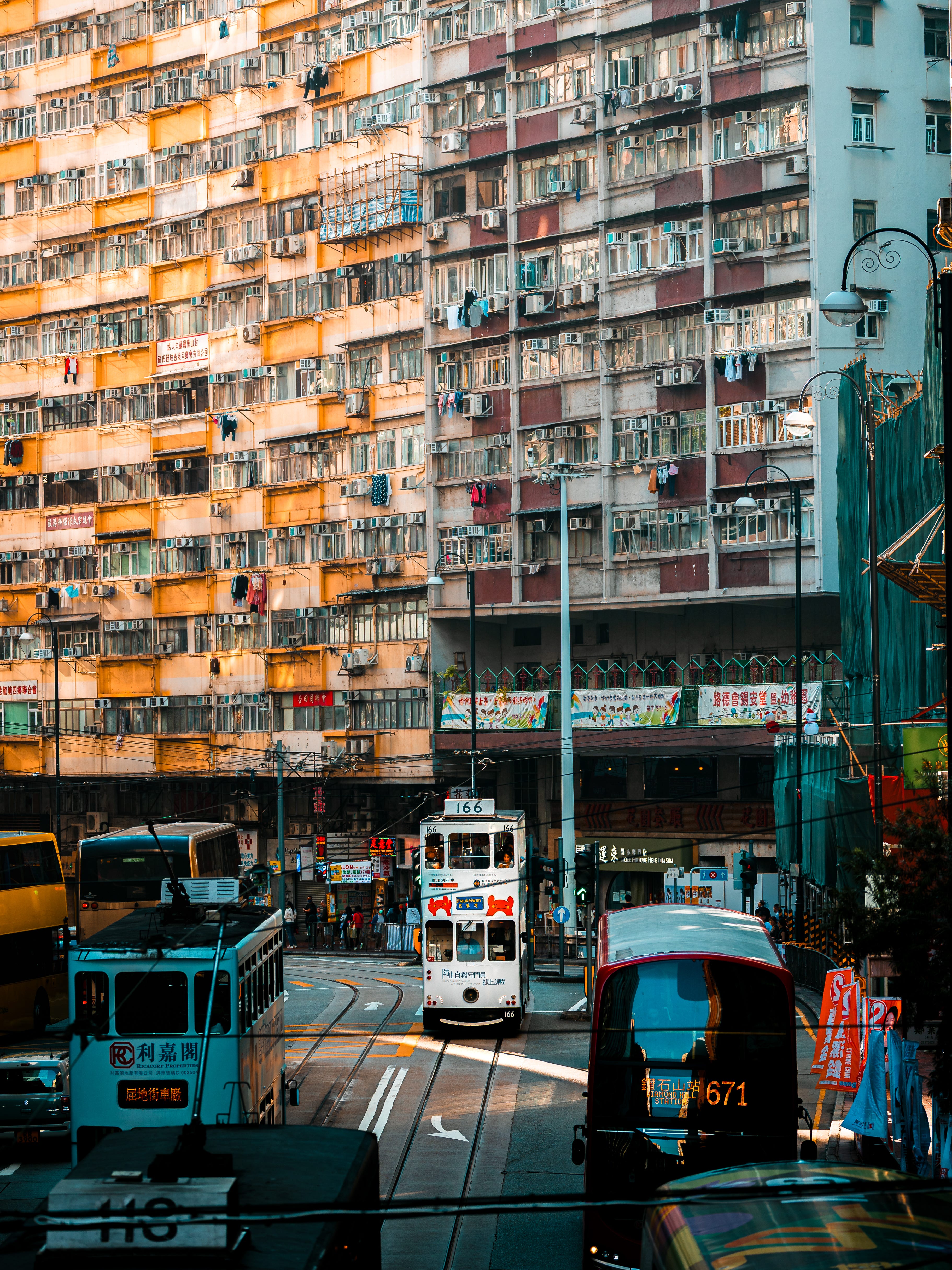
Southern Building – North Point
Best Time to Visit: Afternoon, when the low sun hits the yellow and red facade of the Southern Building, making the colors pop while casting long, cinematic shadows across the tram tracks.
How to Photograph the Spot: Shoot from the pedestrian footbridge overlooking King’s Road. This elevated position gives you a clear, unobstructed view of the oncoming trams and the sheer scale of the residential blocks behind them.
Technique: Use a zoom lens, around 50–100mm, to compress the scene, making the building appear even more massive over the traffic. Wait for a white or brightly colored tram to enter the patch of sunlight for a high-contrast focal point.
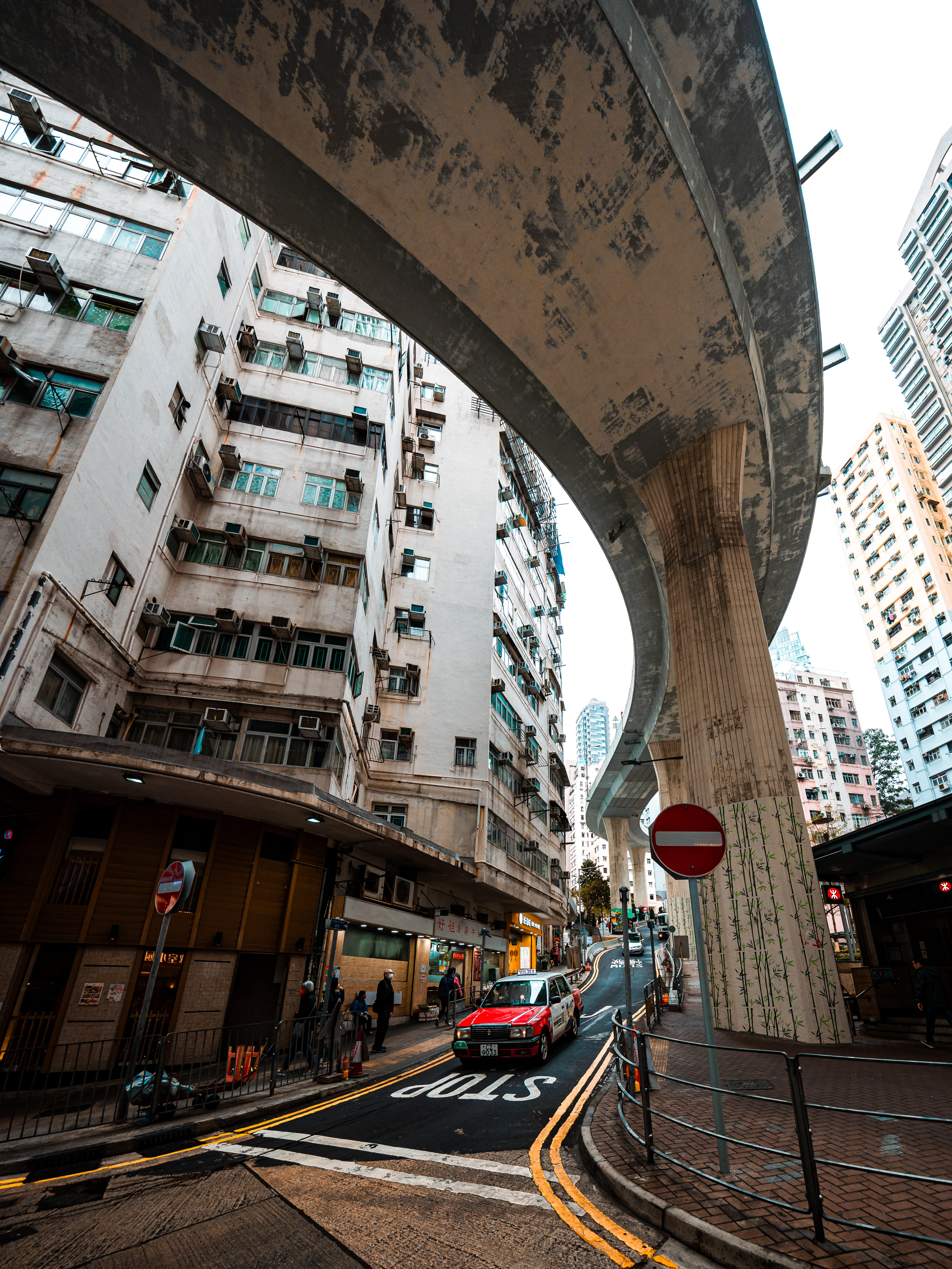
Hill Road Flyover – Shek Tong Tsui
Best Time to Visit: Anytime in the afternoon, or at night when the streetlights create a moody, cinematic feel.
How to Photograph the Spot: To get the full snake-like effect of the flyover curving above you, use an ultra-wide-angle lens, below 18mm, and shoot from a low vantage point looking up.
Technique: Use a ‘leading lines composition’ by aligning the curves of the flyover with the road below to create a sense of depth. If shooting at night, a shutter speed between 5 and 20 seconds can capture light trails from passing cars.
Golden Hour
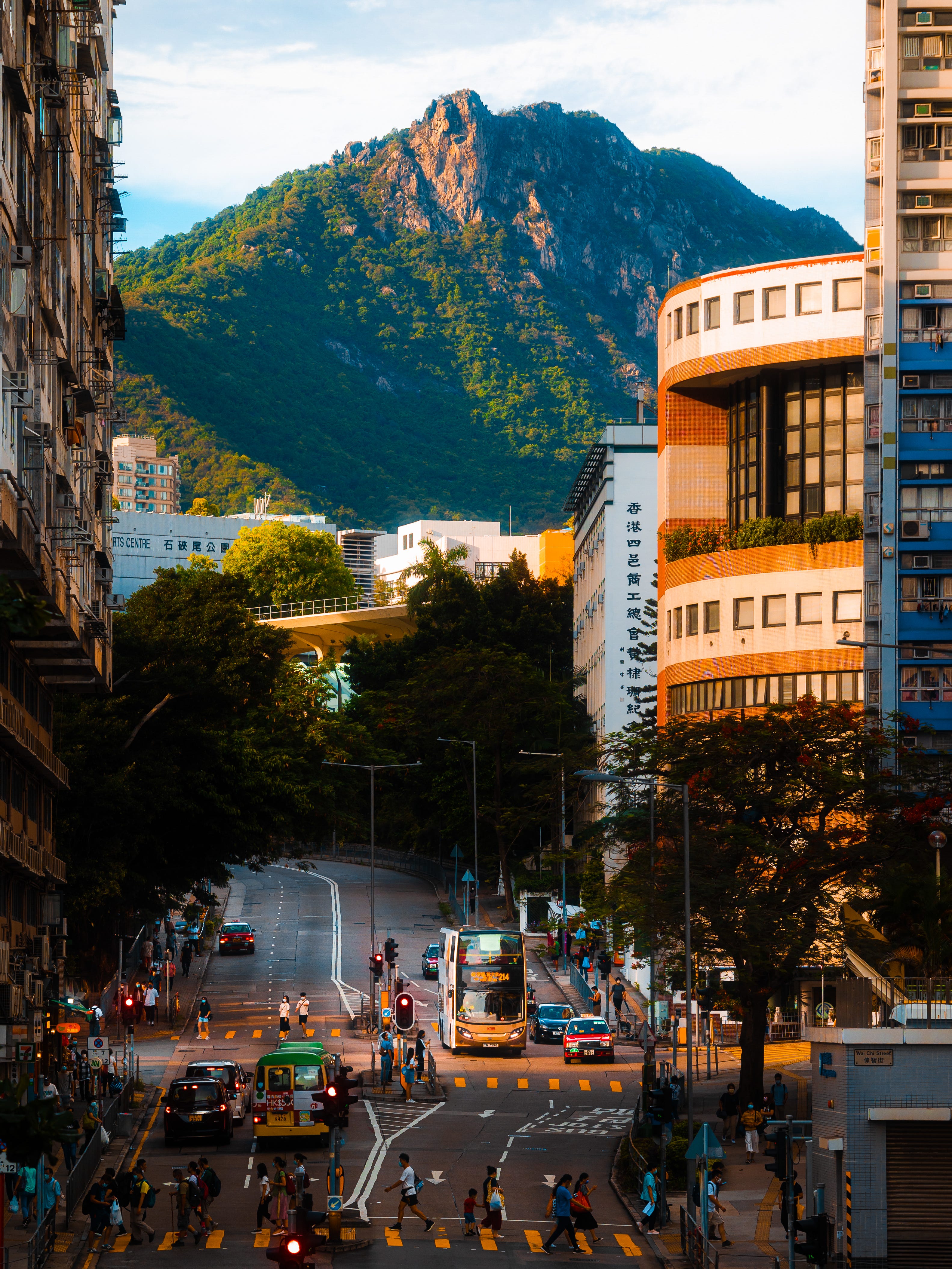
Lion Rock – Shek Kip Mei
Best Time to Visit: Late afternoon on a sunny day, approximately one hour before sunset. The golden hour light hits the face of the mountain, highlighting its rugged texture and making the lion stand out.
How to Photograph the Spot: Shoot from the pedestrian footbridge on Nam Cheong Street. This vantage point allows you to use the long, straight road as a leading line that draws the eye directly toward the mountain peak.
Technique: Use a telephoto lens, 85mm or longer, to create a compression effect. This makes the mountain appear much larger and closer to the foreground buildings and traffic, emphasizing the proximity of Hong Kong’s urban life to its nature.
Blue Hour and Night
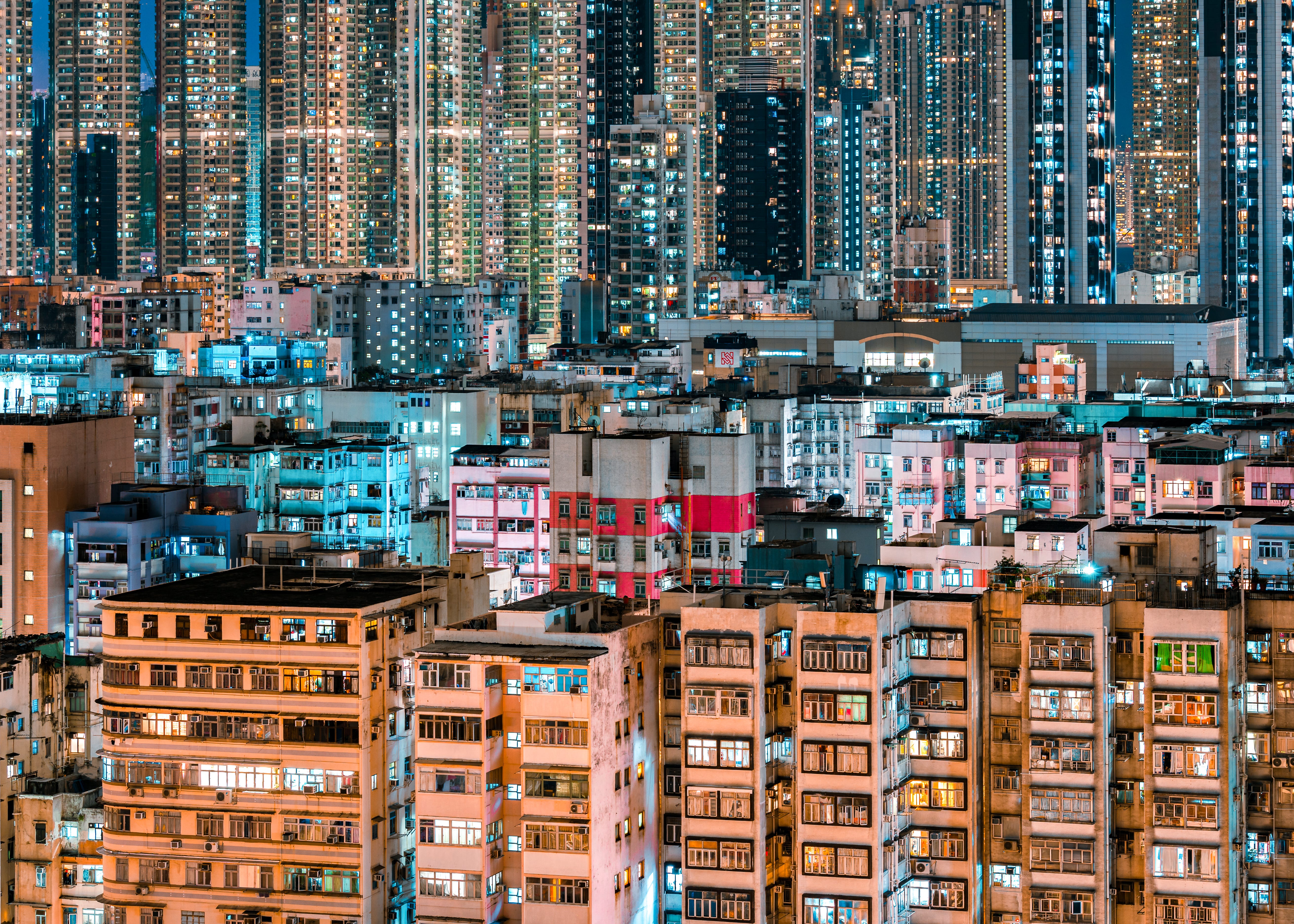
Garden Hill – Sham Shui Po
Best Time to Visit: Arrive around 6:00 PM to catch the sunset, but the blue hour — the period just after sunset — is the real window here, as the city lights begin to come on against the fading sky. This is a popular spot for local photographers, so try to go mid-week to avoid the weekend rush.
How to Photograph the Spot: Use a telephoto lens, like a 70–200mm, to compress the scene and emphasize the stacked look of the buildings.
Technique: Use a tripod for long-exposure shots to capture sharp details of the buildings and light trails from the traffic below. HDR photography helps balance the bright city lights with the darker areas of the hillside.
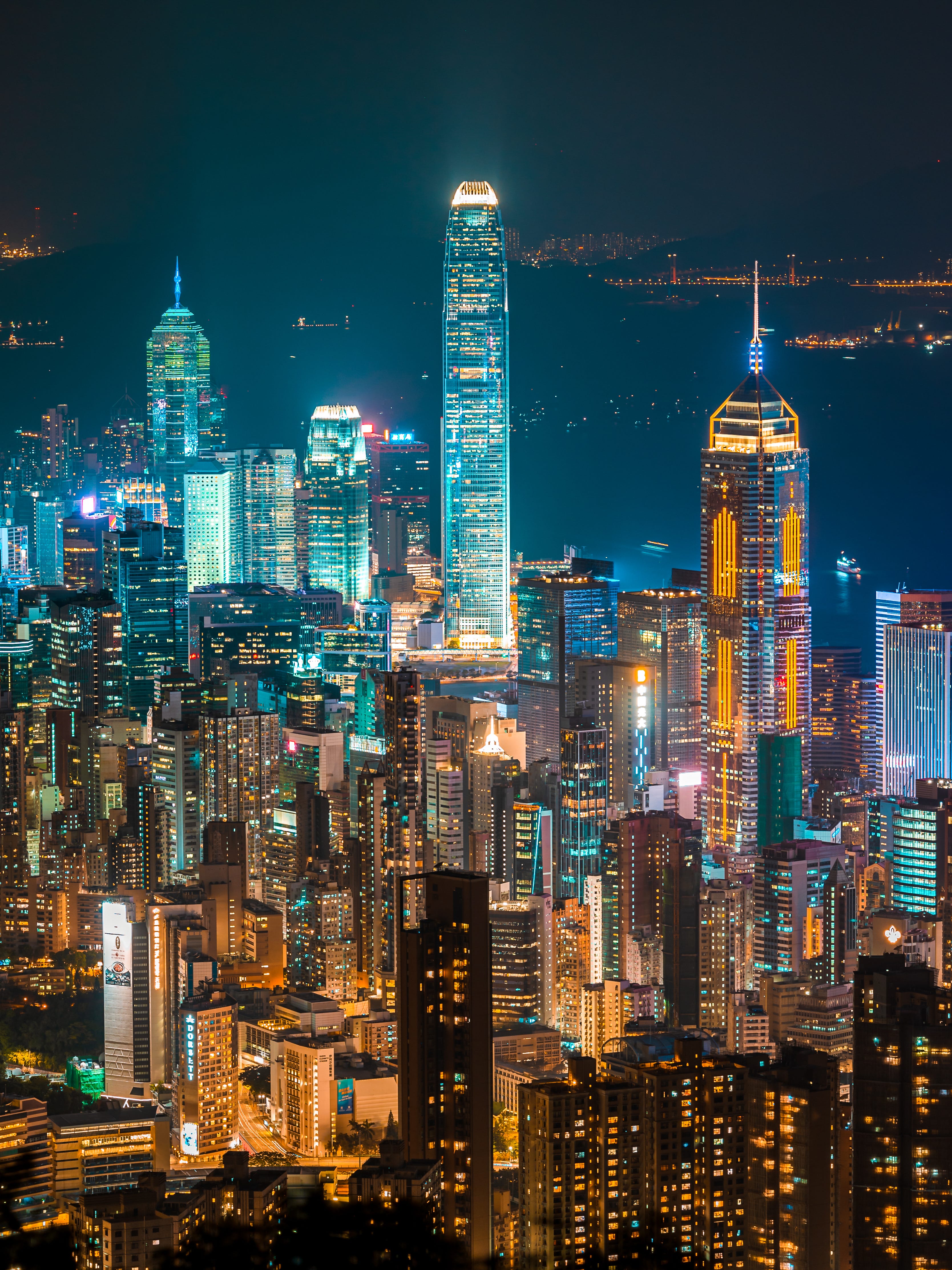
Jardine’s Lookout – Night View
Best Time to Visit: The blue hour, roughly 20–30 minutes after sunset, is the sweet spot for this location. It provides the perfect balance where the sky retains a deep blue hue while the city lights are fully illuminated.
How to Photograph the Spot: A tripod is critical here for the long exposures needed to capture the city lights clearly. Use a telephoto lens, 70–200mm, to isolate specific buildings like the IFC, or a mid-range lens, 24–105mm, to capture the entire skyline.
Technique: Keep your ISO low, between 100 and 200, to minimize grain. Use a mid-range aperture around f/8 to f/11 to ensure the entire cityscape is sharp from front to back.
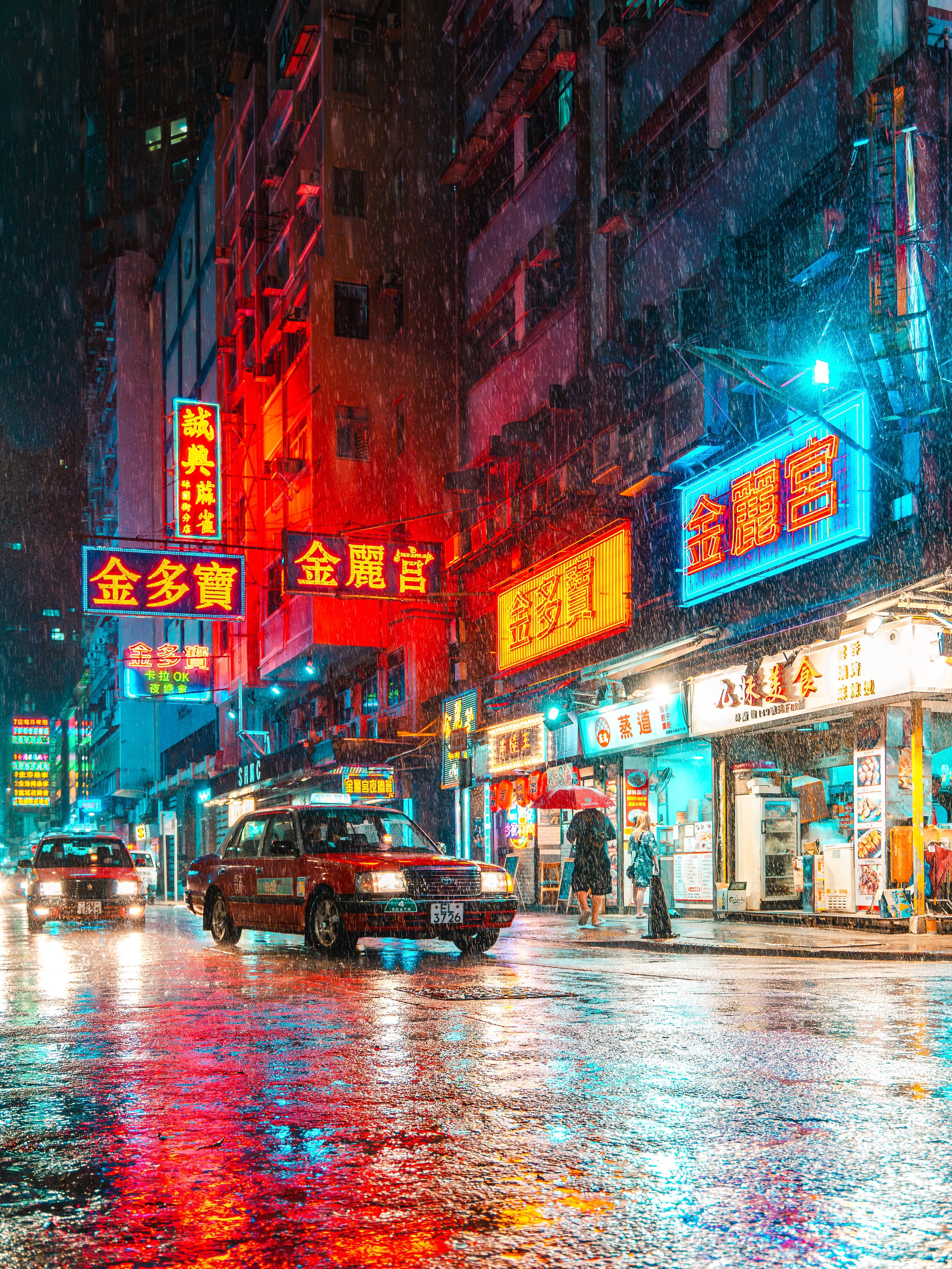
Portland Street Neon – Mong Kok
Best Time to Visit: Visit on a rainy night. The wet asphalt creates a mirror-like surface that reflects the neon signs, doubling the color and light in your frame.
How to Photograph the Spot: Shoot from a low angle — getting your camera close to the ground will maximize those reflections on the wet pavement. Use the iconic red taxis as a focal point to add a sense of motion and local character.
Technique: Use a fast prime lens, like a 35mm or 50mm f/1.8, to handle the low light without a tripod. To capture the falling rain, use a faster shutter speed around 1/250s or higher and push your ISO slightly. 📷
The Briefing
Manson's gear and settings recommendations are how he got these specific shots, and if you have the kit, follow his lead. But these are also just eight of the best vantage points in Hong Kong, and they are worth visiting whether you are carrying a camera or not. Even if you get a cloudy day, do not get discouraged. Hong Kong at night is a different city entirely, and there is so much light from the signage, buildings, and traffic that you do not need to worry about low-light conditions the way you would almost anywhere else. Here are my hotel recommendations.
You can find more of Manson’s work on Instagram at @mansonyms.
All photographs © Mansonyms. Used with permission.
If you liked this, there’s more where it came from. Nothing to Declare opens a window somewhere new every week —travel essays, photography, cultural observations, and books worth reading. Once a week, sometimes more. Free to subscribe.
I long to return - I went during Sevens Week back in 2009 and also went to Macau.
Oooh, want to go back! I loved being in Hong Kong. Your photos -- wow. Simply exquisite, brought back memories.