


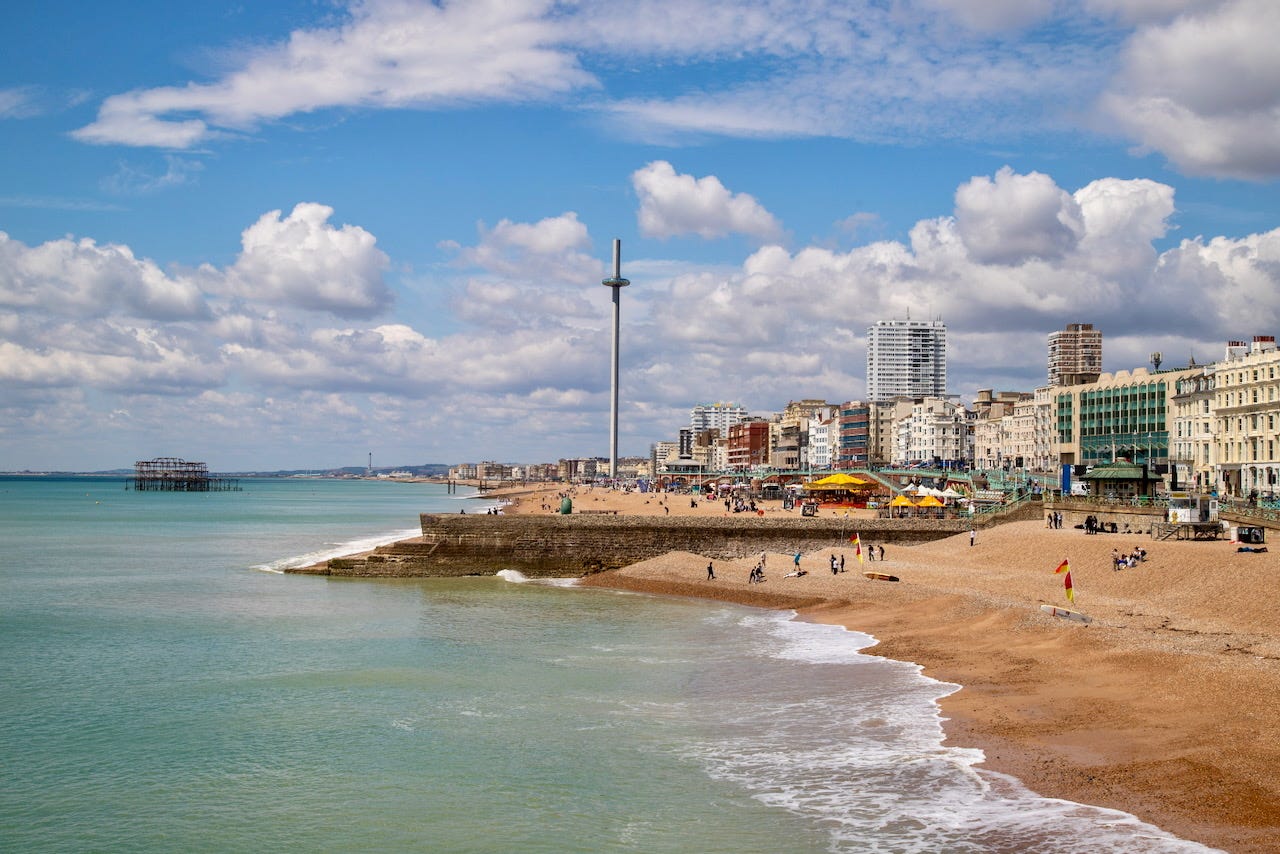
I was sitting at Gatwick Airport when I got the first alert. My flight, already delayed by thirty minutes, was now leaving five and a half hours later, just after midnight. I sighed in that familiar way people do when they’re still pretending it might turn around. Maybe the crew could make up some time from Strasbourg. Maybe someone got lost in duty-free but had now been found. These things happen. It’s aviation.
Fifteen minutes later, the second ping came, this time an email from the airline, citing “extraordinary circumstances,” which is code for EU261/UK278 regulations do not apply, so don’t even try to get a euro from us.
I tried to leave the departures area, but was informed I couldn’t simply walk out. Apparently, having had my flight canceled, we now required an escort, like misbehaving children.
While I waited for someone from the airline to take us back into the real world, I watched a group of Italians shout at the staff as their flight was also cancelled. “HELLO! HELLO! We want ANSWERS! You no giveee me the ANSWERS!” It wasn’t helpful, but it was cathartic. One old woman shook her eyeglass case at the airline representative with what appeared to be genuine menace.
Eventually, I was freed and booked into the airport hotel, where I would stay the night and fly out the next evening. I was stuck for an extra day. When I returned to immigration to re-enter the UK, the border officer gave me a once-over and asked about the reason for my visit. I told him my flight had been cancelled. “Ah, one of those people. Bonus day, then.”
“Bonus day?” I repeated.
He handed back my passport. “Well, bloody good on you then.”
“Bloody good on me,” I nodded.
And just like that, it was a bonus day.
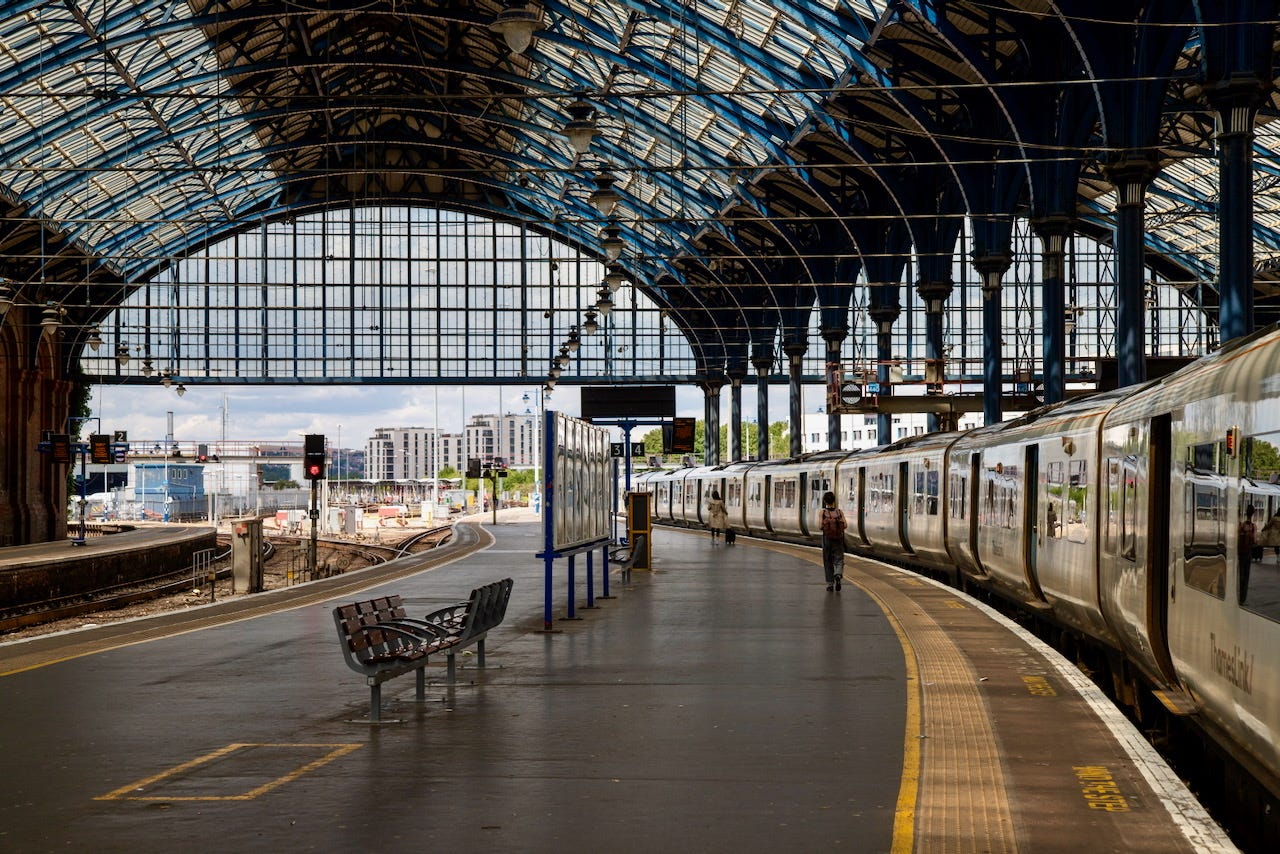
The thunderstorms let up sometime the following morning. The sky went from grey to a color that implied that the sun might be coming, if only hours later. I decided to take the train to Brighton, mostly because it had always been just a little too far from London to justify a day trip. And because I had the vague impression that Brighton was probably the best place to spend a day you weren’t planning on doing anything specific with.
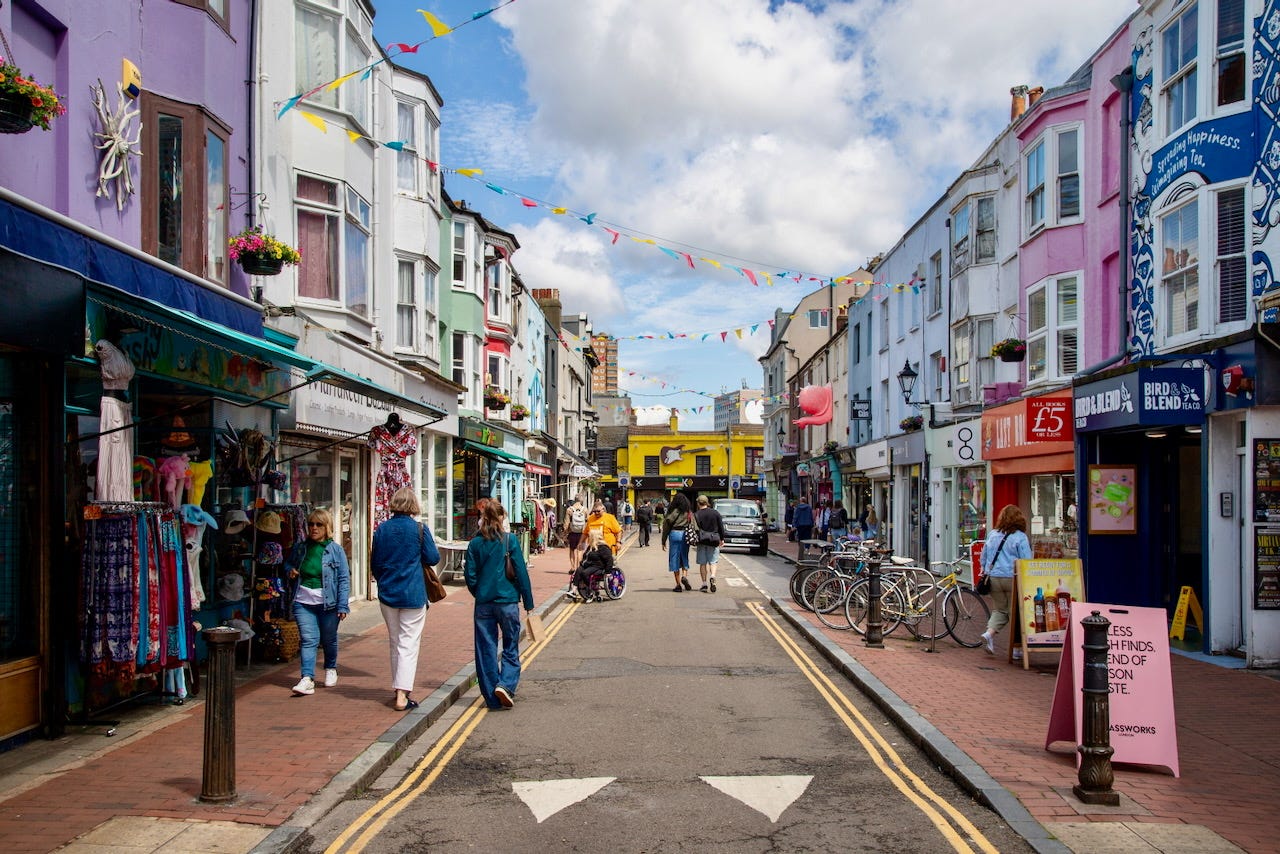
The train took about half an hour. As soon as I arrived, I knew I had made the right decision. Brighton wasn’t charming, not in any obvious way. It was rough, but not in a bad way. More like it had stopped trying to impress people decades ago and found peace with that. Coffee shops spilled out of alleyways next to vape stores and vintage bookstores. Further down, a C&H Weston gun shop neighbored a women’s jewelry boutique and a kebab takeaway. Brighton is, in a word, confident.
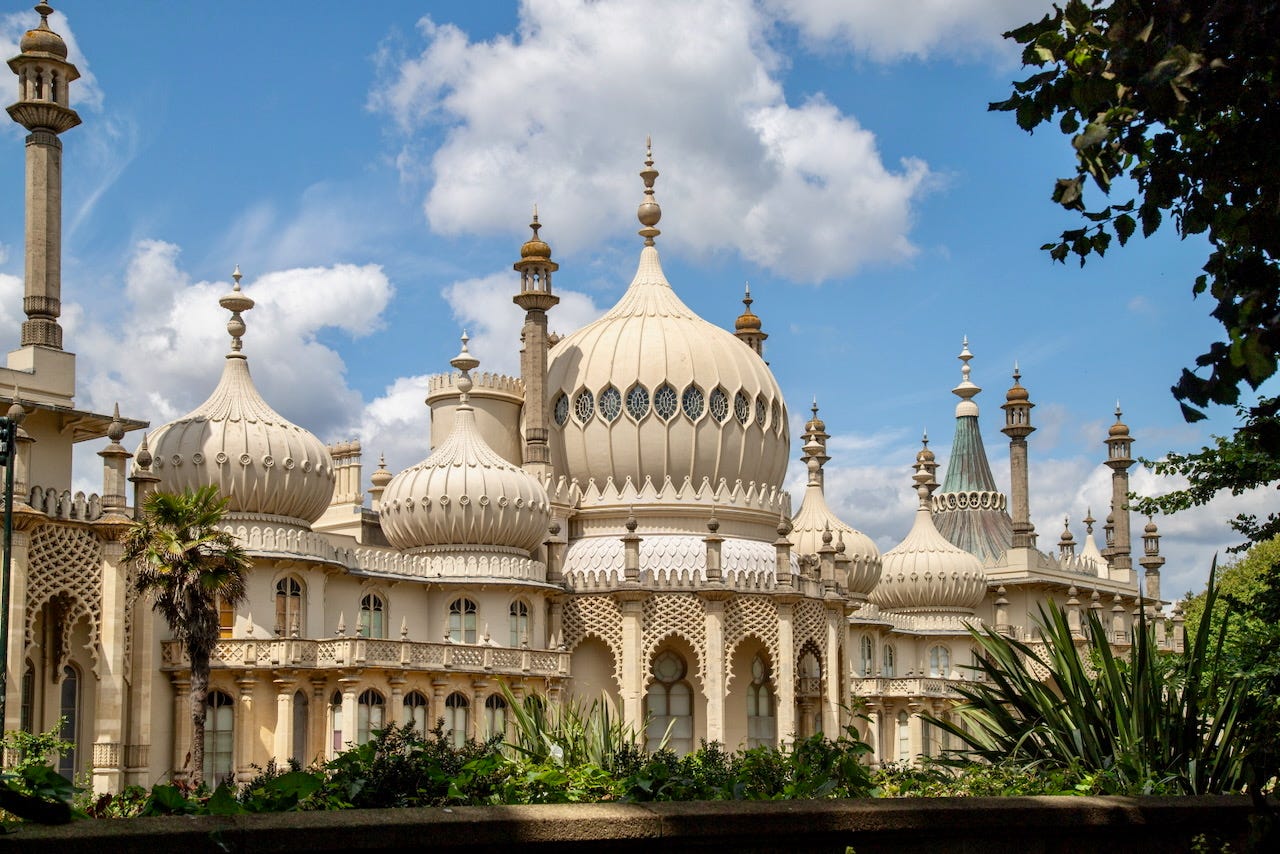
I wandered toward the center, vaguely aiming for the Royal Pavilion. Brighton’s Royal Pavilion is a kind of architectural hallucination, something that my trained background in architecture would describe as halfway between a British palace and an Indian temple, yet designed by someone who had seen both from a distance and thought, yes, but what if it had even more domes? It’s ornate, dazzling, and lovingly strange. ABBA won Eurovision here in the 1970s, which is the only part of this story that my friends back here in Sweden will care about.
The sun was out. Seagulls screamed overhead with real purpose. A man was getting a buzz cut in the park. No one else seemed to notice. I was starting to understand Brighton.


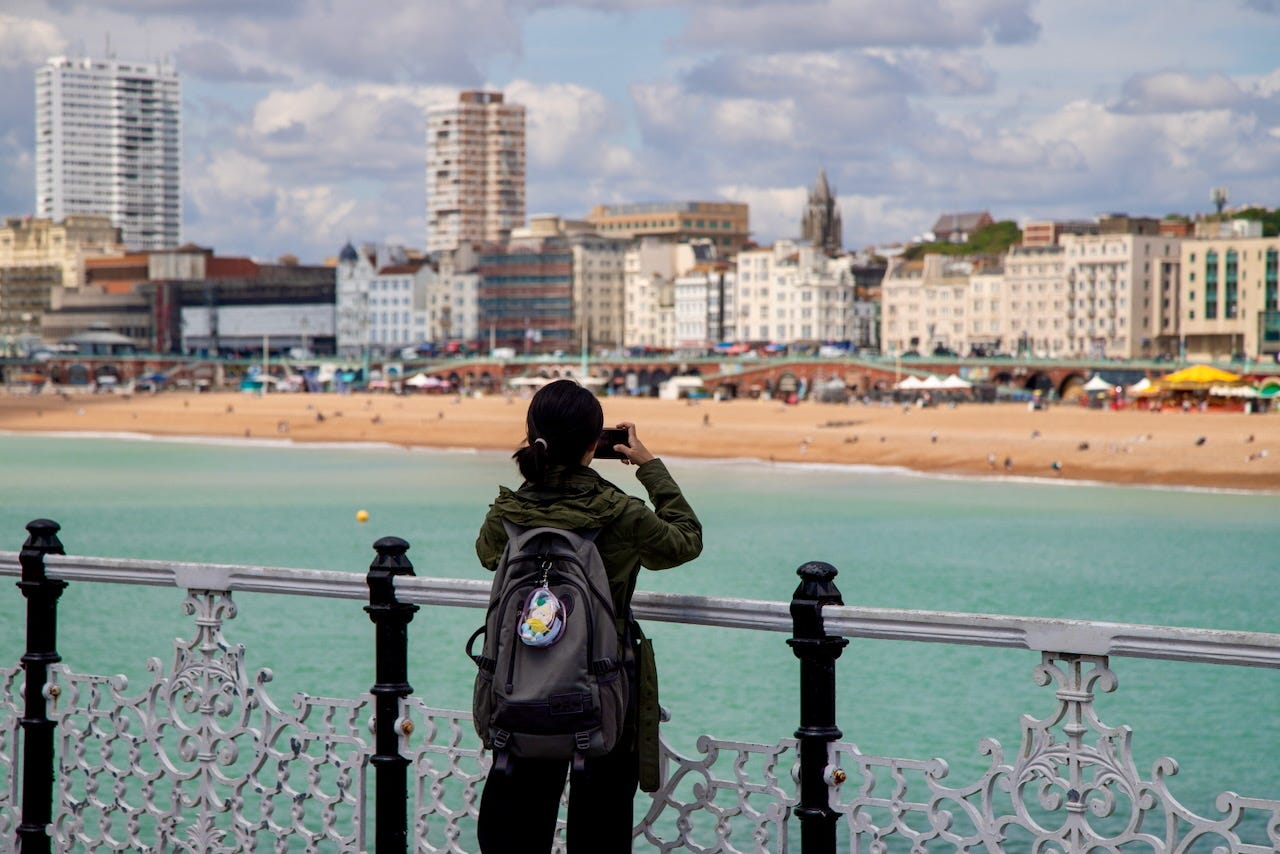
I made my way down toward the water, which, for a seaside town, Brighton hides surprisingly well. You don’t stumble upon the sea -you hunt for it. You pass bars and boutiques, palm readers and window displays that look like curated garage sales. Finally, you reach it: a long promenade, the smell of sea and cigarette smoke drifting up from the beach like incense at a very specific kind of church.
The beach itself is made of rocks. As I walked, I realized I had never stood on a beach like this before. About five minutes in, it occurred to me that every other beach might have it wrong. You can’t get golf ball-sized rocks in your shoes or between your toes. Genius, really.
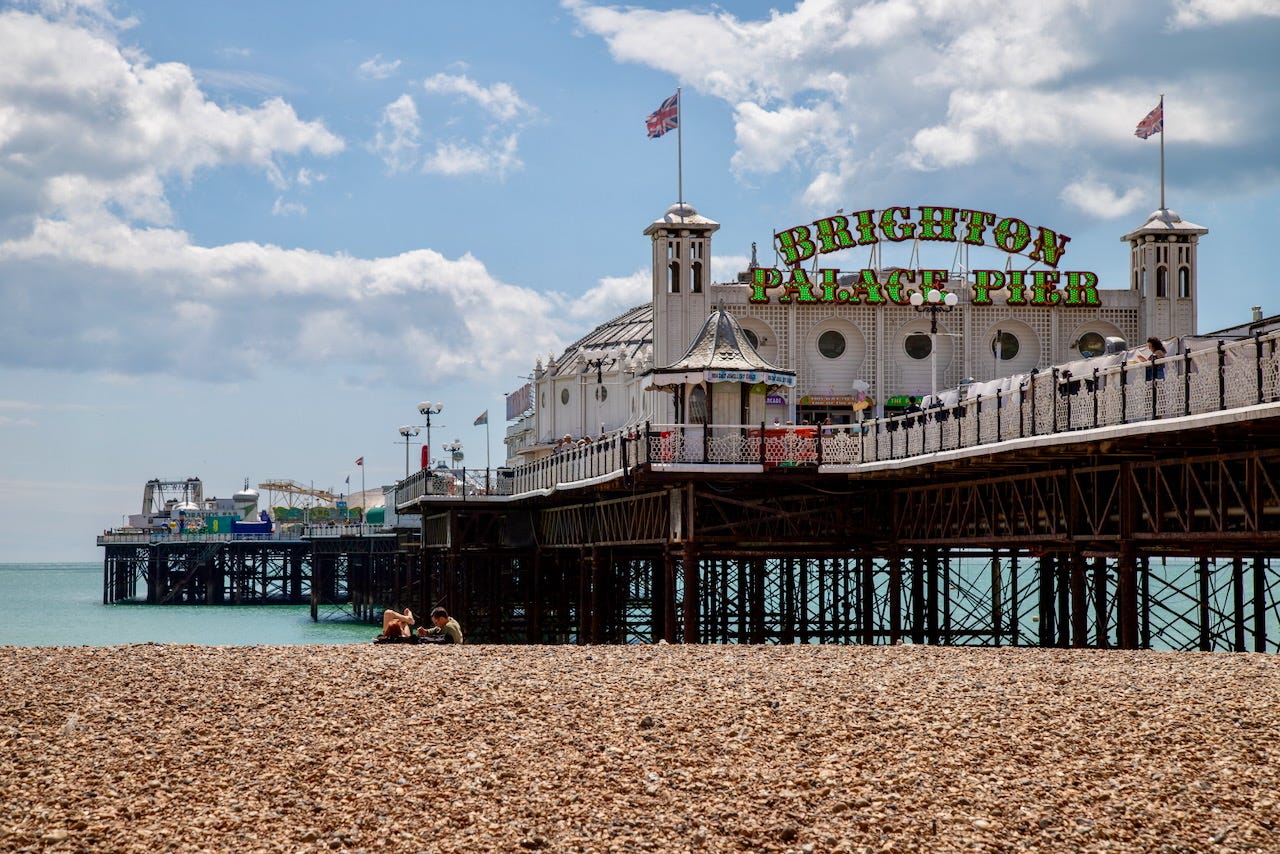
The pier is the centerpiece of Brighton’s unapologetic eccentricity. It dates to 1899, which you can tell by the fact that every pylon it stands on looks like it was last inspected in 1905. The signage is wooden, the rides are still running, and the whole thing feels too old to fail.


There were teenagers screaming on a ride that whipped them around like damp laundry. There were slot machines filled with people who looked like they’d come for the weekend and may not have realized that it was now Monday. A group of teenage girls tried to eat their fish and chips while seagulls dive-bombed them like Hitchcock had personally trained them.
I bought some fish and chips myself as it seemed the sensible British thing to do, despite the inherent risk. A nearby sign advertised a “seaside celebration” of fish, mushy peas, and champagne, which I duly noted for my upcoming wedding anniversary.


There was a claw machine in one of the arcades with a plush toy shaped like a bottle of brown sauce. I stared at it for a long time, thinking how much my wife would love it, and how ridiculous it would be to carry it back on the flight. I didn’t play. I told myself the claw was rigged anyway.
The day passed in a kind of dream logic: rides spinning, seagulls screaming, teens filming a TikTok near the public toilets. I took photos of everything, because that’s what I do when I don’t quite believe something is happening, and also because Brighton is a photographer’s dream. I caught reflections in shop windows, blurred motion on the pier, the chaos and comedy of a city that seemed to exist purely for people with nowhere else to be.
And then, just as quickly as it began, the day was over. I took the train back, returned to the hotel, and then to the airport. Sitting at the gate exactly twenty-four hours later, everything felt oddly reset. Same airport, same destination. Only now I had a camera roll and field notes that felt like they belonged to a different life.
Brighton wasn’t part of the plan, but perhaps for everyone it should be.


Near the beginning of the pier, I passed a Zoltar machine —the same coin-operated, animatronic fortune teller from Big. It wore a turban and stared at me with those mechanical, all-knowing eyes. For a second, I stood there wondering if I’d made a wish I didn’t remember. Was this what it looked like when your life turned into a different one for a day? No career responsibilities, no onward itinerary, no obligations?
What is a bonus day, really?
It’s a pier that smells like batter and vinegar. It’s a claw machine filled with plush condiments you’ll never win. It’s a man getting his head shaved in the park like it’s the most natural thing in the world. It’s everything slightly off-kilter, yet somehow exactly where it’s meant to be.
It didn’t feel like real life. But it counts.
And if nothing else, it was —well, bloody good on me.
This essay won a Silver Solas Award in 2025.
Thanks for joining me on my bonus day.
If you'd like to make bonus days and little escapes a regular thing, consider subscribing.
Already a subscriber? Thank you — your support means the world. Feel free to share, recommend, or give it a restack.
If you’d prefer to support through photography, I also sell prints. And if you spot a photo in a story that you like and isn’t listed, just reach out. I’m happy to do special runs at no extra cost.
This was a fun read. You got Brighton pretty well. I laughed at the fortune teller caption.
Wonderful! Brighton is a fun place, I've been many times and you captured its essence so perfectly. How were the fish and chips?
You might remember my encounters with Brighton seagulls, one of the bastards stole my then wife's donut.
Have you read Brighton Rock?