


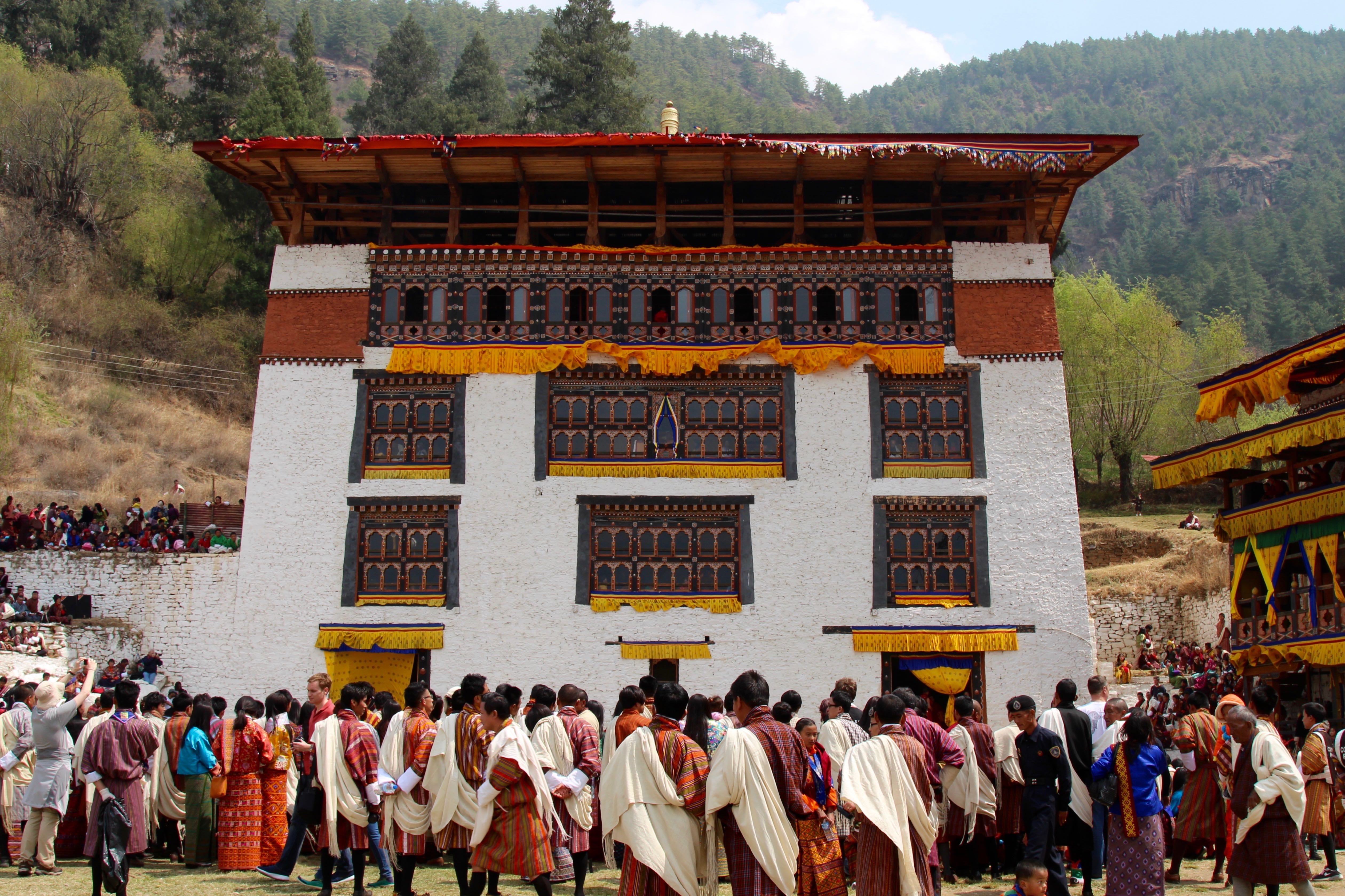
At first light, the valley is already awake. Prayer flags ripple along the ridgelines. Below, in the shadow of Rinpung Dzong, people pour in from nearby villages — their footsteps soft against the dirt paths, their clothes radiant with the colors of devotion.
The Paro Tshechu is Bhutan’s great spring crescendo — a five-day celebration of faith, community, and performance. But it doesn’t announce itself with fanfare. Instead, it builds like a rising breath. You feel it in the hush of early morning, in the careful tying of kira and gho — Bhutan’s traditional dress — in the quiet pride of a grandmother adjusting a child’s scarf just so before they walk into the monastery grounds together.
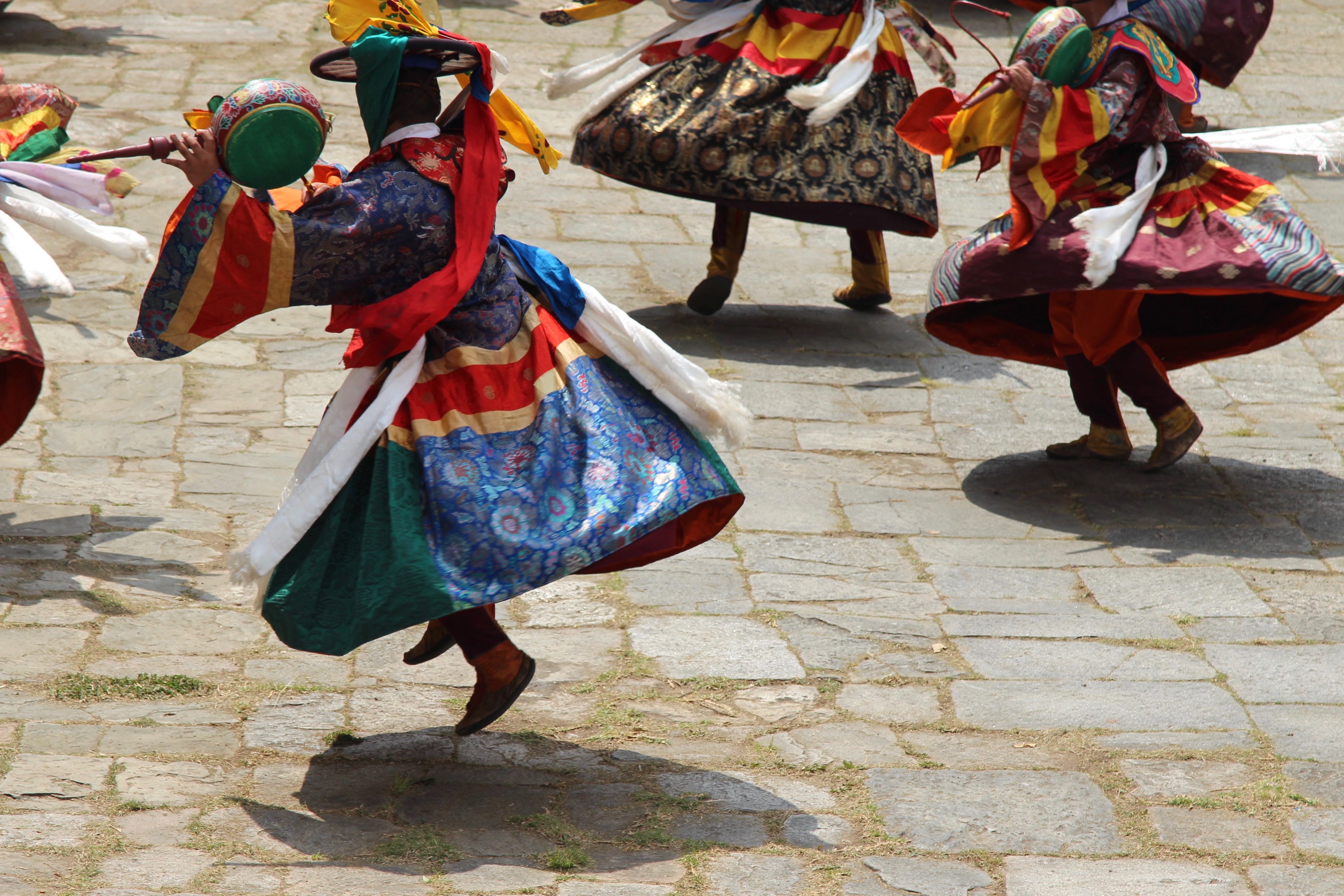
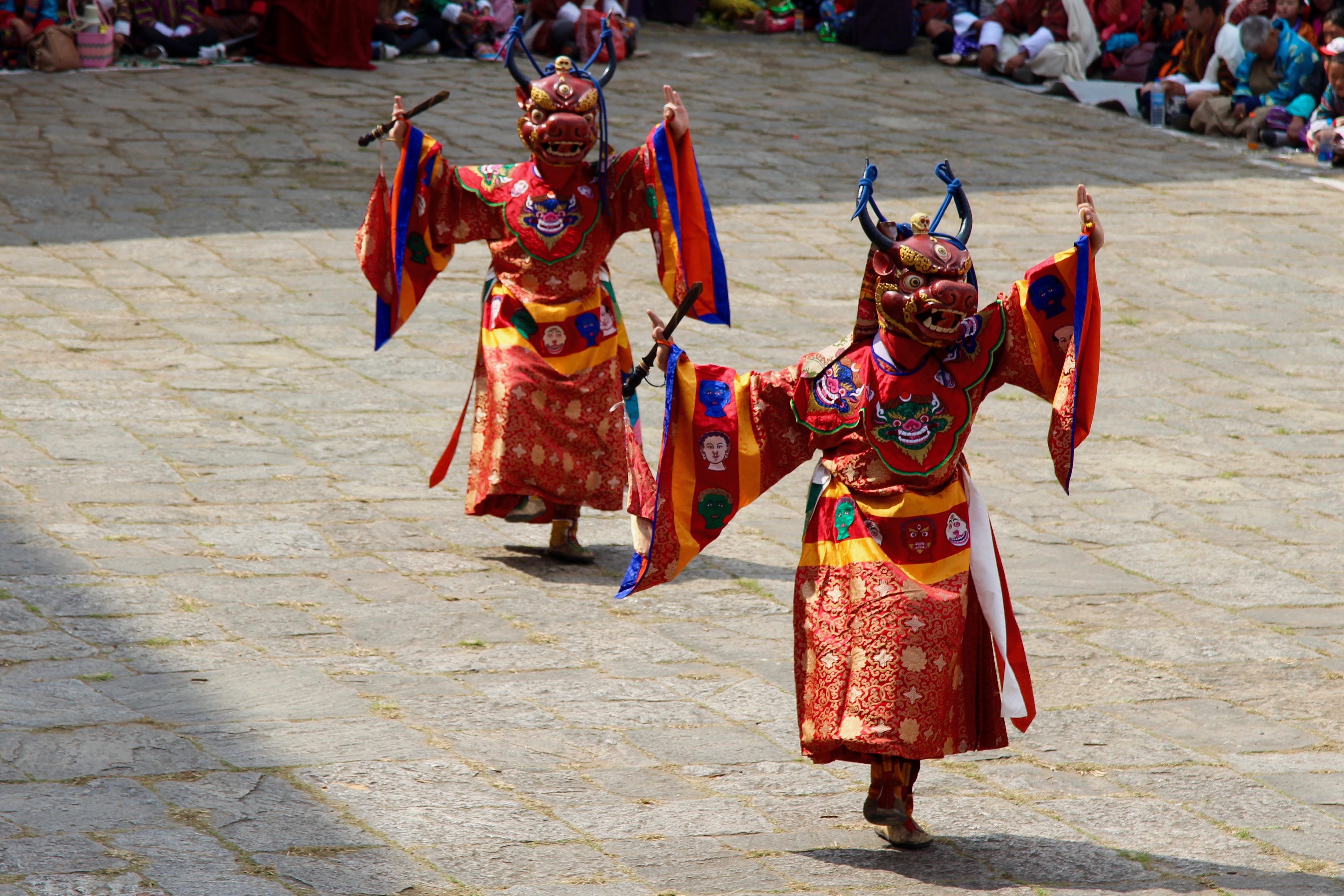
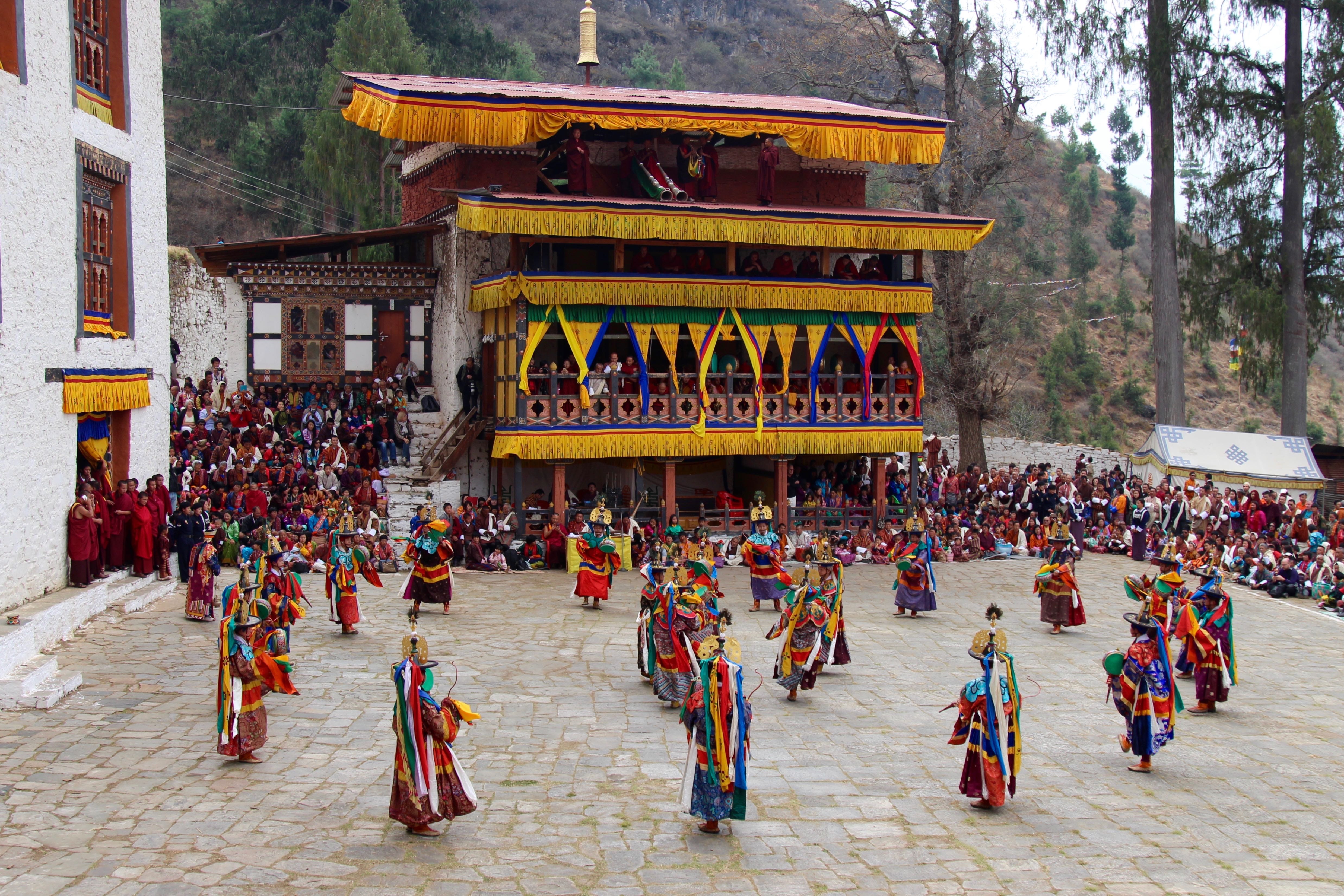
By mid-morning, the courtyard is alive. Masked dancers whirl to the beat of long horns and drums. Each movement is deliberate, passed down through generations — said to ward off evil and bless all who witness it. These aren’t performances in the Western sense. They are offerings. Each footfall a prayer. Each twirl a ritual gesture, made not for applause but for the gods.
From the sidelines, we watch the dancers as a young boy watches us — his smile wide, his curiosity pure. His father grins but doesn’t stop him. We play a silent game of peekaboo, catching him watching us, then quickly looking away. Around us, families sit in tight clusters, many tiers up the mountainside, sharing snacks and sun. There’s laughter, but it never breaks the spell. The mood hovers somewhere between festival and pilgrimage.


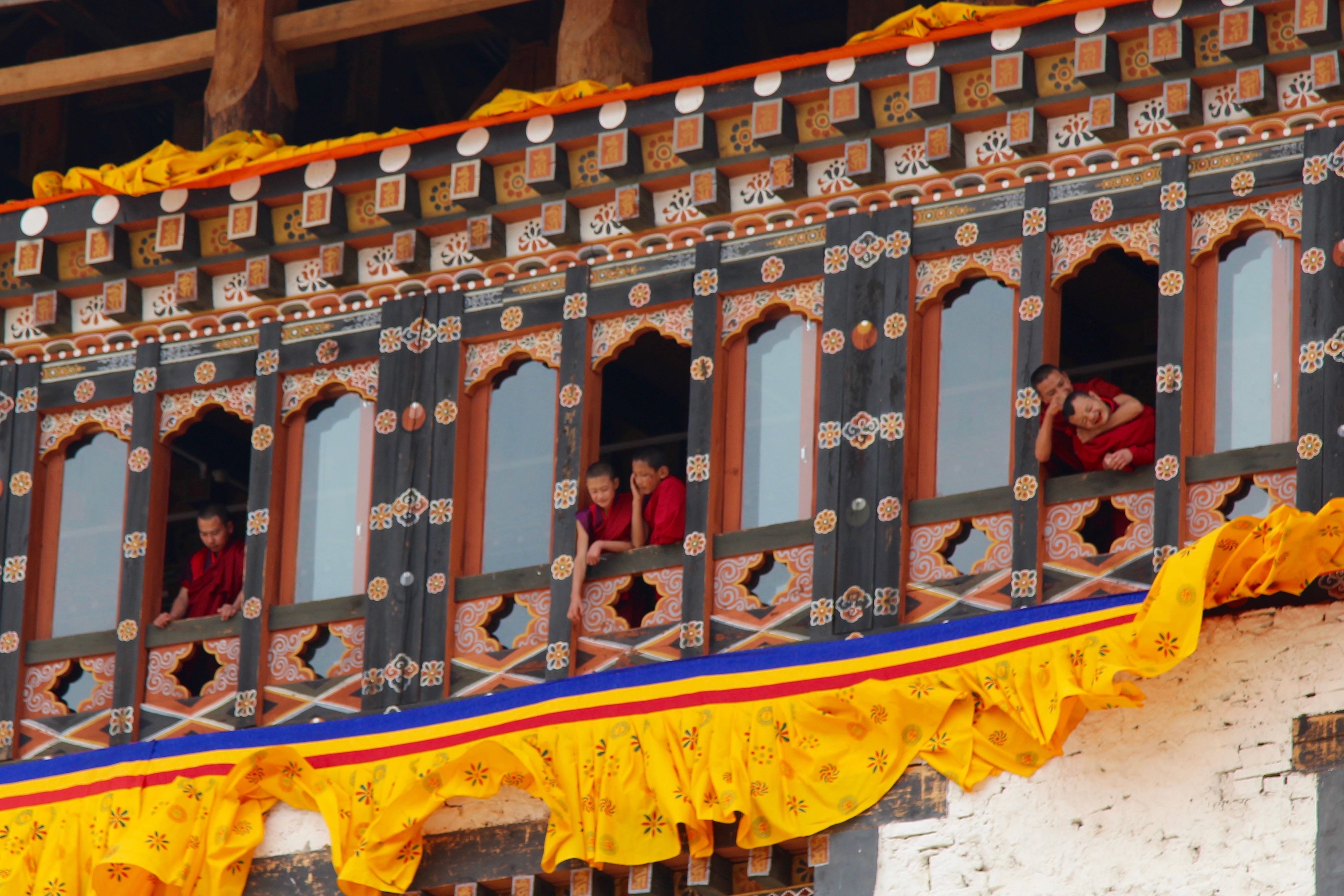
Above the courtyard, young monks lean out of the dzong’s carved windows, their faces half-lit by sun. One gives another a noogie and ducks out of view, laughing. Everyone seems to know everyone. Kindness reigns. Conversations carry a tone of intimacy, even if I can’t make out what’s being said. A group of pre-teen girls gathers near the trampled footpath along the edge of the stage; diagonally across the courtyard, a few boys glance their way — the universal choreography of young love.
Later, walking back down to town, we pass vendors selling boiled corn, plastic toys, and strings of wooden prayer beads. The sacred and the everyday, woven together without contradiction. That is Bhutan’s quiet magic.
This festival isn’t a spectacle. It’s a thread in the larger fabric of Bhutanese life — resilient, radiant, and deeply human. You don’t watch the Paro Tshechu. You join it, if only as a quiet observer at the edge of the circle, where the gods still dance and the valley remembers.
The Briefing
Bhutan charges a Sustainable Development Fee of $100 per night to every visitor, and all international tourists (except Indian, Bangladeshi, and Maldivian citizens) must book through a licensed tour operator to get a visa. The Paro Tshechu is held over five days in late March or early April — the dates follow the Bhutanese lunar calendar. Jamie Zeppa’s Beyond the Sky and the Earth is the one book I'd read before going — a memoir about teaching in a Himalayan village that turns into a love story.
Like this? Subscribe for more dispatches and photo essays from around the world.
If you’d prefer to support through photography, I also sell prints. And if you spot a photo in a story that you like and isn’t listed, just reach out. I’m happy to do special runs at no extra cost.