


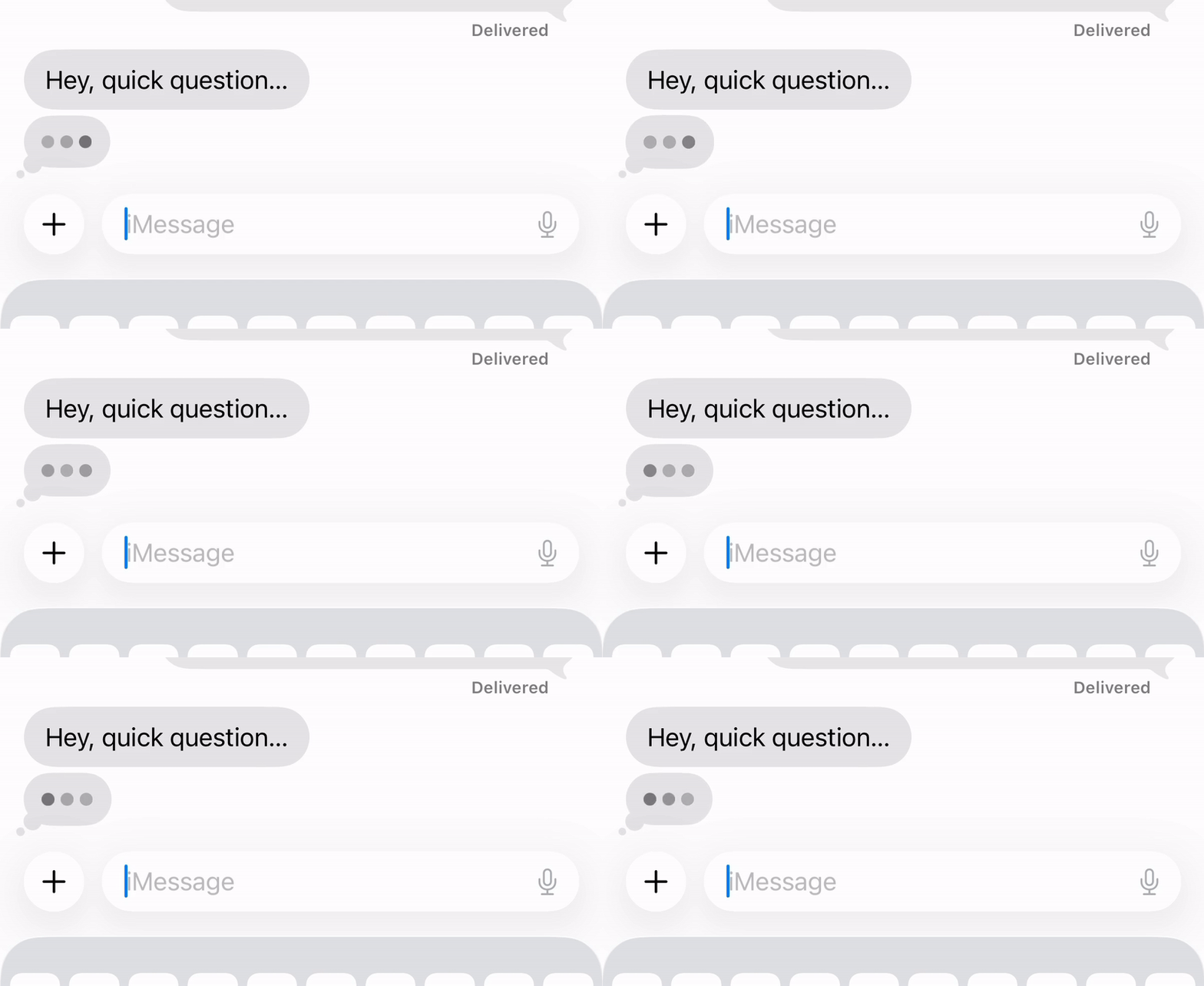
The text usually starts politely.
“Hey, quick question…”
You already don’t like where this is going. You reread it, even though there’s nothing else there yet. Your shoulders do that thing they do when you’re about to be mildly inconvenienced in a way you’re not allowed to complain about.
At first, you assume you’re supposed to be disappointed. You get ready for that. You think about how you’ll respond or about how understanding you’ll sound.
And then, almost immediately, you realize something else is happening.
You feel a little better.
You weren’t planning to cancel. But if you’re honest, you’d already thought about it. You’d dismissed the thought the way you now dismiss a lot of thoughts, by telling yourself you’d see how you felt later.
Later has a way of showing up as someone else’s message.
You type back quickly. “Totally understand.” You mean it. You also send it faster than you need to, which tells you more than you’d like. Your shoulders are no longer slumping.
Sometimes, both people feel this at the same time. This is the best version of it. The plans fade out without drama, like no one wants to draw attention to the fact that this worked out suspiciously well for everyone.
The reasons, when they finally appear, are never dramatic. A headache. Something related to a child. Something at work that technically could wait, but won’t. They are all the kind of reasons that don’t invite questions.
No one ever says, “I don’t feel like it anymore,” even though that’s usually the sentence underneath all the others.
No one ghosts. We’re adults.
When a cancellation comes, you respond the way you’re supposed to with concern and then reassurance. You send it quickly, without rereading it too closely.
Occasionally, the exchange stretches longer than it needs to. Someone offers a way out without quite offering it. “We could always reschedule if you’re tired.” The other person insists they’re fine. This triggers another reassurance, then another apology. By the end, the plans are gone, but now both people feel oddly implicated.
Group chats make this worse.
A plan can survive indefinitely in silence, but once someone types, it becomes unstable. The message is usually careful: “Just checking in, feeling a bit wiped today…” No one answers right away. Everyone rereads it, but the first response is always slower.
Someone admits they’re also tired. Someone says they can still go, but wouldn’t mind rescheduling. Someone else mentions they were already running late anyway. Each message is polite. Each one somehow feels necessary, but within minutes, the plan collapses completely.
This was expected.
No one says that out loud, but everyone knows it. The plan didn’t fail. It did exactly what plans do now.
The chat goes quiet again. No one is angry, but no one is relieved enough to admit it. If someone does type, it’s to say something generous and unnecessary, like, “We should definitely do this soon,” which everyone understands means not soon and possibly not this.
Sometimes you cancel something you actually wanted to do. Sometimes you go to something you should have canceled. Both leave you with the same faint sense that you misread the situation, though you’re never quite sure how.
The worst moment is when you cancel and then feel better immediately. This feels like evidence. Of what, you’re not sure, but it doesn’t feel flattering.
Plans now exist in a fragile state. They’re theoretical until you arrive and start removing your coat.
Sometimes the text never comes. You put on real clothes. You leave the house. You have an okay time. You come home feeling slightly heroic, as if you’ve done something that used to be normal.
Sometimes the text does come.
And sometimes you send it. 💬
If you liked this, there's more where it came from. Nothing to Declare opens a window somewhere new every week —travel essays, photography, cultural observations, and books worth reading. Once a week, sometimes more. Free to subscribe.
This is so accurate! Sometimes, even the thought of potentially cancelling gives me a brief moment of relief. But I usually hold out to see if I’ll get “the text” from the other person.
Scott, if you're ever passing through Vienna, be sure to let me know in advance, we can make firm plans to meet up and as the time gets closer we'll see who blinks first 😉