


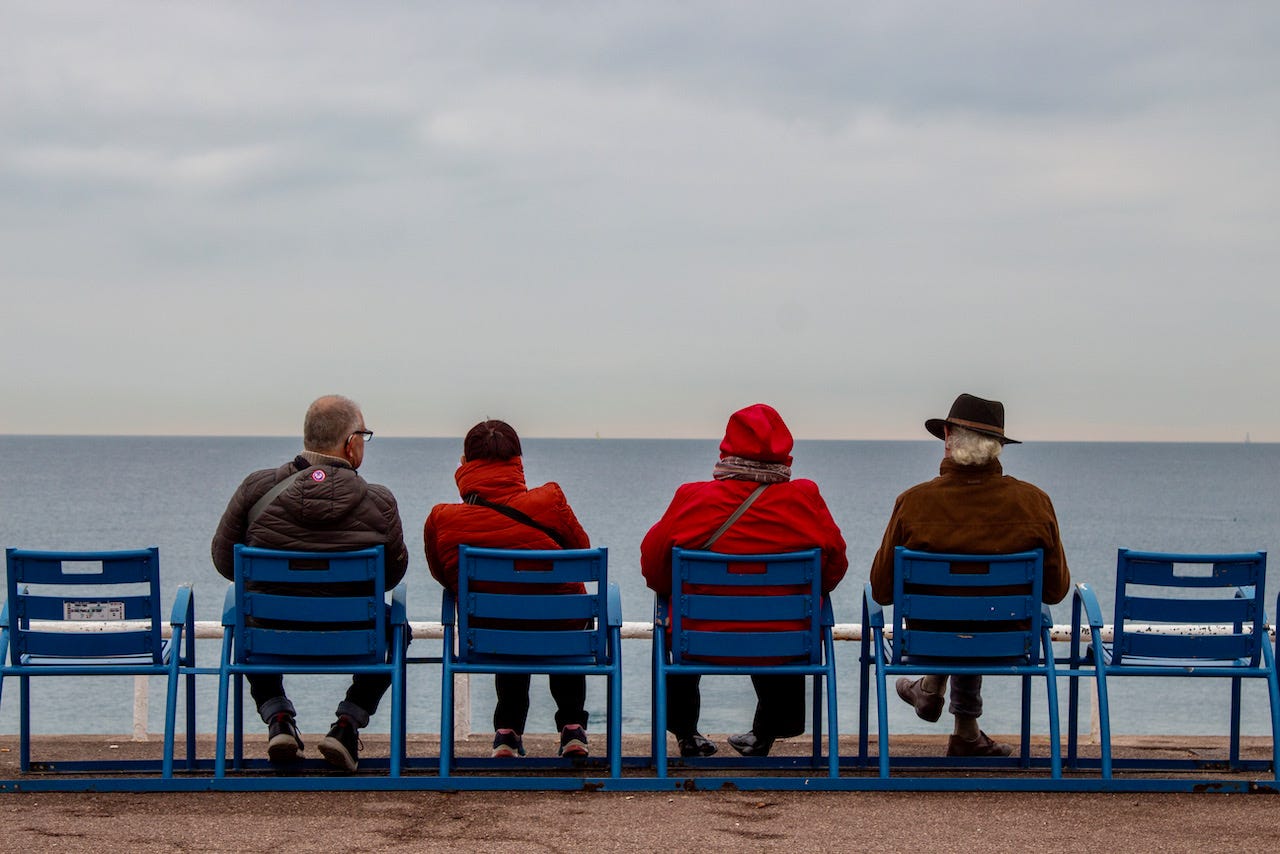
I was on a catch-up call with my uncle recently when he mentioned that he and my aunt were looking to visit Cape Town for the first time next year. Before he had finished talking, I was already running through the places I would tell him to go and the people I could connect them with. Thankfully, I caught myself before unloading all of it and said: “I’ve got a couple of places for you, so when you get around to it, reach back out.”
Recommendations from calls like this used to be the norm for figuring out where to go and what to see, along with a little bit of reading before you left. Now recommendations are everywhere all at once. Before we leave and long after we land, from Google reviews when we’re picking a place to eat to Instagram, which for me is usually in the back of an Uber or lying in bed at the hotel. Most of it is worth seeing, and often we find ourselves saying, “Well, I’m here.”
Almost everyone does this, and I can’t really blame anyone. A vacation is one of the most expensive things most of us do, between the flights and the hotel and everything else, and we get less time off than we used to, so leaving an afternoon empty through that lens can feel like a waste.
A Washington Post analysis of Bureau of Labor Statistics data found that American workers are about half as likely to be away on a full week’s vacation as they were in 19801, and Australians, who used to go overseas for more than a month at a time, were down to about three weeks by 2019.2
Booking anything ahead of an overseas trip used to mean a travel agent or an expensive international call, so most things were figured out after you landed. But in the years since the advent of the smartphone, almost everything has moved to a booking system, which means more of the trip is decided at home, whether it be dinner reservations, timed entry to museums, or even a pool lounger at hotels.
None of this would have surprised Staffan Linder, the Swedish economist who wrote The Harried Leisure Class in 1970.3 His argument was that as people got wealthier, their time was worth more, so they started treating a free afternoon like a workday, trying to squeeze everything they can out of it.
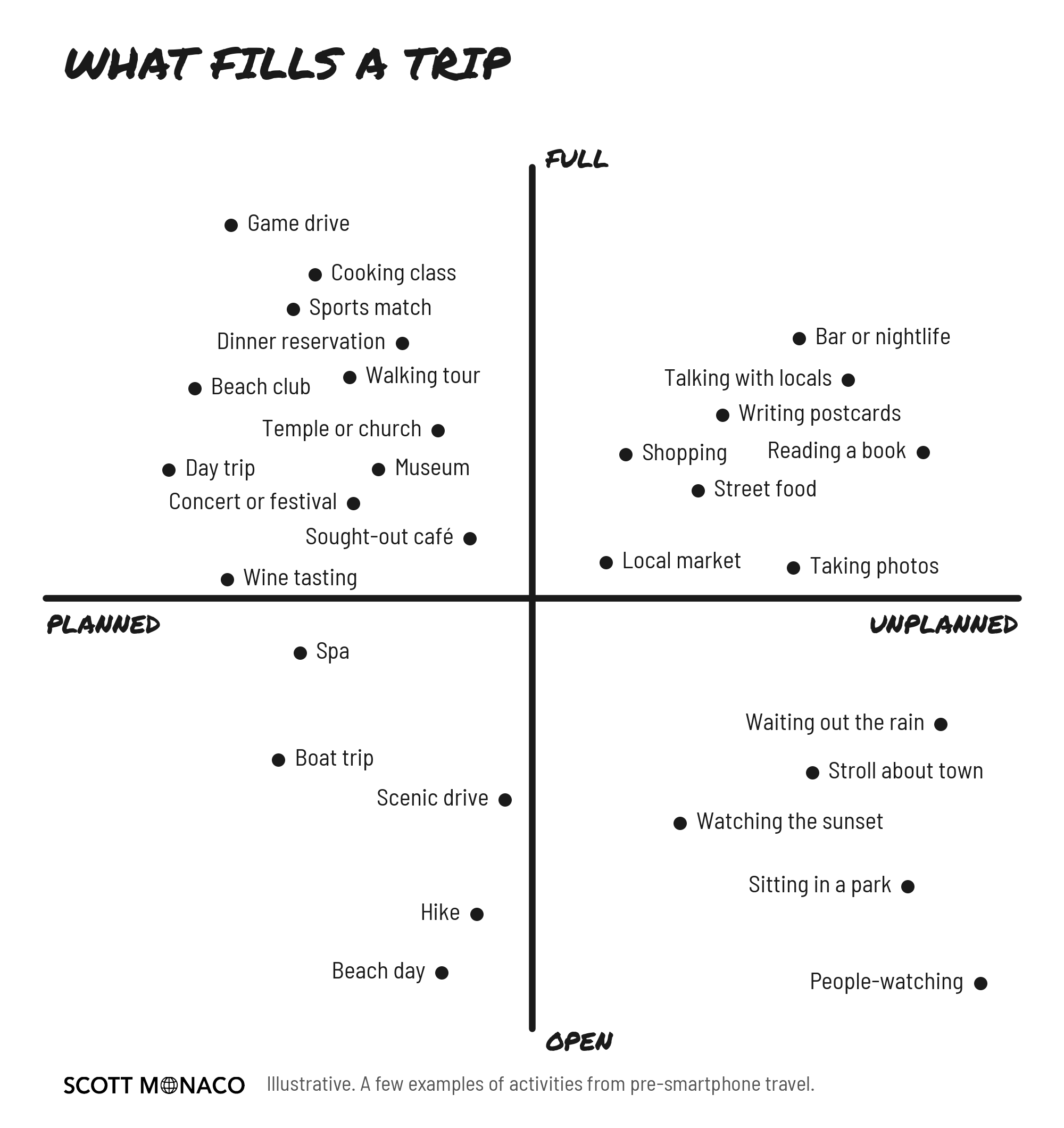
To my knowledge, no one has done a long-term study on how many activities people fit into each day of a trip over the years, so the two charts below are illustrative. The first shows the kinds of things people used to do on a trip, but nobody did all of them. You would pick a couple of them that suited where you were going and leave the rest of the time alone. Each one sits somewhere on the planned and unplanned axis and the full and open axis. A dinner reservation is planned and full, since you’re at one place doing one thing the whole time, while a beach day is planned but open, because even though you’re at the beach all day, you can read or swim, just to name two. A stroll about town, on the other hand, is similarly open but more unplanned. A good part of a trip used to happen on the right side of the chart and specifically the lower right corner.
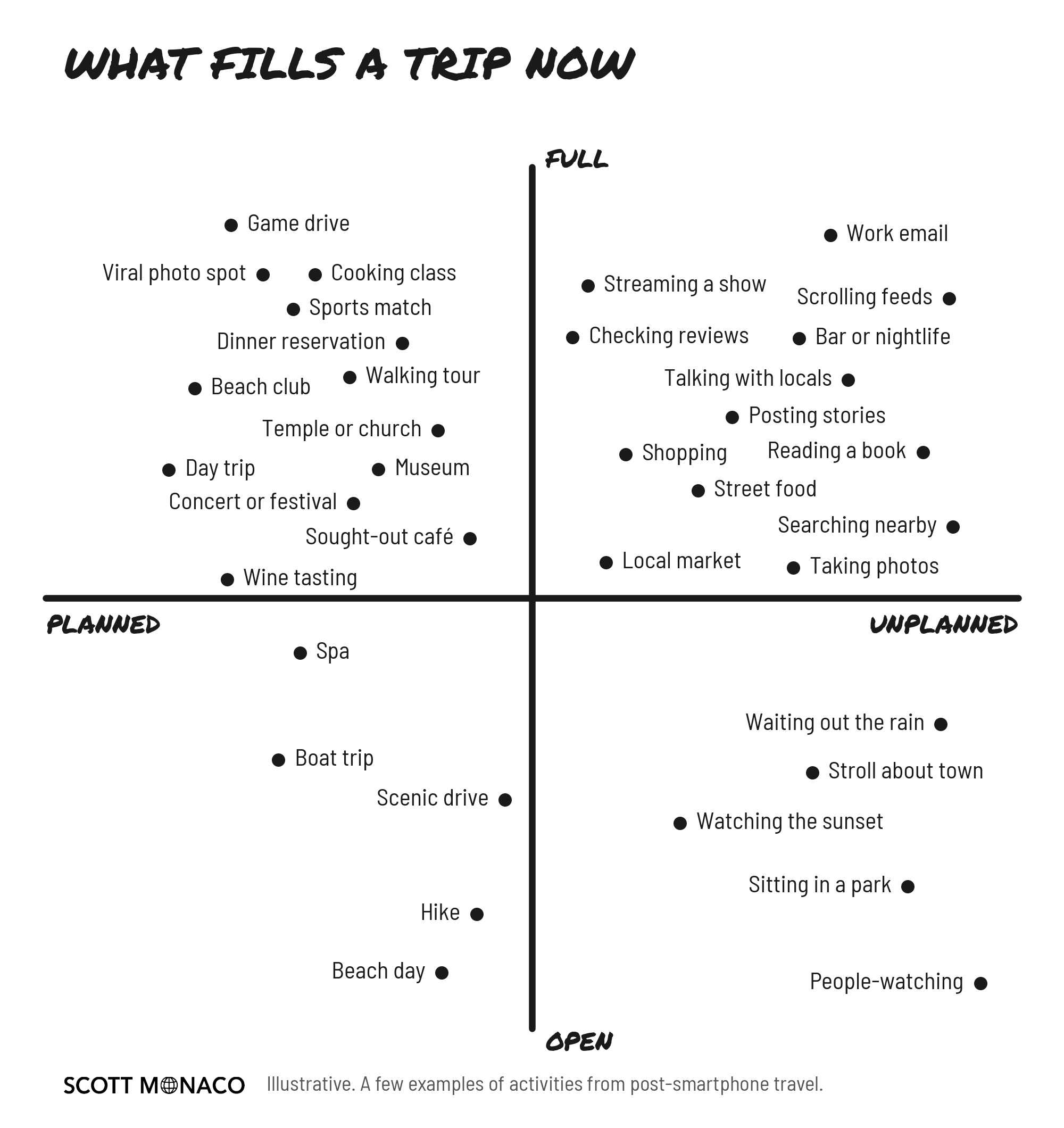
The second map shows the same choices today. Look at the top right, where work email and scrolling feeds have moved in. On the planned side, the viral photo spot is just one example of what’s been added (and often includes a sizable queue waiting for your turn). Most of what’s new is unplanned, and it creeps in on top (and nudges out) everything else. The museum and the dinner you booked before you left are still there, so is whatever you added from the feeds, reviews, and maps. Nothing in the bottom half has gone away, there’s just less time left for it.
When there was less competing for your time, like in the first map, you picked a few things and left gaps around them, so a trip had its highs and lows, and you’d usually rest up after a big day. Now, with all of that stacking up, we often keep doing things until the schedule is full. Some of what you do is naturally going to have more of an impact than the rest, but when you’re going from place to place, it’s harder to tell which things really stand out, and you end up with the flat, packed line in the graphic below. If you slow down the pace, or actively choose to do fewer things and be deliberate about it, you’ll find more natural peaks. And those peaks might not even be the things you planned in advance, since some of what you booked will turn out to be a letdown. Some of the best moments are the everyday ones you’d never find if everything was planned before you got there.
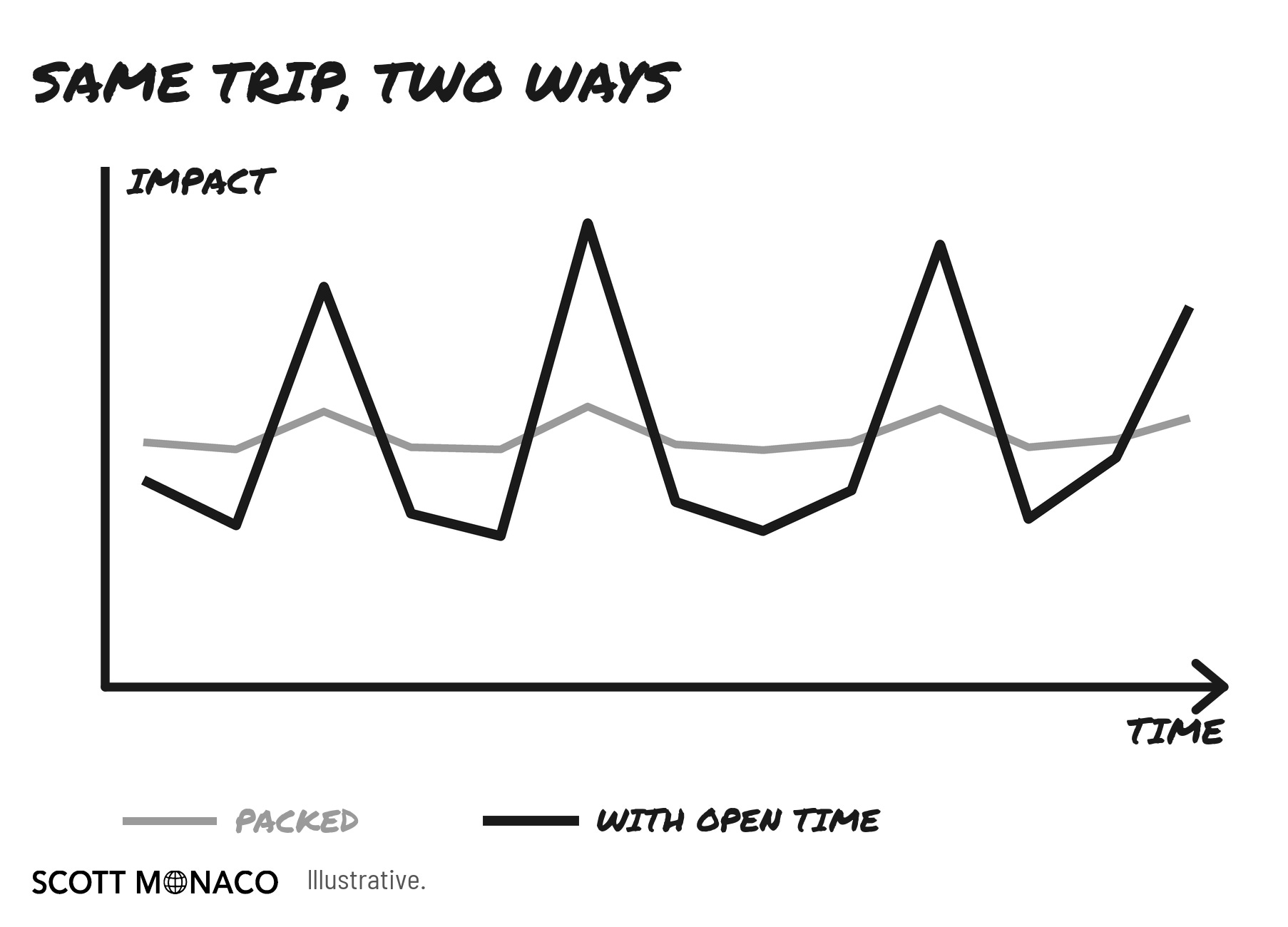
I make this mistake too despite my knowing better. In fact, I did exactly this in Athens last year. I stayed in Kolonaki, near Lycabettus Hill, and the Acropolis and the National Archaeological Museum were on my list to visit. But then I realized the Benaki Museum and the Museum of Cycladic Art were both nearby, so I went to those too. All this is to say I spent a lot of that trip staring into the faces of sculptures, and by the end they had all blended into each other so that I couldn’t tell you what stood out in one museum versus another. None of them are bad museums, and looking back, I would have been far better served skipping a few rooms of clay vessels. My wife, in contrast, didn’t try to do half the things I did, and when we reminisce about that trip, based on what she remembers and how fondly she talks about places like The Naxos Apothecary, it’s clear her trip looked a lot more like the line with open time.
When I looked back at all the trips I’ve taken, of which there have been many, and started looking at other people’s trips as well, I came up with what I think is the formula for this. I call it half the days, plus two. You take the number of days in your trip, divide it by two, add two, and round up, and that’s the most things you should plan. So a long weekend of three days means you plan at most four things, and a week gets six. A short trip can take a faster pace, and where most people go wrong is keeping that long-weekend pace for a week or two.

That covers anything you would really want to see or might need to book ahead of time, like dinner at the one restaurant you really want to go to, a museum, or a two-hour walking tour. Everything else stays unplanned, and on a trip where you’ve only planned a handful of things, that is what most of your days are made of. That time can go anywhere on the chart, like a local market or a stroll around town, though a day can fill up with unplanned things too. If you travel on guided tours or trains, where you’re not the one setting the itinerary, it’s worth picking an operator that understands pacing. I recently did a two-week guided trip in Africa, and even though I wasn’t in charge of the itinerary, the pacing on it was excellent.
Another benefit of a trip designed like this is that it expands the places worth considering. When people are choosing between a trip to Italy and a trip to Slovenia, most tend to pick Italy, in part because of a perception that there is so much more to see and do there. But if you’re planning around seeing a handful of things and spending the rest of the time enjoying where you are and taking in the culture, how much “there is to do” in a place matters a lot less, since you were never going to do all of it in either country.
When my uncle does reach back out, the list I send him will be a lot shorter than the one I was running through on that call, and it will leave most of his days in Cape Town open. He’ll still have a few things to look forward to and more room around them, and I’m excited to hear what stands out.
If you liked this, there’s more where it came from. Scott Monaco opens a window somewhere new every week — travel essays, photography, cultural observations, and books worth reading. Once a week, sometimes more. Free to subscribe.
https://www.washingtonpost.com/business/2023/02/10/disappearing-vacation-days/
https://roymorgan.com/findings/australians-holiday-overseas-for-a-shorter-time
https://www.nrpa.org/globalassets/journals/jlr/2003/volume-35/jlr-volume-35-number-4-pp-478-480.pdf
It's a good idea to have a few places 'up your sleeve' just in case you do not find enough surprises or unexpected experiences when you arrive at you holiday destination.
It helps, in a way, if you plan something that is by nature uncertain, because it depends on weather, or some other factor beyond your control. That way, you are forced to leave open time that might have to be repurposed in some way, on the fly.