


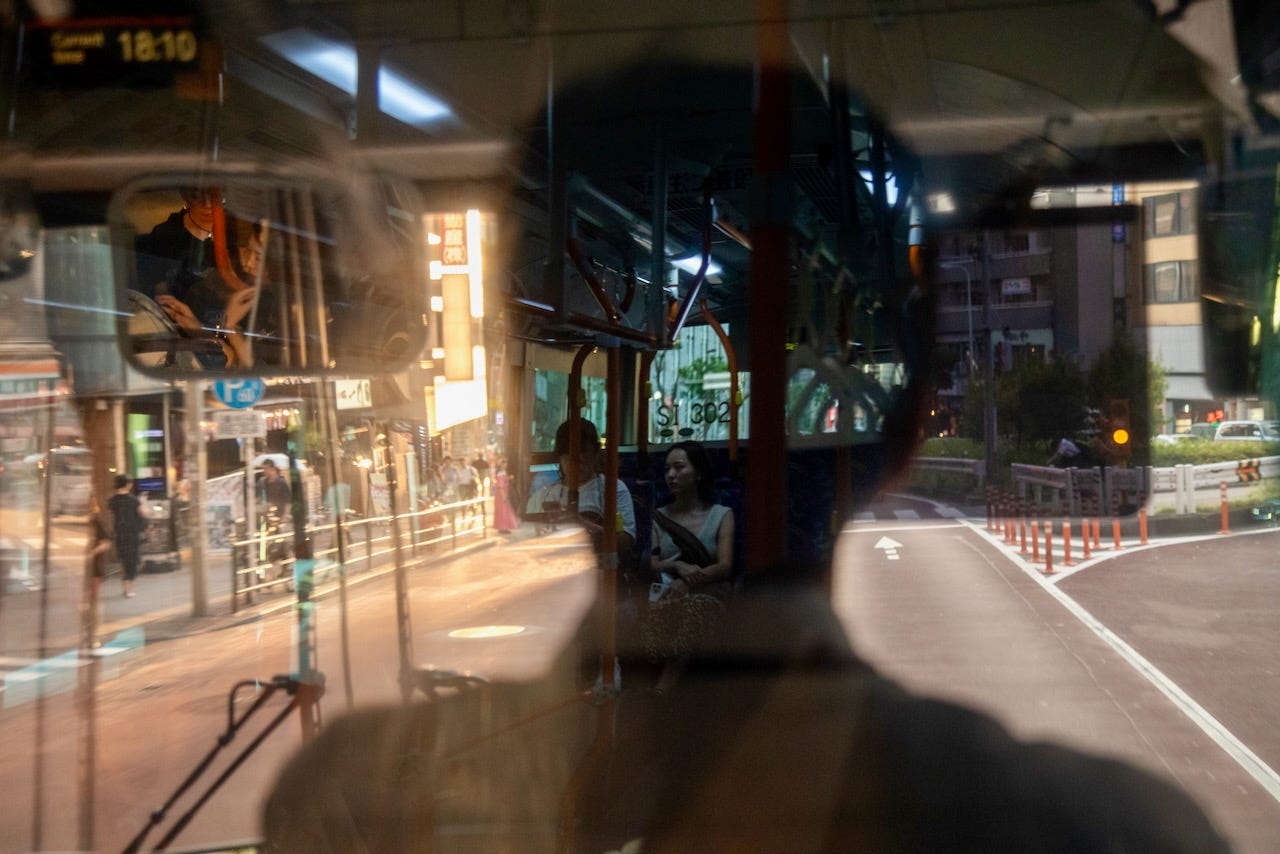
After a week of conversations with destinations and operators about their goals, challenges, and hopes for the future of travel, I started thinking about how we actually move through the world.
Travel isn’t just about where you go. It’s how you see, listen, and behave when you get there.
Most travelers chase visibility. They document, post, announce, and compare. But the most meaningful moments usually happen when you do the opposite —when you, however briefly, assimilate into place completely.
Every destination has two versions: the one that greets everyone, and the one that opens slowly to those who linger. The first is easy to find —it’s made to welcome you. The second takes patience, quiet, and a willingness to be changed by what you find there.
The rest follows.
What You Signal
What you bring out into the world decides which version of it you’ll be invited into. Most people think of packing as logistics, but really it’s self-presentation, the first signal of how you expect to be treated.
Once, waiting for a delayed flight from a European capital to D.C., a woman sat beside me. Within thirty seconds, I knew exactly who she was: a top lawyer at a major American tech company. Her business card sat in the clear pocket of her laptop case, company name and contact details in plain view. She hadn’t said a word, yet she’d told me everything.
We all do this, in smaller ways. The brand of our luggage, the logos on our clothes (we’ll come back to this later), even how we stand in a crowd, all of it tells a story before we’ve earned the right to speak. Some of those signals invite curiosity, but others invite risk.
What you carry determines how visible you become. Broadcast too much, and you draw the kind of attention you can’t control. Also, the more you broadcast that you are a tourist, the more likely you are to be treated like one. Travel light, in things, in assumptions, in self-importance, and you will always have a more impactful trip.
(And please, don’t leave your personal information on display. Someone writing about you is the least of your or your luggage’s concern.)
What You Notice
Before I cross a street or speak to anyone in a new city, I stop and watch. Who moves quickly? Who lingers? Who’s watching everyone else? The first sixty seconds in silence tell you what’s normal here and what isn’t.
In intelligence training, thresholds are treated as danger zones. A doorway is where people pause, bunch up, and attention narrows. You never stand in a threshold. You read it, then move through. Thresholds are everywhere.
For example, at an airport, when you clear customs and reach the sliding doors, don’t step straight out. Pause inside and look. Who’s crowding the exit, pushing for eye contact and fares? Who’s hanging back, calm, waiting for people who clearly know them?
Then, walk past the noise like you already know where you’re going, and suddenly you have better options. The further you get from the doorway, the more you find the second version of a place — the drivers who aren’t hustling, the people who treat you like a person instead of a mark.
Observation isn’t suspicion. It’s an act of patience and gives a place the time to reveal what it is really like.
How You Move
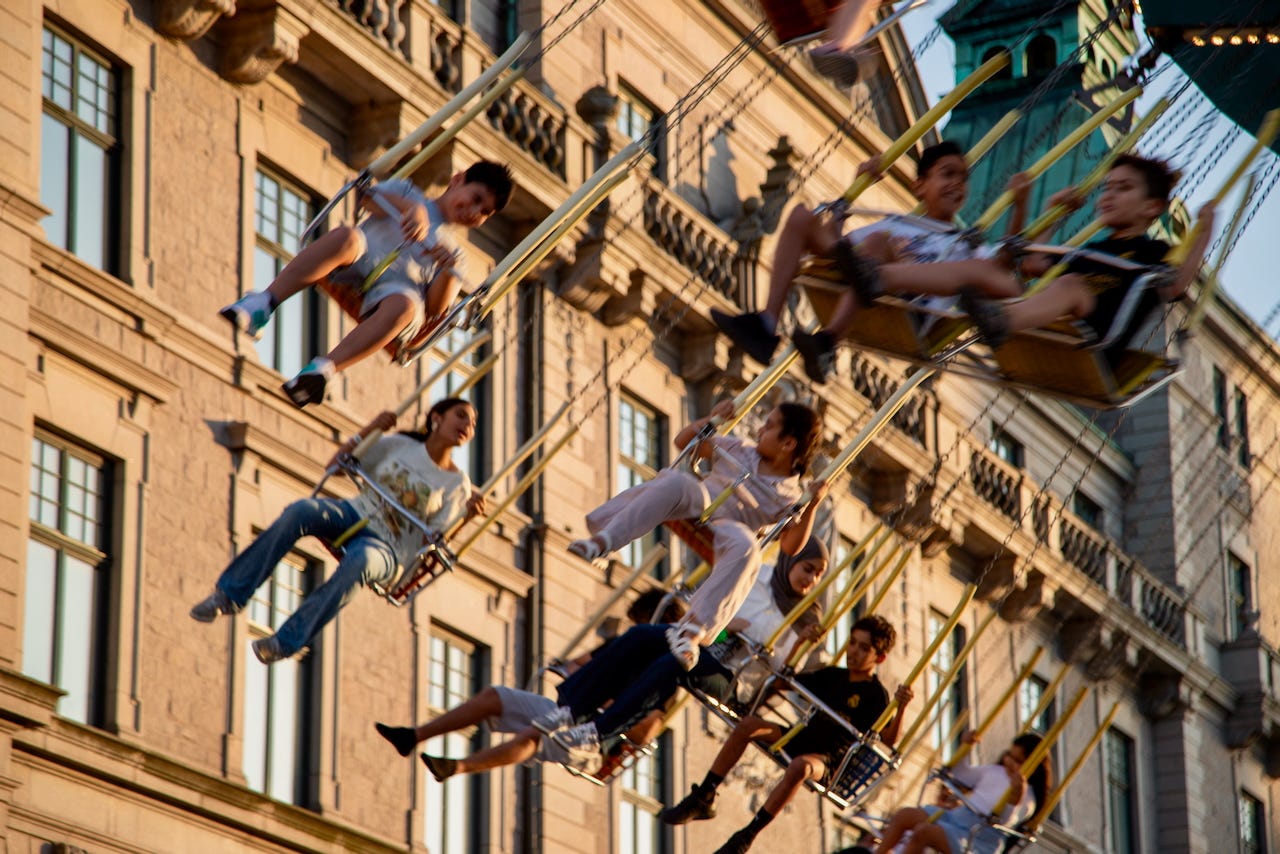
Every city has a current. You can fight it, or you can learn to move with it.
In Sweden, people walk close enough to step on your heels. They’ll approach quickly and talk at full volume behind you, and it’s not an impending confrontation. You’re just part of the flow. In some places, that flow is brisk and precise, while in others, it meanders and stalls. The trick is to feel it before you join it.
If you fight the current, stopping suddenly, walking against the grain, or blocking a narrow sidewalk, you’ll always feel out of place. Every subway station and market has its own pulse: match it, and the city starts to make room for you.
This is where your phone betrays you most. When you stop to check a map or take another photo, you lose the rhythm that connects you to what’s around you. Know your direction before you step out. And if you miss your turn once or twice, let it go. Some of the best places I’ve found came from wrong turns made with confidence.
Travel flow isn’t about efficiency, it’s about belonging.
How You Blend
I pack light, but not just for convenience. Even at six feet tall, I can travel indefinitely with what fits in a carry-on: navy, tan, olive, white. No logos, no slogans, no signals.
Every place has a palette, and you can learn it before you go. The goal isn’t mimicry but neutrality. People notice what doesn’t fit, and once you’re noticed, you’re read. In many places, blending in has less to do with color and more to do with culture: whether women cover their shoulders, whether men wear shorts only at the beach, or whether that baseball cap will make you stand out (almost always yes). Learning them is how you show respect before you say a word.
In most places, standing out isn’t about race or nationality. You can be the only foreigner in sight and still blend perfectly if you move without demanding attention. There have almost certainly been other foreigners before you, some who passed through, others who stayed long enough to belong.
Blending in isn’t disguise. It’s quiet respect, a way of saying, I’m here to learn, not to lead. It also opens doors. Walk down a street dressed for attention, and you’ll get the version of the city built for tourists. Walk down the same street looking ordinary, and it starts showing you its unguarded self.
A capsule wardrobe helps. Choose pieces that layer and adapt while not advertising. The fewer signals you send, the more space you leave for a place to speak.
How You Speak
Volume is a giveaway. Americans announce themselves long before they mean to: too loud, too bright, too certain they’re blending in. Even the words give you away. Awesome. No worries. You know? They’re tells. Little flags that say, I’m not from here.
In field training, one of the first things they teach is to listen before you speak. Lower your voice by twenty percent. Slow your rhythm. Strip away the filler. All of that is actually just performance.
I began doing this subconsciously in countries where I couldn’t keep up with the language, and soon realized that quiet could be its own kind of fluency. But fluency changes shape. In Spain, Mexico, or Italy, it isn’t quiet at all, it’s knowing when to join the rhythm and when to pause.
And the smile, that’s another tell. Americans smile constantly, to prove ease, to buy comfort. But in many cultures, smiling without reason reads as nervousness or insincerity. Calm is what earns trust, not cheer.
Every culture has its own verbal temperature. When you meet it where it is, the true version of the place appears.
What You Leave Behind
Every traveler leaves a trail. Part of it’s physical: plastic bottles, food waste, receipts. Part of it’s invisible: noise, impatience, and a sense that the world exists to serve you.
You have already seen this. The coffee cup resting on a temple step, the footprints where shoes should’ve been removed, or a voice raised in English. No one means harm, but each act chips away at the respect a place deserves.
The more you travel, the more you realize a place isn’t a backdrop for your experience. It’s someone’s home. To treat it that way changes everything.
Bring a reusable bottle. Bring what you need, not what you’ll waste. Notice how your presence changes when the exchange rate is favorable to you. Generosity and restraint are both forms of respect.
If you can leave a place as intact as you found it, and its people still glad you came, you’ve done it right.
How You Observe
Observation isn’t just about awareness. It’s also a kind of respect. The world opens when you stop looking for what’s remarkable and start noticing what’s routine.
Every culture teaches you its values through small cues: how loudly people laugh, who steps aside on the sidewalk, or even whether a shopkeeper greets the next customer or finishes the conversation they’re already having. Watch how people treat service staff, who gets thanked and who doesn’t. That tells you more about a place than any guidebook could.
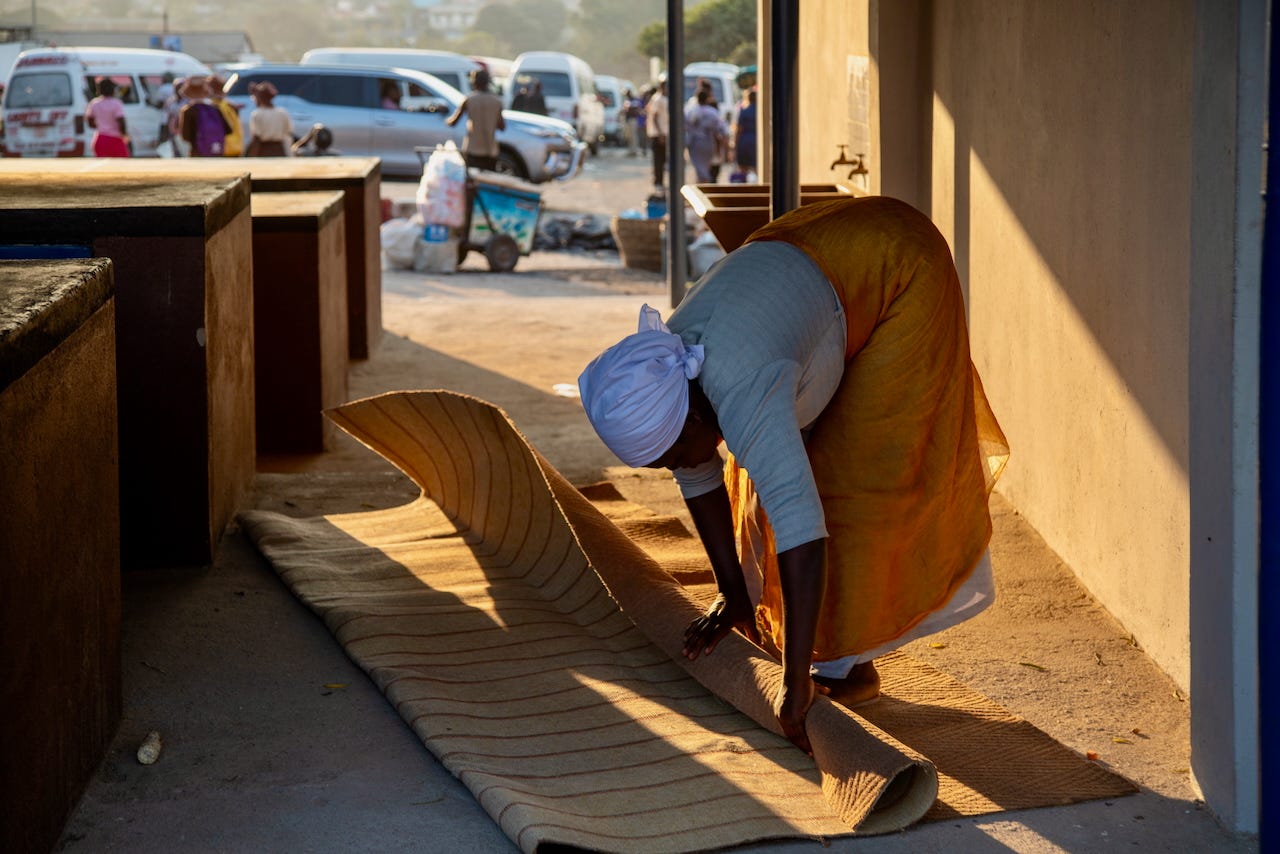
Then pay attention to who doesn’t get seen at all: the workers who reopen a place each morning, the street sweepers before dawn, or the driver waiting outside while everyone else eats. Travel runs on invisible labor, and the more you notice it, the more you understand what a place gives up to host you.
If you only look at what’s designed to impress you, you’ll see the version of a place built for visitors. When you start seeing who sustains it, you begin to glimpse the version it saves for those who wait.
How You Vary
Routine makes travel predictable. Variation makes it human, and sometimes, it makes it safe.
When I stay in a new neighborhood, I change my route each day. I leave left one morning, right the next. Every detour teaches you something small: who’s up early, which corners stay quiet, what kind of life unfolds when you’re not repeating yourself.
For women especially, unpredictability isn’t fear; it’s agency. Routine draws attention while variation diffuses it. When you walk a different street or shift your timing, you move with purpose instead of pattern. It tells the world you’re part of the flow, not just passing through it.
And variation is also a contribution. When you change your route, you change who benefits from your presence: a new café earns your breakfast, a quieter market sees your curiosity, or a local shop gets your business.
Tourism thrives when movement spreads. The rhythm of discovery, not repetition, is what sustains it. If you move differently from others, you help a place and yourself stay alive in more than one direction.
What You Say
Words travel faster than people. When you arrive somewhere new, lead with curiosity. Ask before you tell; they know the place better than you, after all. When someone asks what you do or where you’re staying, answer simply. “Writer.” “Over near the park.” The less you explain, the more freedom you keep. Most people mean no harm, but not every question needs an answer. Field officers call it managing your profile, but we travelers might call it boundaries.
But words do more than protect. Every exchange, however brief, adds to the story a place tells about itself. A traveler who speaks with curiosity instead of comparison invites locals to share pride rather than patience. A thoughtless comment about prices or politics lingers more than you’d ever expect, while a thoughtful one about a culture or their work multiplies goodwill.
Every traveler is a bridge, full stop. The tone you set ripples outward shaping not only how others see you, but how a place sees travelers like you. So tell smaller stories. Ask more than you answer. The more room you leave in the conversation, the more a destination will want to keep speaking to you.
How You React
Everything goes wrong eventually. Weather shifts, luggage disappears, trains stop running. What matters isn’t control, it’s composure. People mirror what you project, and the calmer you stay, the more the world finds its balance again.
When things falter, a traveler who stays grounded becomes an anchor and the guest everyone wants to help. Locals remember grace longer than grievance. A delayed flight can turn into a shared meal. A missed reservation can lead to a better conversation. Panic shrinks a place; patience opens it. Tourism runs on these small redirections, the moments when steadiness turns strangers into hosts.
The best travelers aren’t fearless, they’re steady. And it’s often in those broken plans that the second version of a place, the one that saves itself for those who wait, finally appears. 👣
If you liked this, there's more where it came from. Nothing to Declare opens a window somewhere new every week —travel essays, photography, cultural observations, and books worth reading. Once a week, sometimes more. Free to subscribe.
How beautiful, Scott — this feels like required reading for anyone who wants to belong in a place rather than consume it. I kept nodding along, especially at that bit about the “two versions” of every destination. Slow travel has taught me the same lesson: the real magic shows up only after you’ve stopped announcing yourself.
Such a thoughtful, generous piece. Thank you for articulating what so many of us feel but rarely put into words. 💛 Kelly
Monaco’s essay belongs to that rare lineage of travel writing that feels like instruction in seeing rather than tourism — part Bruce Chatwin, part Pico Iyer, with a dash of fieldcraft. He writes as if the truest passport is temperament. His prose is spare but immersive, and his ethics are unsentimental: “Blending in isn’t disguise. It’s quiet respect.”
In an age when mobility often masquerades as mastery, Monaco’s voice restores the sacred art of belonging without owning. His traveler is not the influencer with miles logged but the listener who leaves no digital footprint, who can cross a border “with nothing to declare” because they’ve learned how to let the world declare itself.
It’s a luminous, quietly radical reminder that travel isn’t about conquering novelty — it’s about earning invisibility through grace, observation, and restraint.