


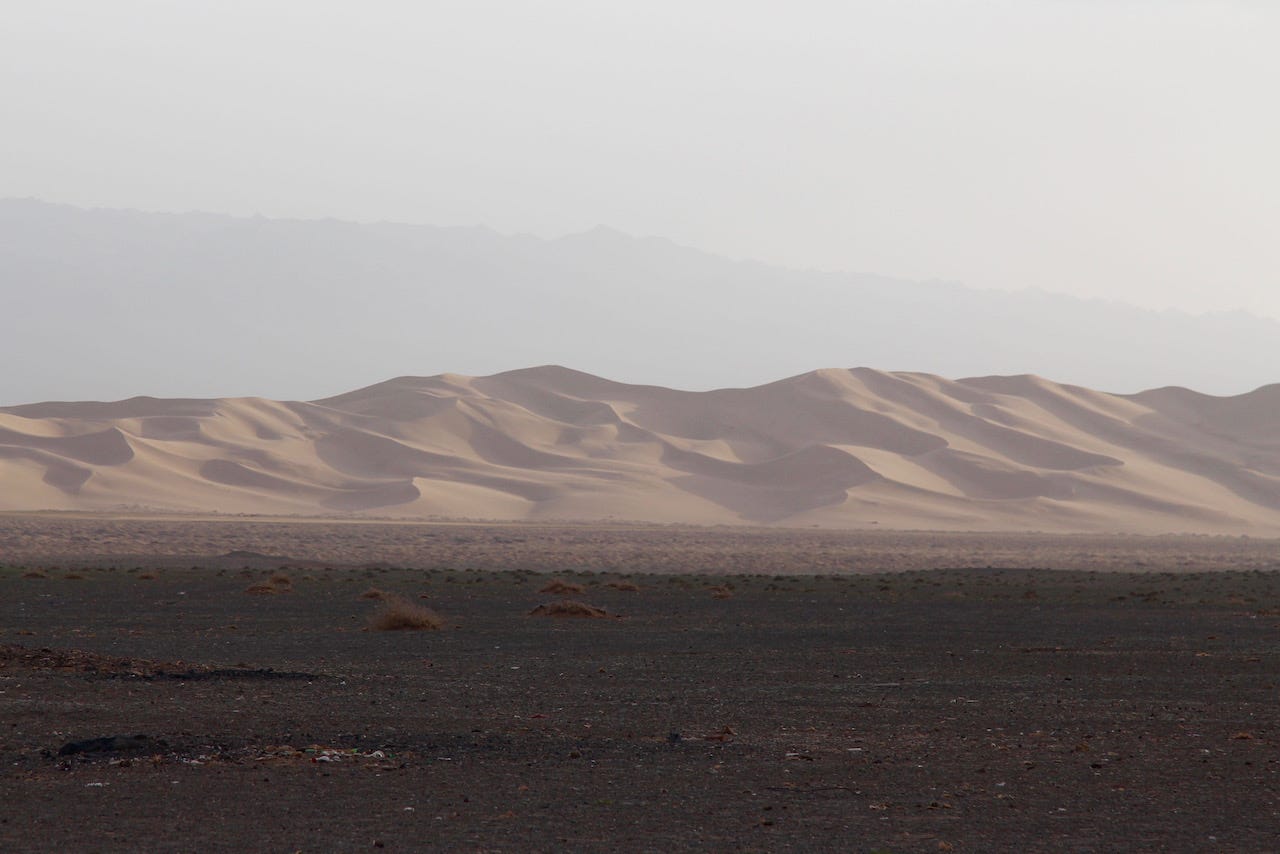
There are places that change your sense of scale. Mongolia did that to me.
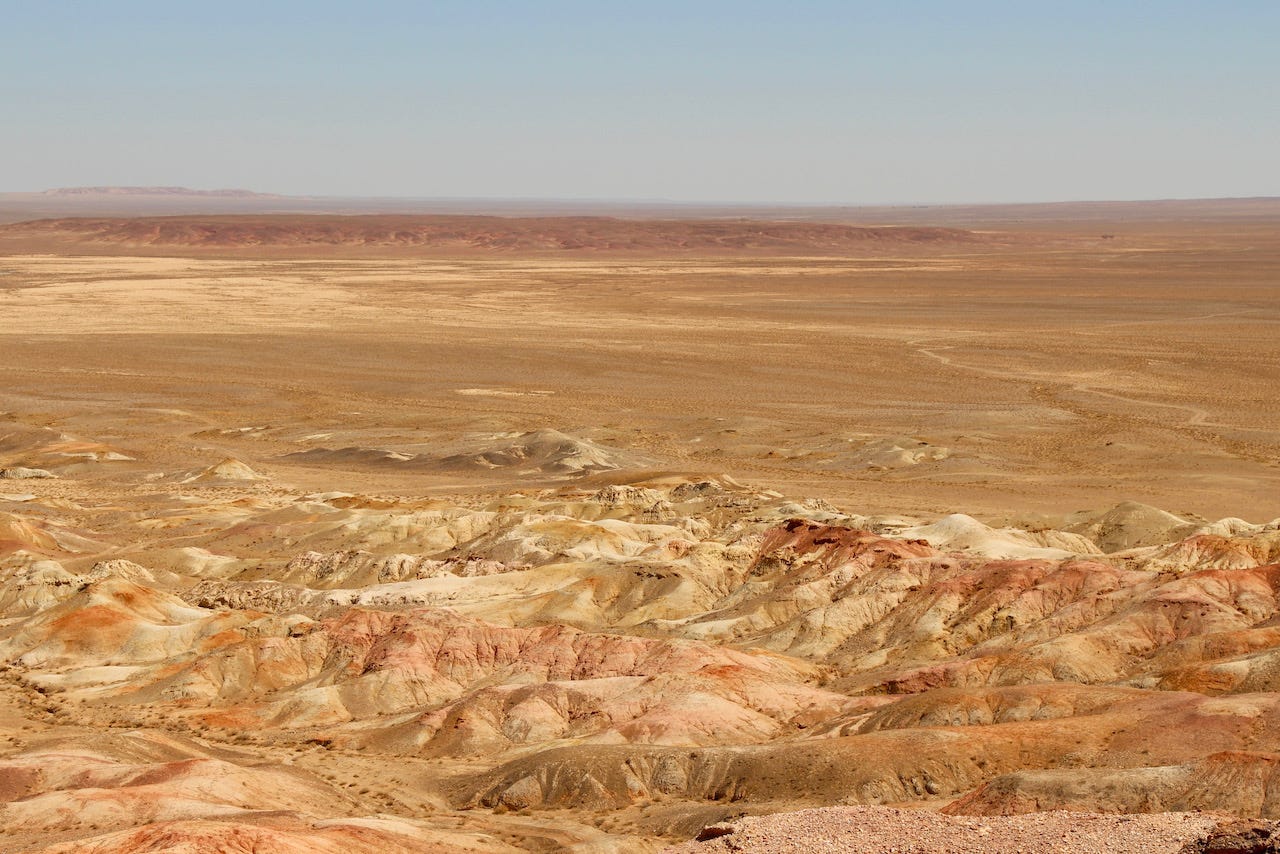
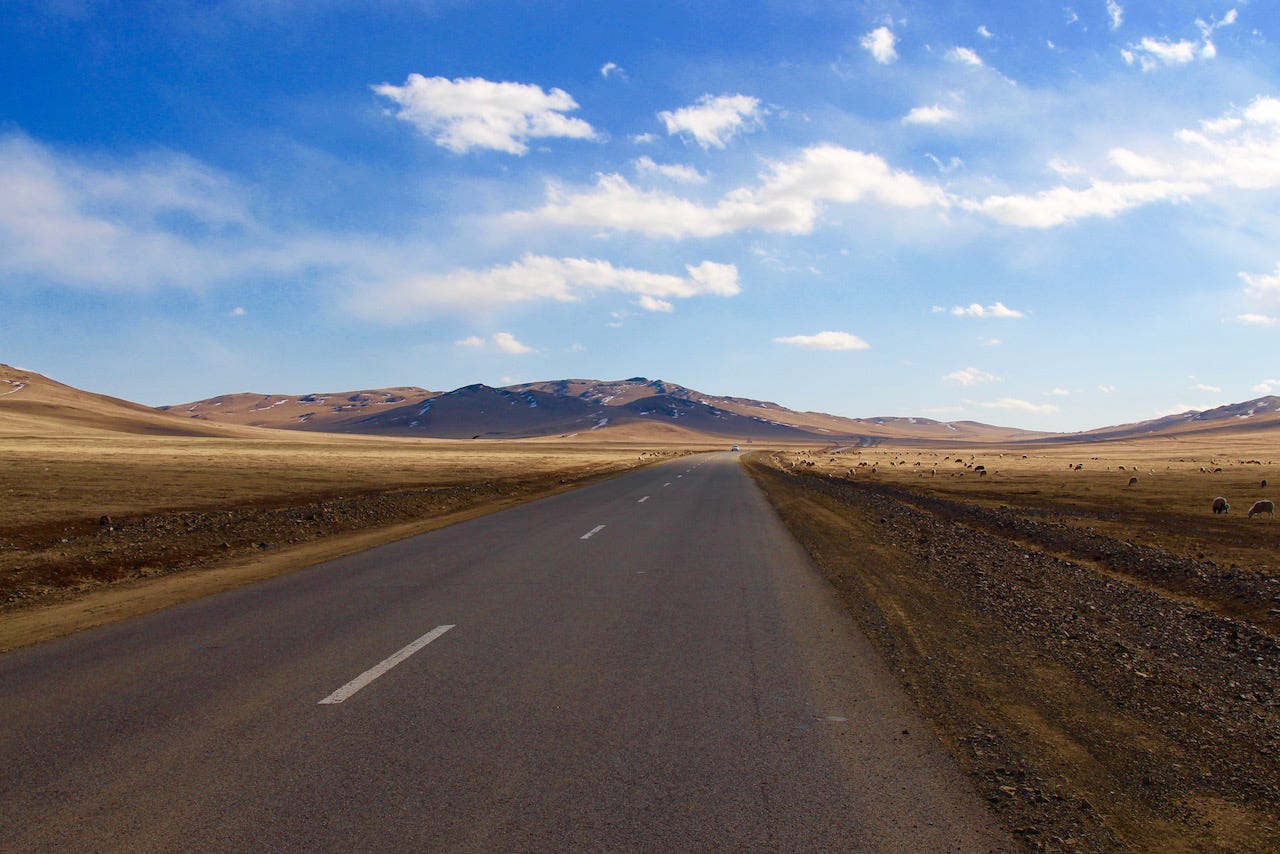
We arrived in the south, near Dalanzadgad, and before long, the road gave out, the pavement disappeared, and the open steppe began. For the next seven days, we drove across southern and western Mongolia —a region about the size of Texas— without seeing a single sign. Sometimes there was a dirt path or tire tracks in the sand. Mostly, there was nothing. Just land and sky.
And yet our driver knew exactly where we were going.
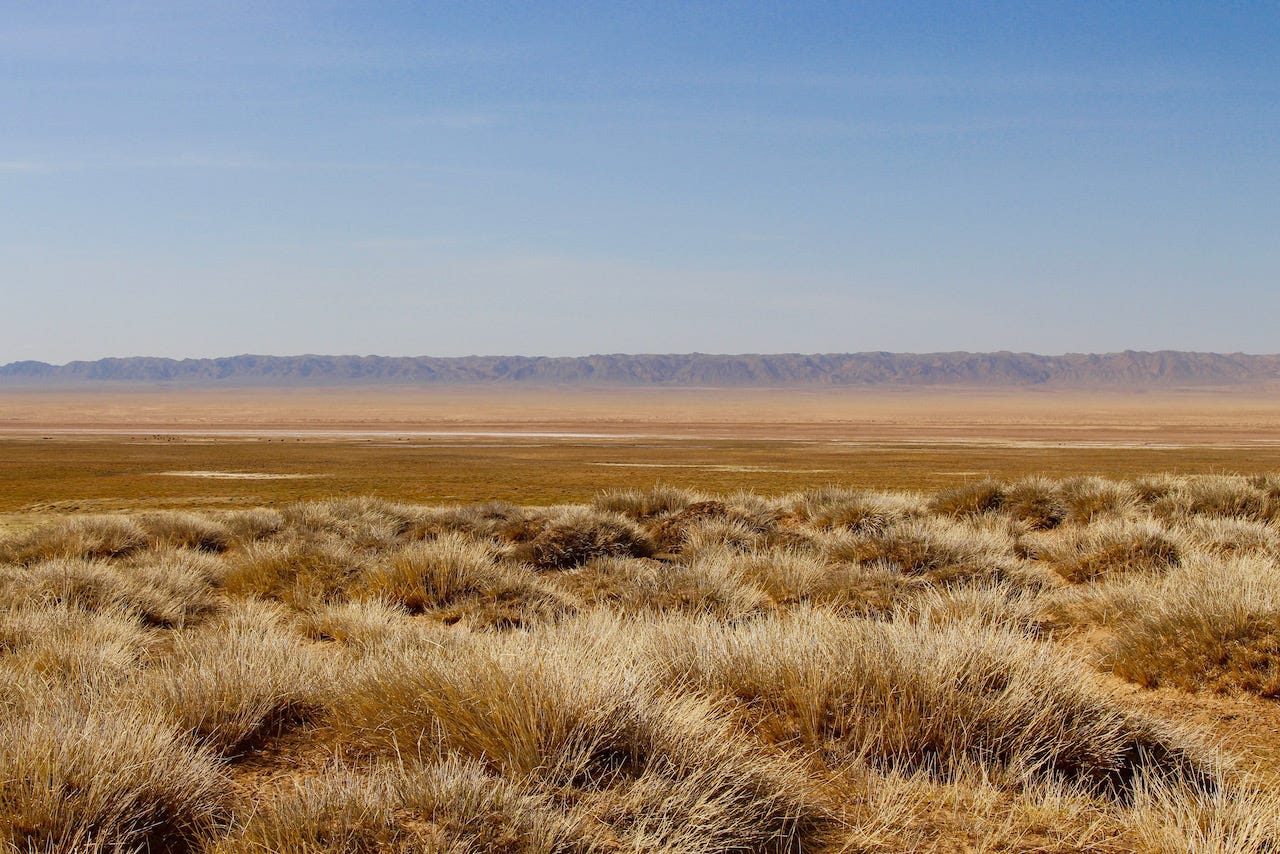
He didn’t use GPS. I never saw him check a map. His phone was the kind of burner model you can’t buy anymore. But he read the landscape like it had always been speaking to him. Tufts of grass, the angle of a ridge, a shift in light. The kinds of cues a foreigner wouldn’t even notice, let alone understand. I kept looking out the window thinking, “How does he know?” But he always did.
It made me think about how much of the world is readable only to the people who live it.
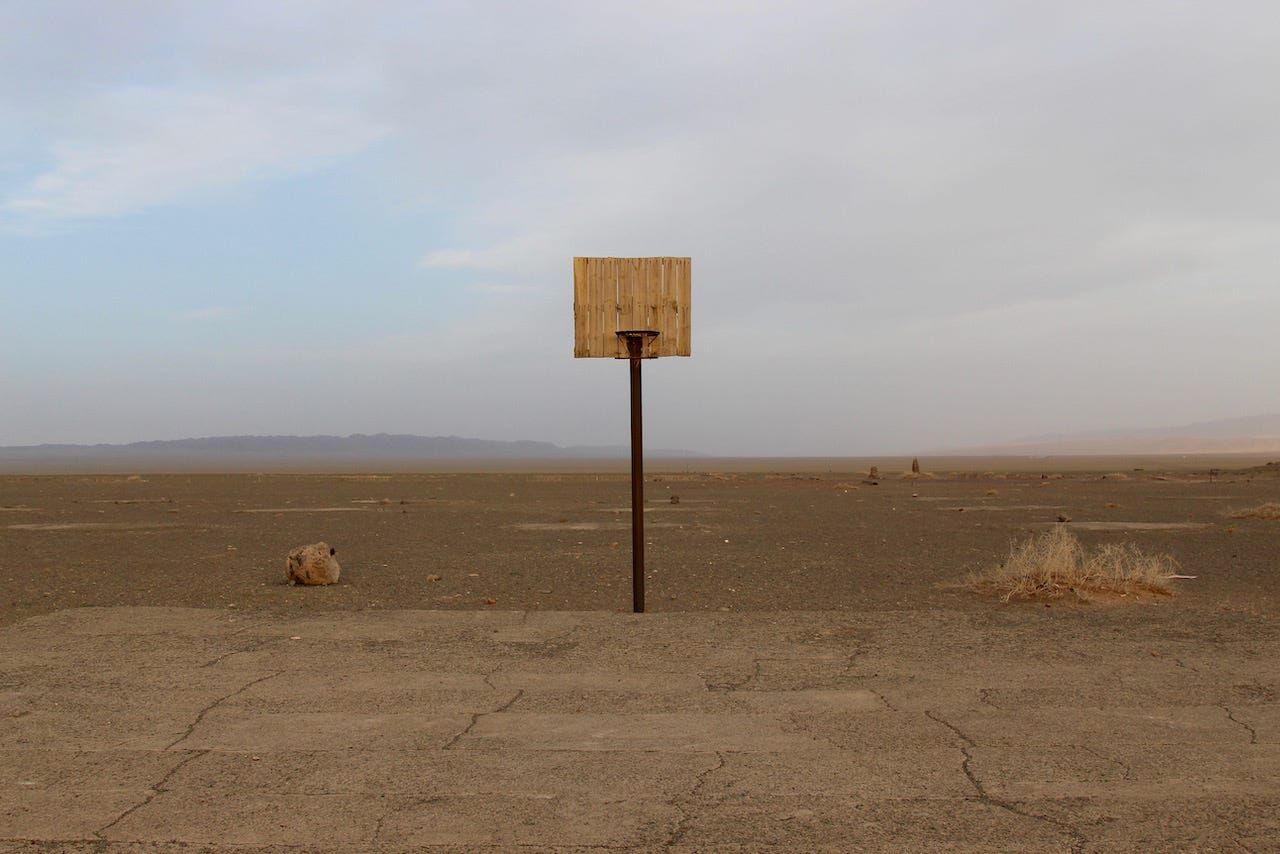
For the first few days, I tried to keep track, to orient myself in the void. I watched the horizon like it might offer clues. Sometimes it did. We’d spot a distant motorbike or the silhouette of a camel. Other times, we’d pass a rusted basketball hoop with nothing around it, just standing there like a prop in a set. The towns were small, if you would call them towns at all. Then, more nothing.
But it was the kind of nothing that starts to feel like something.


We stayed with nomadic families in their gers —circular tents arranged neatly on the grass, their doorways always facing south. Inside, despite the cold at night, it was warmer than I expected. A fire stove at the center, fueled by dried animal dung, called argal. There’s no wood out here, but argal burns clean, without much smoke. It’s gathered and stacked beside each home, sun-dried and ready, and light enough to move when the family decides to. It’s the kind of everyday genius you don’t think about until you need it.
Meals were simple. On meeting a family the second day, we were offered Nermel Arkhi, a yak milk so fermented it’s alcoholic. It was unlike anything I had ever tasted before.


We spent our days driving, occasionally hiking through valleys or climbing the dunes of the Gobi. There’s a quiet sort of thrill to being surrounded by so much emptiness. It’s not adrenaline. It’s more like surrender. A reminder that you are small, and the world is not built around you. Somewhere around day three, we bathed in a freezing mountain stream. Just us, the rushing water, and a few horses pulling at the grass nearby. They watched without interest.
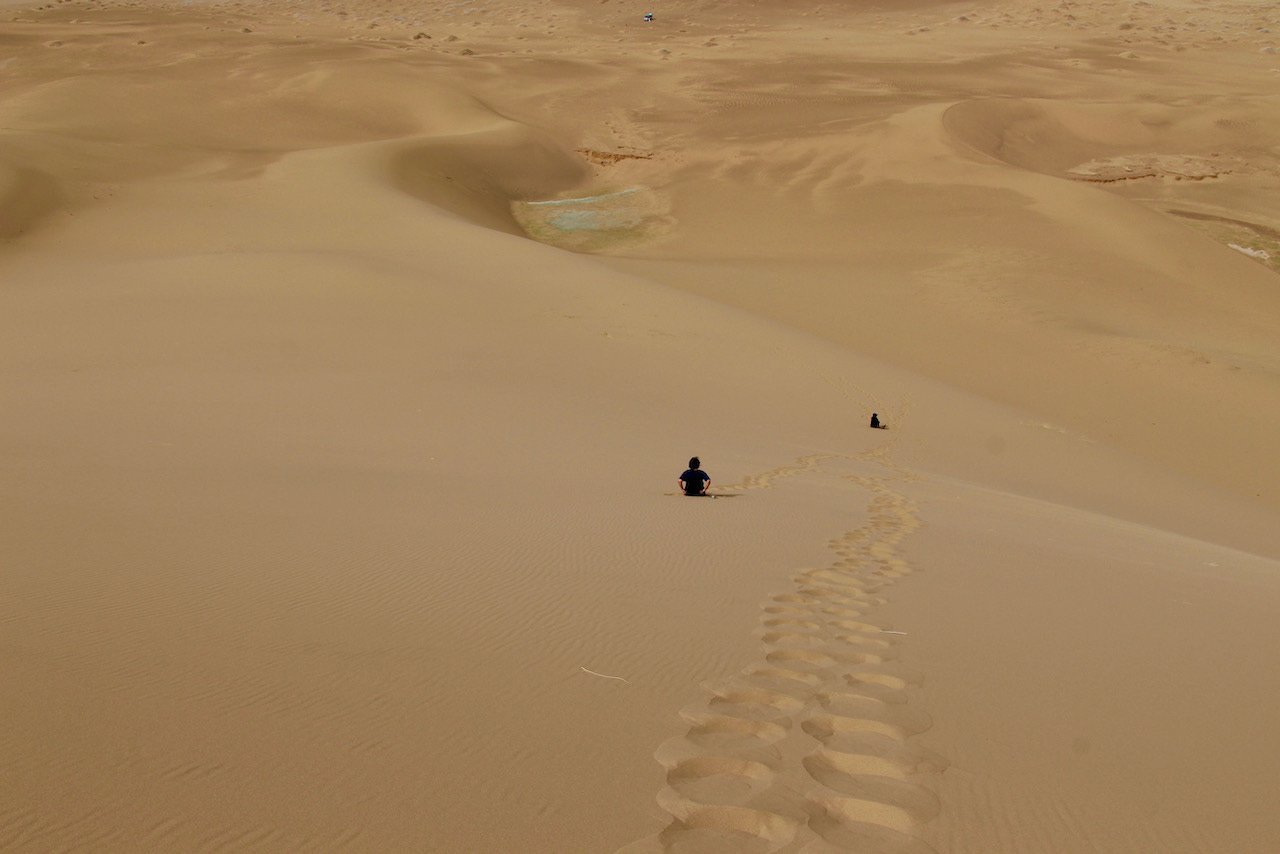
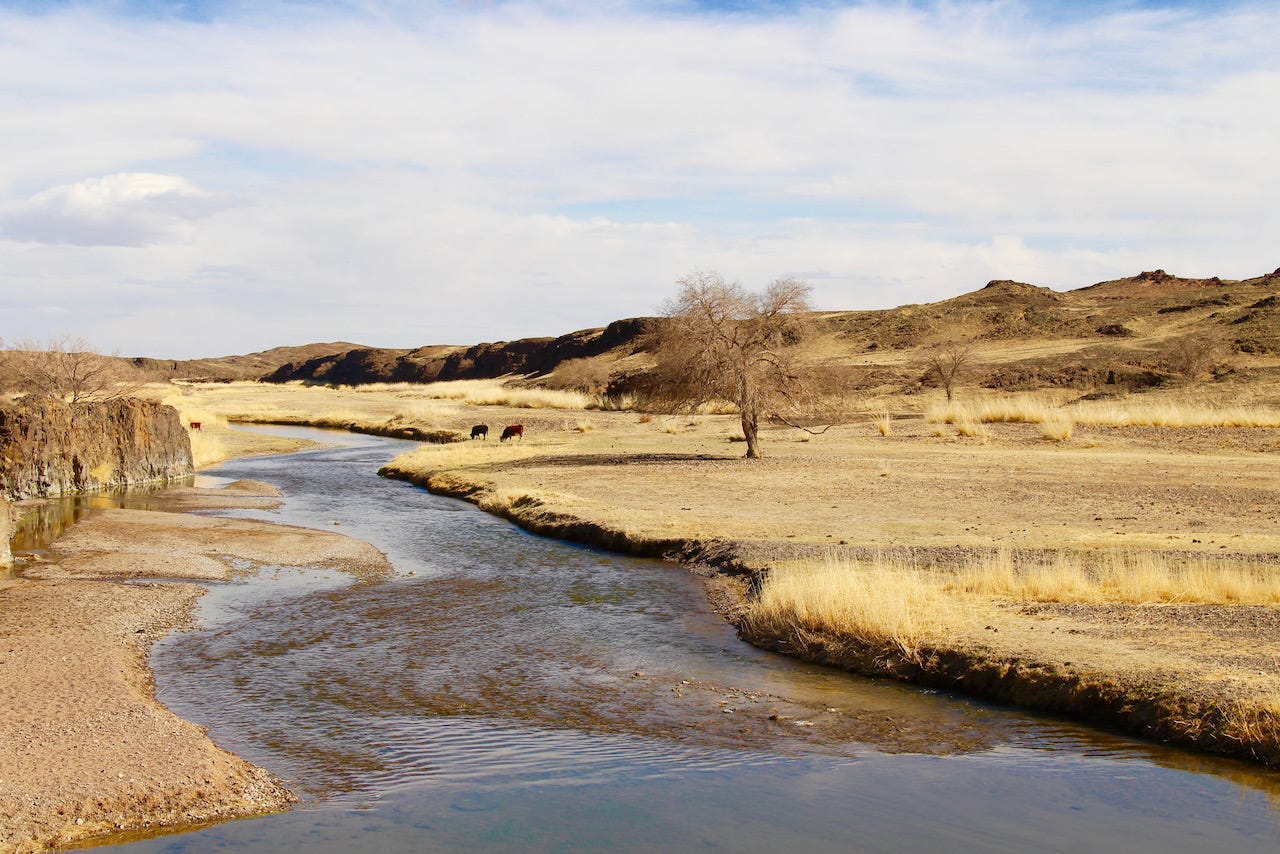
At some point, I stopped checking my phone for a signal I knew wouldn’t come and a blue dot that would be of no use. I stopped asking where we were or how much longer it would take. We’d drive for hours in near silence. Just the hum of the engine, the crunch of gravel, the sound of wind against the glass. The space started to feel less foreign. Not familiar exactly, but no longer hostile.
On the fourth day, it happened —a sharp bang that cracked through the usual hum of motion. The car jolted once, enough to lift us from our seats, and then settled into an uneasy sway. We slowed. The driver said nothing, but pulled over and stepped out.
He crouched low, inspecting the wheel wells and undercarriage with practiced hands. Dust lifted gently around him as he worked in silence. No dramatic verdict. No repair attempt. Just a glance, a pause, and then he climbed back in and turned the key.
The driver didn’t complain. He just kept going. Adjusted. Took turns gently, slowed on dips, kept his eyes ahead. The rest of the trip would be like this —bumpier, yes, but not worse. Somehow, the discomfort didn’t matter anymore.
We’d gotten used to the rhythm. To moving slower. To taking what came next without asking why.
It didn’t feel like a breakdown. It felt like a recalibration.
The world didn’t move any faster than we could handle. Bouncing and rattling, we pressed forward. Slower now, but somehow steadier. What would’ve felt inconvenient in another place just became part of the story here. In a country built on movement, what mattered was that we kept going.
Later that afternoon, as we drove through the valley of green-gold grass, our guide spotted a horseman on the horizon. He was barely a speck, no road, no trail, just a shape against the wind. The driver eased off the gas. We coasted slowly, then stopped. Without a word, the guide opened the door and began to walk toward the man. No rush. Just purpose.
It took nearly ten minutes for him to reach him. The rider waited, still. When they met, there were no handshakes, no greetings we could see. Instead, both men sat down, cross-legged, in the middle of the steppe.
There was something deeply human about it: two people grounded in a place that needed no introduction.
They spoke quietly, unanimated to us from a distance. We didn’t move. The wind rustled the grass. The clouds passed overhead. And for a few minutes, it felt like time paused. Not out of drama, but out of respect. This wasn’t a transaction. It was communion.
Eventually, the horseman stood, climbed back on his saddle, and pointed gently toward a barely-there track. Our guide returned, climbed back in, and we turned —not dramatically, just a few degrees off course. But it was clear this new path would get us where we needed to go.
That moment stayed with me.
Not just because it was beautiful, though it was. But because it made me realize how often we demand clarity where we haven’t earned it. I’d spent days scanning the horizon, trying to figure out where we were going. And here were two men who barely needed to speak to agree on the way forward.
That’s what trust in the land looks like. That’s what fluency in place feels like.
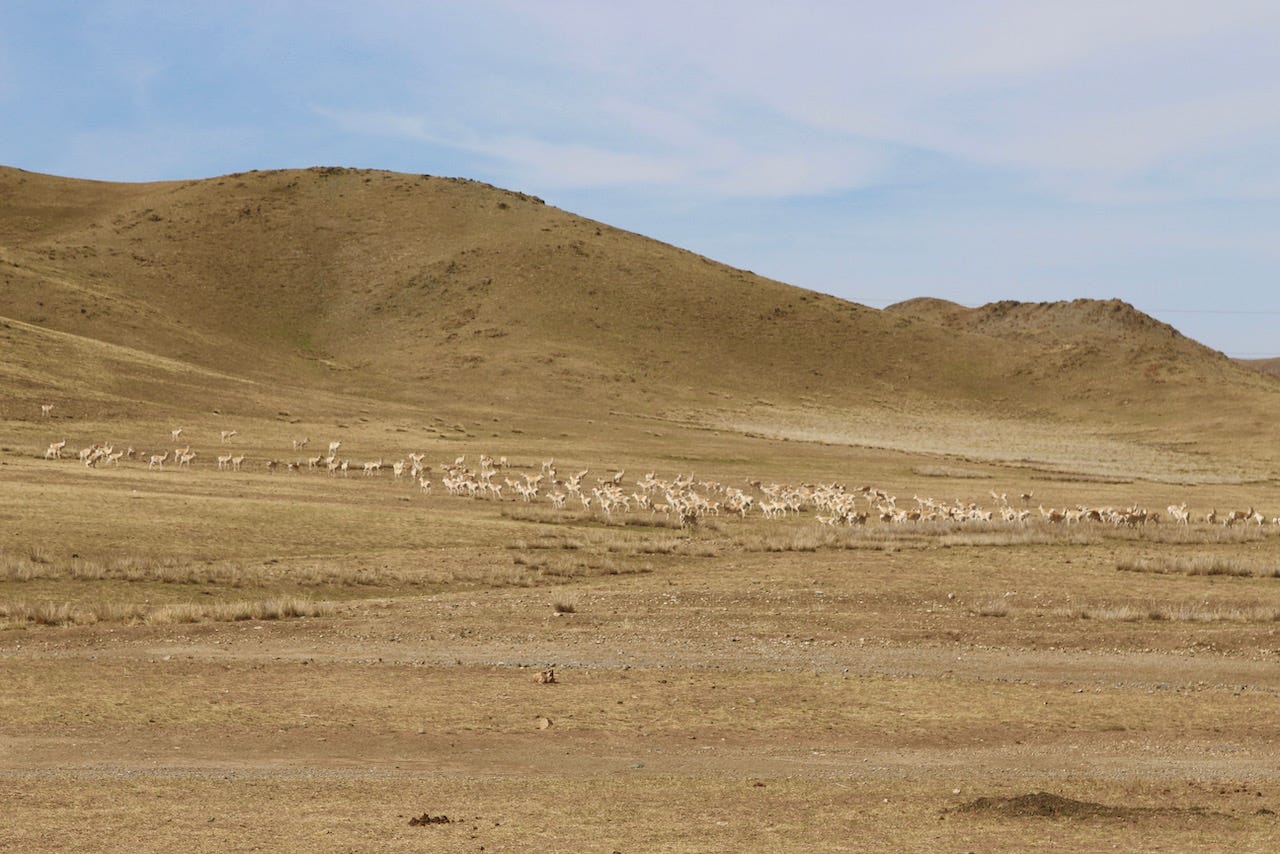
After that, something changed in me. I stopped trying to track time. I stopped trying to name every location. We were still bumping along in a broken vehicle, and yet, it felt smoother somehow. Or maybe we just weren’t resisting anymore. We were moving the way the steppe wanted us to —patiently, observantly, without asking for more than it gave.
There’s a kind of quiet that doesn’t mean absence. It means presence.
And Mongolia was full of it.
We didn’t know it then, but this would become one of the trips my wife and I would talk about the most. Not for what we did, but for how it felt —wide, quiet, unhurried. It comes up often between us, usually when life starts moving too fast. One of us will mention the steppe, the silence, the slowness. Not because we want to go back, exactly, although we definitely will. Not because we want to feel lost again. But because in losing ourselves out there, we found something deeper in ourselves.
The Briefing
Mongolia is the least densely populated country on earth — about two people per square kilometer — and outside Ulaanbaatar, most of the country has no paved roads. There are more horses than people, and outside of Ulaanbattar, you should anticipate camping and local ger stays. Here are some hotels I'd recommend in Ulaanbattar.
Like what you read? Subscribe for more photo essays and dispatches from around the world. Already subscribed? Thank you—consider a recommendation or a restack!
If you’d prefer to support through photography, I also sell prints. And if you spot a photo in a story that you like and isn’t listed, just reach out. I’m happy to do special runs at no extra cost.
I love your writing, Scott! It's so evocative, I felt like I was there too.