


It’s tough keeping an automatic hand dryer running with your head. There I was in the bathroom of the Rønne ferry terminal, bent under the Dan Dryer, its little Viking mascot looking like it was standing on my shoulder. As the bathroom door opened, I turned to see who was coming in and caught my head on the underside. The man appeared unbothered by the soaking wet figure crouched at waist height, offered only a frown, and turned toward the urinals. I returned my focus and continued to tousle my hair.
Earlier that morning, at dawn, I had left my apartment, taken an hour-long train to Ystad on the Southern coast of Sweden, and caught the ferry to Bornholm. The crossing takes around an hour and a half. I drank a coffee and watched the sun reflect on the Baltic Sea.
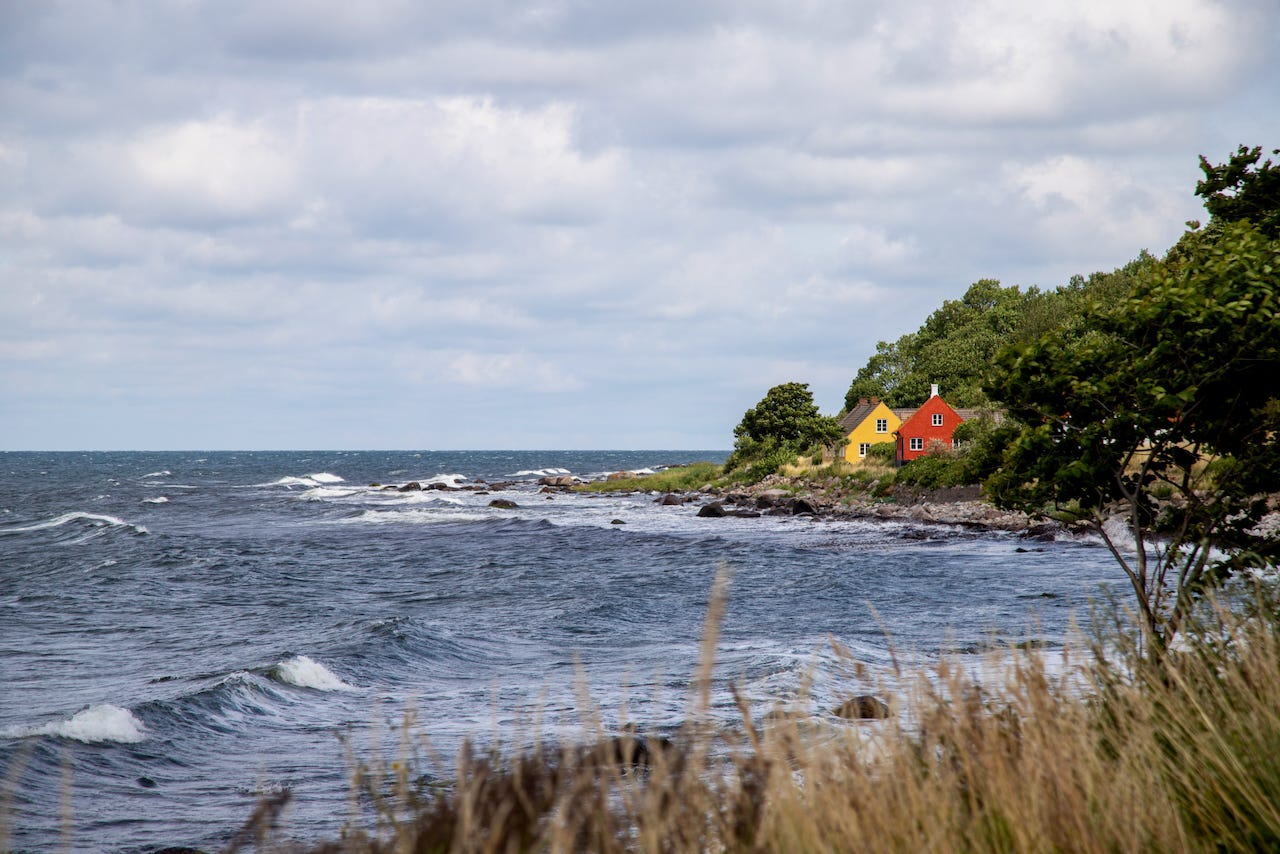
Bornholm took its time to appear on the horizon. The island is Danish but sits closer to Sweden, Poland, and Germany than to Copenhagen, which has historically made it either strategically important or inconveniently exposed, depending on the century. The Soviets briefly occupied it at the end of the Second World War after the German garrison surrendered, shelling Rønne before withdrawing and handing it back. Since then, Bornholm has settled into a more agreeable role — the Danes call it the Sunshine Island as it gets more sun than anywhere else in the country, and generations of Danish families have been making the crossing every summer to cycle its coastline, eat smoked herring, and buy ceramics. It is not an island that does anything quickly.
I had not planned to take it slowly.
Upon disembarking, I walked into town and found a bicycle rental shop. The man behind the counter looked up when I came in.
“Bike or e-bike?”
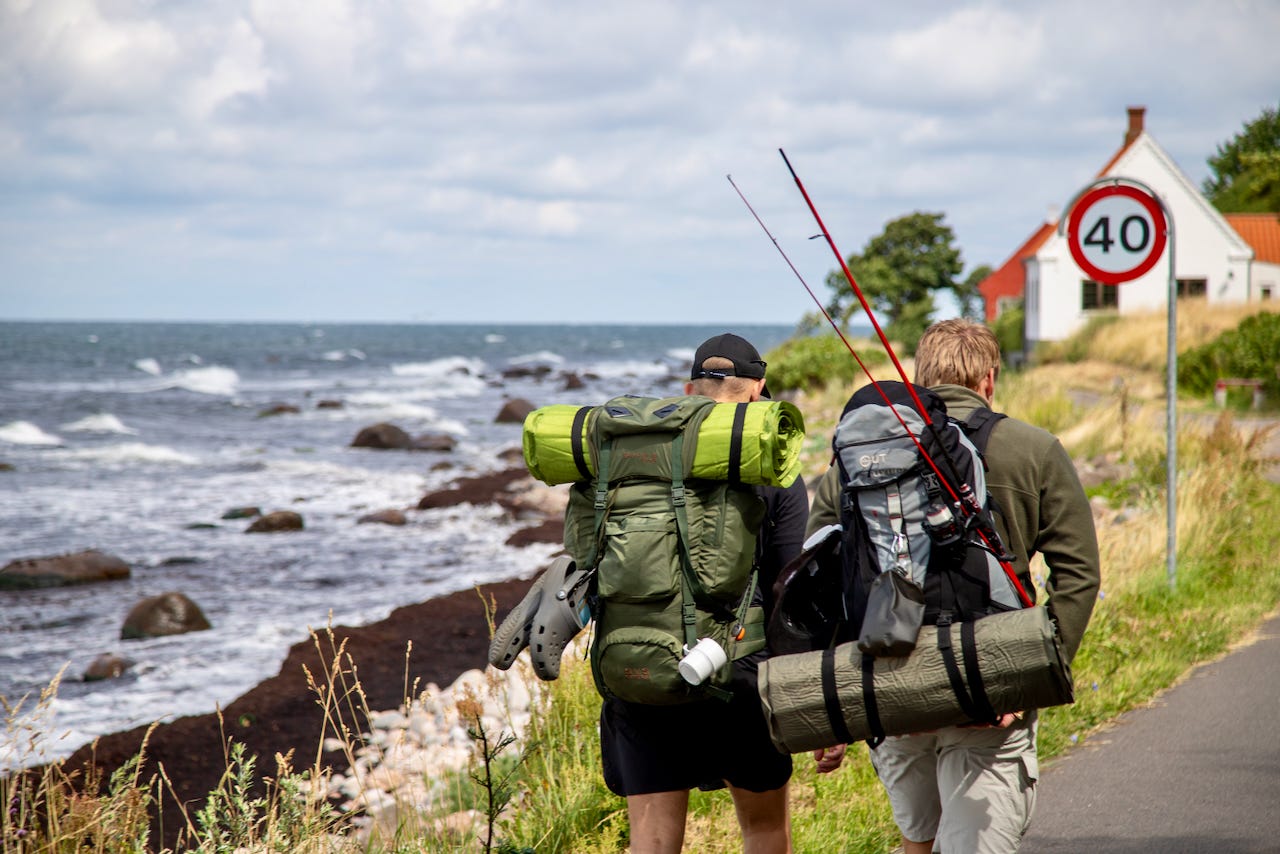
I had never ridden an e-bike before. The island was roughly 80 miles around, and I was planning to ride the whole thing in a day. I had completed the annual Seattle to Portland ride of 206 miles in 11.5 hours, so the distance or time didn’t concern me. My ego was, admittedly, in excellent shape. I was carrying a backpack with a camera, and parts of the coastal route reportedly turned to gravel. The choice of an e-bike seemed, if anything, like a way to make it more enjoyable.
He pointed at a row of them along the wall and handed me a lock and a 15-foot charging cable for the battery, which took up the remaining space in my backpack. No helmet was offered. This is Denmark.
I told him I was planning to circle the island.
He looked at me for a moment. “Yes,” he said. “It’s possible.” The shop closed at six, he added, but if I was back later, I could just lock the bike outside, and he’d sort it in the morning.
I noted the time. I had a ferry to catch. Six it was.
I set off north through the forest, the smell of pine cutting through the morning air — the kind of fresh, quiet morning that makes you feel lighter. The trees were dense on both sides of the path. I tried out the bell with some enthusiasm, passing an elderly couple, who did not appear to share it.
Then the forest opened, and the sea was there on my left, running along the western coast as far as I could see. Other cyclists passed me going the other direction, panniers strapped to their rear wheels, clearly on a different, more leisurely schedule than mine.
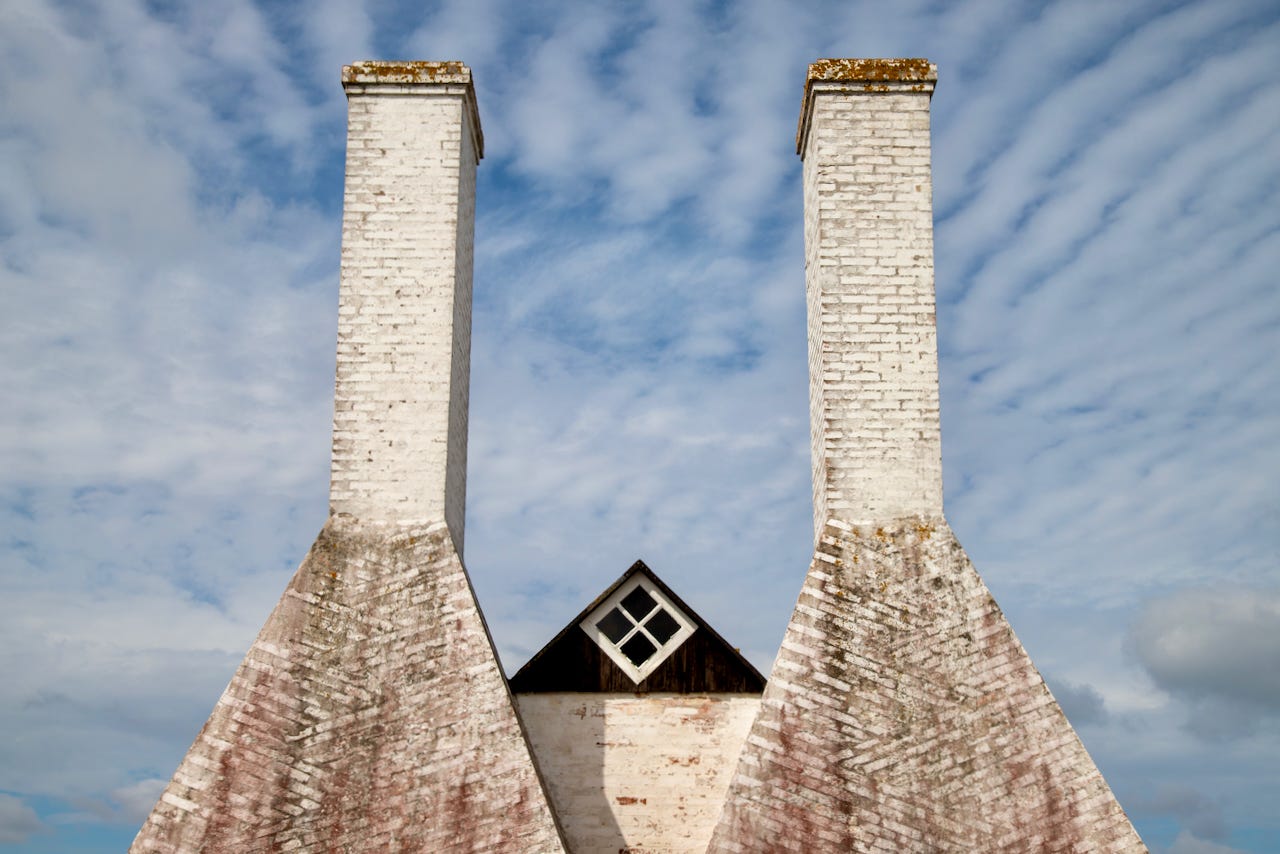
Before long, I was met by several low whitewashed buildings set close to the water, each with a pair of distinctive chimneys that flared wide at the base. I stopped to look. A sign confirmed what the smell had already suggested: smokehouses. Bornholm has been smoking herring over alder wood for centuries, and these buildings, with their odd twin chimneys designed to draw the smoke slowly through the fish, are scattered along the coast. I noted one for lunch and kept moving.
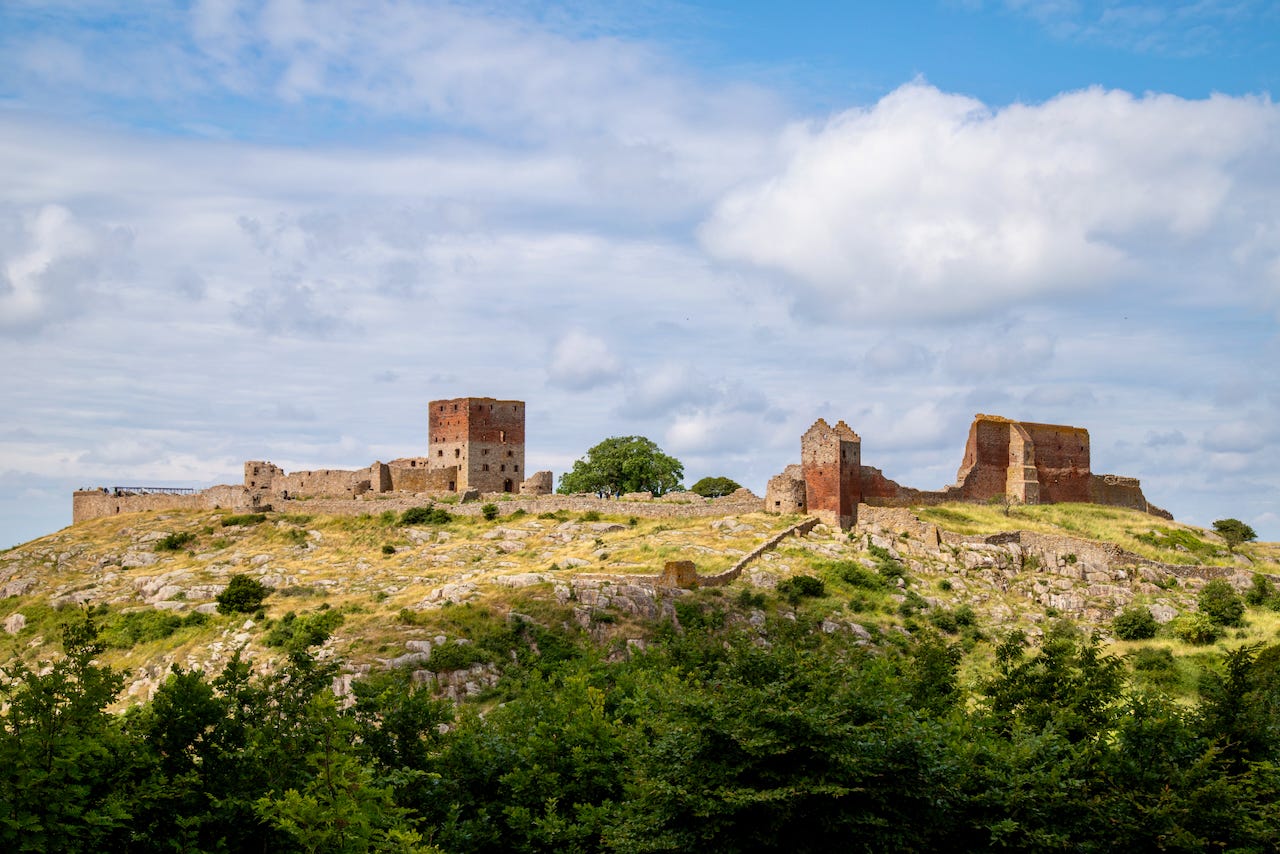
The e-bike seemed heavier than anything I’d ridden before, but on the flat coastal path the ‘light assist’ setting made up for it. I was moving fast along a stretch of coast so unreasonably pleasant that I briefly considered whether property on Bornholm was within my budget. It was not a serious thought. Then the hills arrived, earlier than the map had suggested, and more of them. A few additional clicks of the assist and I was over them. At the top of one, I was met by Hammershus, the largest medieval fortification in Northern Europe by footprint, its towers and walls sitting on a promontory above the sea. The Danes dismantled much of it in the 1700s and probably spent the following two centuries regretting it. I left the bike at the base, walked up, took in the view, and got back on. I was making good time.
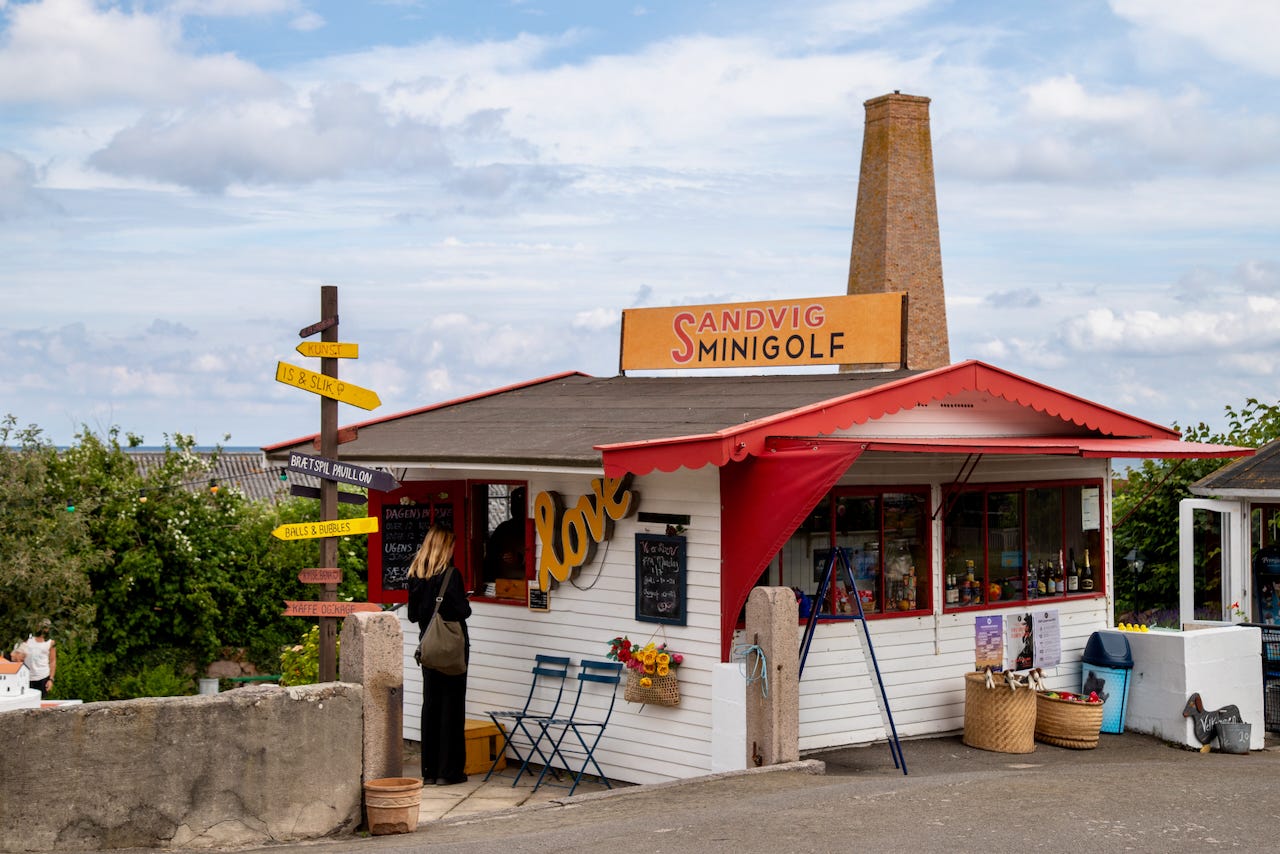
The northern coast ran through Sandvig, Tejn, and a string of villages that seemed to be doing fine without much outside attention. Mini golf courses appeared with surprising regularity — modest setups near the water, with a mix of young and old playing them, everyone taking their shot with complete seriousness.
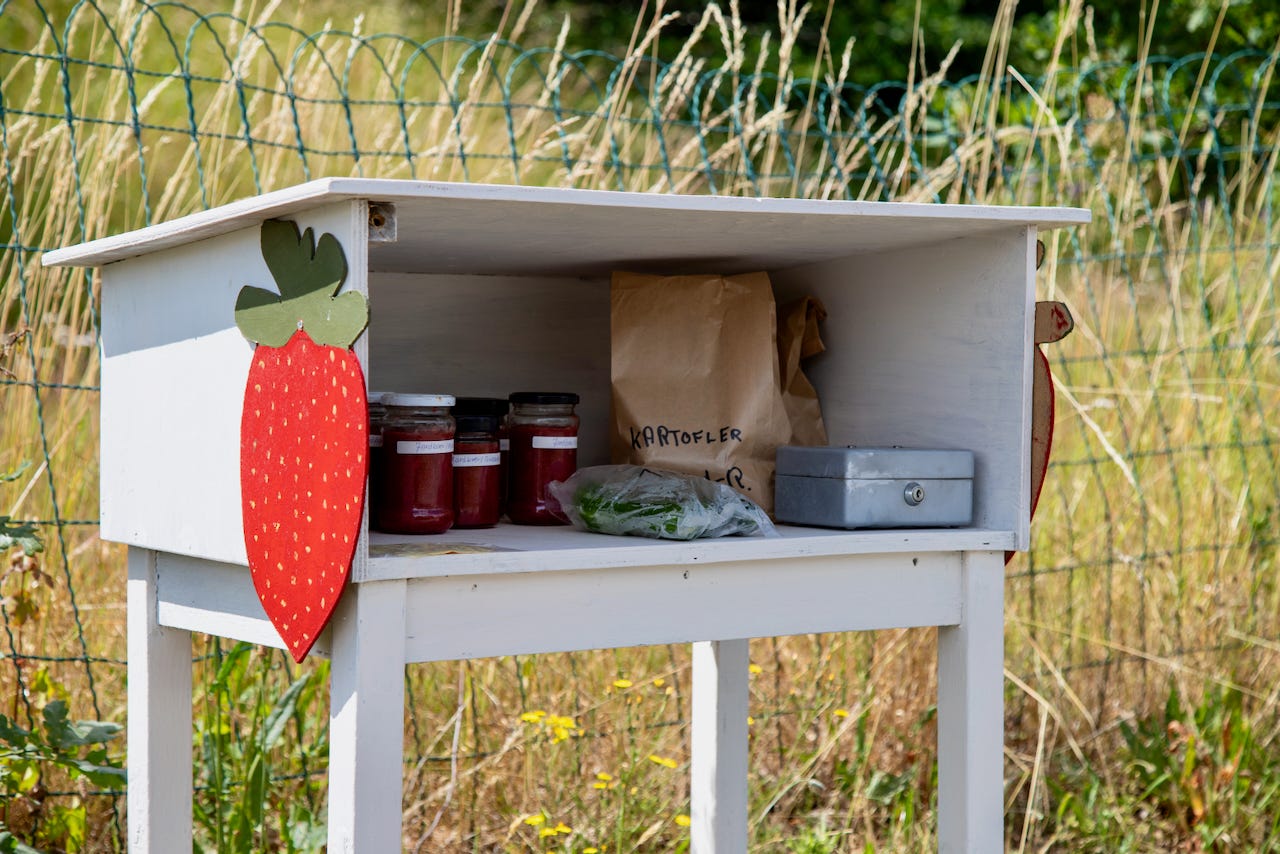
As I rode, I kept myself busy taking in all the textures of the place — the sheep grazing, the Danish flags adorning every pole, and the ceramics studios. The most common and the most visually interesting were the gårdbutikker. This translates to farm shop in English, though these were simpler than that: wooden boxes or small shelves set at the roadside outside homes with jars of honey, jam, eggs, vegetables, a handwritten price list, and a cash box for the money. No attendant or camera, just the assumption that you would pay. I watched cars and bikes stop regularly. This appeared to be completely normal.
Gudhjem was the last town on the coast before I had wanted to turn inland. I stopped at a bakery and ordered a pastry. The plan from here was to head to Østerlars — the most intact of Bornholm’s four round churches, built in the twelfth century. Østerlars is the largest and the one everyone comes to see.
The battery indicator was lower than it should have been for where I was on the route – a heavy bike over surprisingly hilly terrain adds up. I was roughly halfway around and told myself I could ration it.
I looked at my phone. The 20% chance of rain I had checked that morning was now 100%, the radar showing a solid mass of green and yellow moving in from the west, forecast to run until evening.
It was still sunny, however, the vimpels were snapping in a wind that hadn’t been there an hour ago. I finished the pastry and got moving.


The road up to Østerlars was steep enough into a headwind that I abandoned any thought of rationing and put the assist on full. By the time I had arrived, the battery was dead. I stopped at the café across the road, wielding the 15-foot extension cord and a battery the size of a cinderblock, and asked if I could charge somewhere. The staff plugged it in by the refrigerator.
When I came back from the church thirty minutes later, the battery indicator had not moved. Outside, through the café window, a wall of dark clouds was coming in off the Baltic.
I revised my plan. Instead of finishing the coast, I would cut directly through the interior — 14 miles back to Rønne, as straight as possible with minimal exposure. Perhaps I could make it back while it was still drizzling. This was optimistic.
An e-bike with a dead battery is not a regular bike. It is a regular bike that is significantly heavier than a regular bike, and about five minutes into the first climb I was hit by wind and a torrential downpour that did not let up. The interior was mostly farmland, flat and open, no shelter from anything. There was nothing to look at and nothing to stop for. I put my head down and rode. The temperature kept dropping. The most direct route ran along the shoulder of the main road, and as cars passed, I thought about the occupants, warm and dry inside. Perhaps eating smoked fish on a smørrebrød.
I made it back to Rønne with time to spare. The man at the rental shop looked up as I came through the door, dripping onto his floor. He had been closing up early –the rain had seen to that.
“You’re back.”
When asked, I told him I’d enjoyed it until Østerlars before the battery died and the rain came. He seemed mildly impressed that I’d gotten that far. I handed back the extension cord, and he locked up the remaining bikes.
The ferry terminal was a ten-minute walk in the driving rain. I found the bathroom, located the Dan Dryer, and got to work. By the time the man walked in and offered his frown, I had made meaningful progress. The ferry back to Ystad was on time. The train from Ystad ran without incident. I got home, stood under a hot shower for longer than necessary, and collapsed on the sofa.
Outside, right on schedule, the rain stopped. 🚴♂️
If you liked this, there’s more where it came from. Nothing to Declare opens a window somewhere new every week —travel essays, photography, cultural observations, and books worth reading. Once a week, sometimes more. Free to subscribe. Refer three friends (free subscribers count) and earn a free month of paid, which is where some of the best stories live (🤫).
Haha the bike shop keeper being mildly impressed that you made it as far as you did was my favorite part.
Great adventure, at least you got a pastry and some exercise. Those e-bikes are HARD to move once they die.
Of course the rain stopped then! Now I'll think twice before renting an ebike...