


This week's piece is by Julia Hammond, a UK-based travel writer whose work has appeared in The iPaper, the New Zealand Herald, Wanderlust, and Daily Passport (@juliamhammond). She's been to more than 130 countries. This is the first piece from our open submissions call. All words and photographs are hers.
Sometimes it pays to have a guide. Without one, I’d have walked right past what looked to be an unremarkable —if quite large— bromeliad. The tips of its leaves were brown and curling; it wasn’t in great shape. Yet concealed within its folds was a tiny yellow frog. Endemic to Kaieteur National Park, the Golden Rocket Frog was barely the size of a fingernail. Even with the guide’s help, picking out the two black eyes of the creature that had tucked herself into the shadowy gap between two leaves was no easy task.
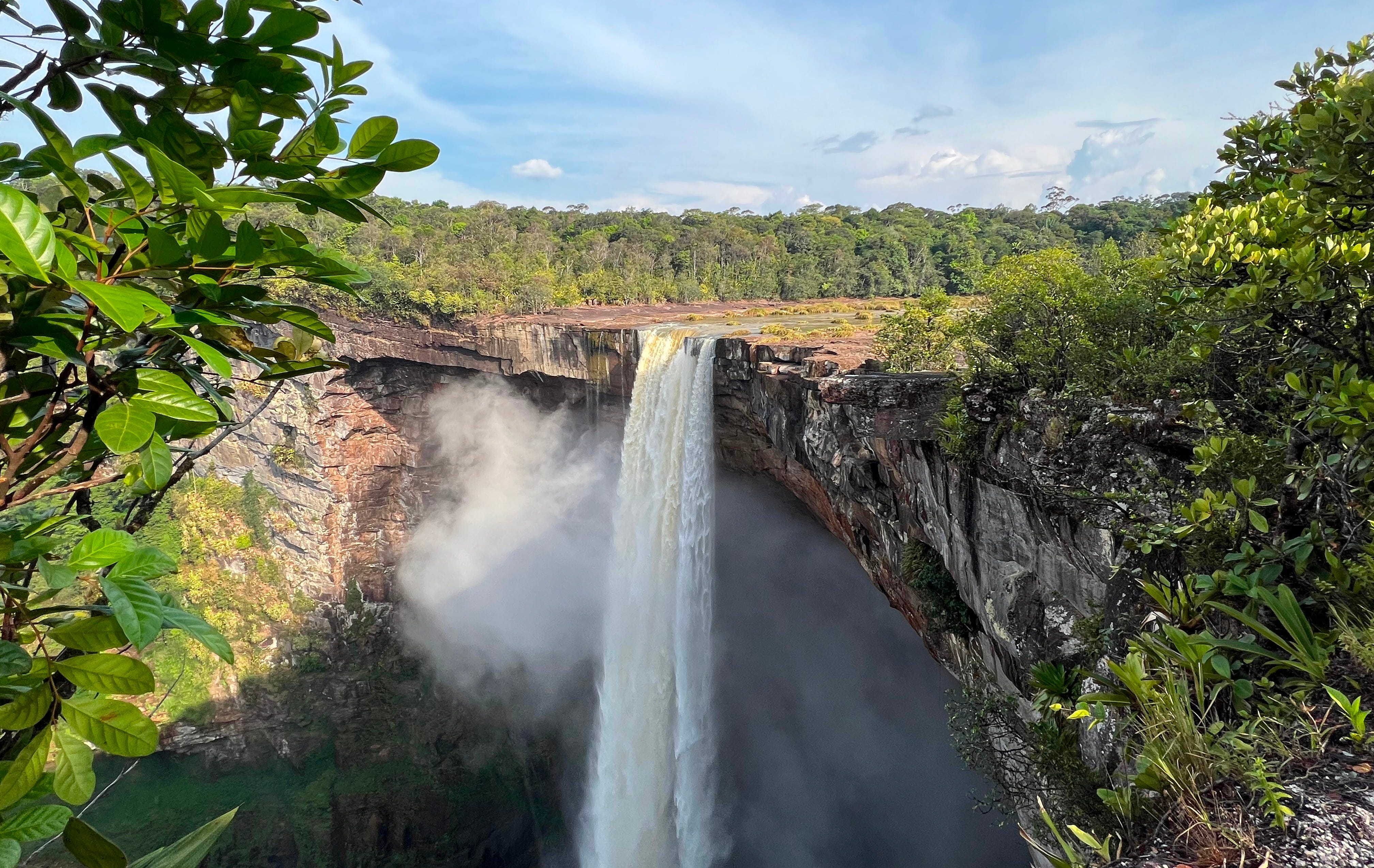
I was reminded that travel is as much about those unexpected, unscheduled moments as it is about the famous landmarks we make such long journeys to see. This remote corner of Guyana is home to Kaieteur Falls. The Guyanese claim it is the world’s largest single-drop waterfall by volume, and it was certainly an impressive sight. We stood and watched as the Potaro River poured over a sandstone cliff, tumbling 226 meters down into the plunge pool below. The guide reeled off the statistics —more than 136,200 liters of water cascaded over the falls every second— but this epic moment wasn’t about the numbers.1
To reach this remote spot, most travelers take a flight. A handwritten tally on the National Park office whiteboard recorded the year’s totals: by October, 8,159 visitors had arrived by air compared to a paltry 38 overlanders. Day-trippers were flown up in light aircraft, the kind of planes where you need to disclose your weight and sit where they tell you, to make sure the balance is right and the plane won’t crash. Noisy, uncomfortable and cramped, they’re a far cry from the wide-bodied jets that swoop from continent to continent and make such trips possible within busy lives.
In such a tiny cabin, flying felt raw and stripped back, the preserve of the adventurous —and those well-heeled enough to afford the privilege. Georgetown’s colorful rooftops were soon replaced by trees subdivided into a grid by dead straight dirt roads. Fires burned where sections were being cleared for agriculture. But nature soon took over, as far below us silt-laden rivers carved up tracts of dense rainforest. Aside from a handful of mining concerns that created colorful scars on this pristine landscape, there was little evidence from this height of any human activity. The undulating carpet of trees appeared impenetrable.
Like the trees, the clouds thickened and fat raindrops began to pound the windshield. Distant lightning lit up the sky. Our knuckles paled as they tightened around the seams of our seats. We exchanged nervous smiles in an attempt to convince each other that we hadn’t made the worst mistake of our lives.
And then, out of nowhere, there it was. A river of liquid chocolate that seemed almost motionless. A faulted escarpment, its gnarly face partially shrouded by cloud. A narrow column of water cascading over the edge, the wind catching at its edges. Beneath, an irregularly shaped pond surrounded by sepia-hued boulders.
We touched down on an unkempt airstrip that was barely keeping the grass at bay and set off behind our guide down a sandy trail that wound through clumps of red sundews; these endemic flypaper plants trap their prey with the sticky hairs that coat their leaves. A sign read Boy Scout’s View; it led to an overlook that gave us our first glimpse of the waterfall from the ground. The cascade itself was in shadow, though sunlight intensified the yellow leaves of the shrubs and trees that clustered at the trail’s edge. As far as the eye could see, it was just trees and rock, save for this single, magnificent spear of white water and spray that pounded and puddled to form a tannin-rich plunge pool. Even from this distance, the thunderous roar of the water drowned out our conversations, demanding attention.
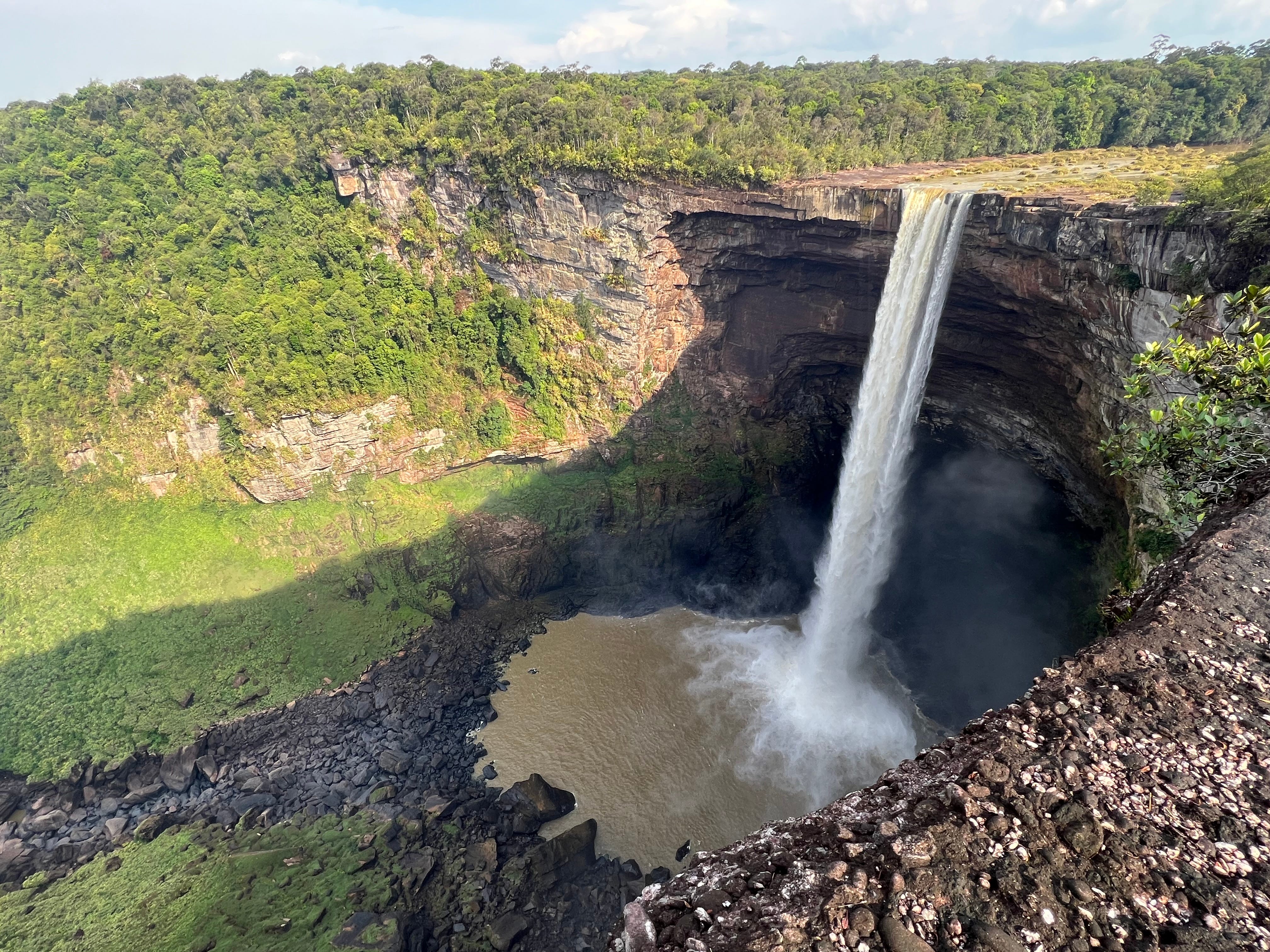
We moved on, to Rainbow View. Closer than the first overlook, the sound intensified, and the impact of the water on the rock strata was more apparent. What had appeared a homogenous shade of brown from a distance became striated blocks of caramel, coffee and cream. The layered sedimentary rock became a series of unevenly spaced steps under the relentless assault of the flow of water. Yet above the falls, the river was calm, flowing around low hummocks of grass right up to the rock lip. But once it tumbled over the edge, gravity gifted the waterfall its extraordinary power.
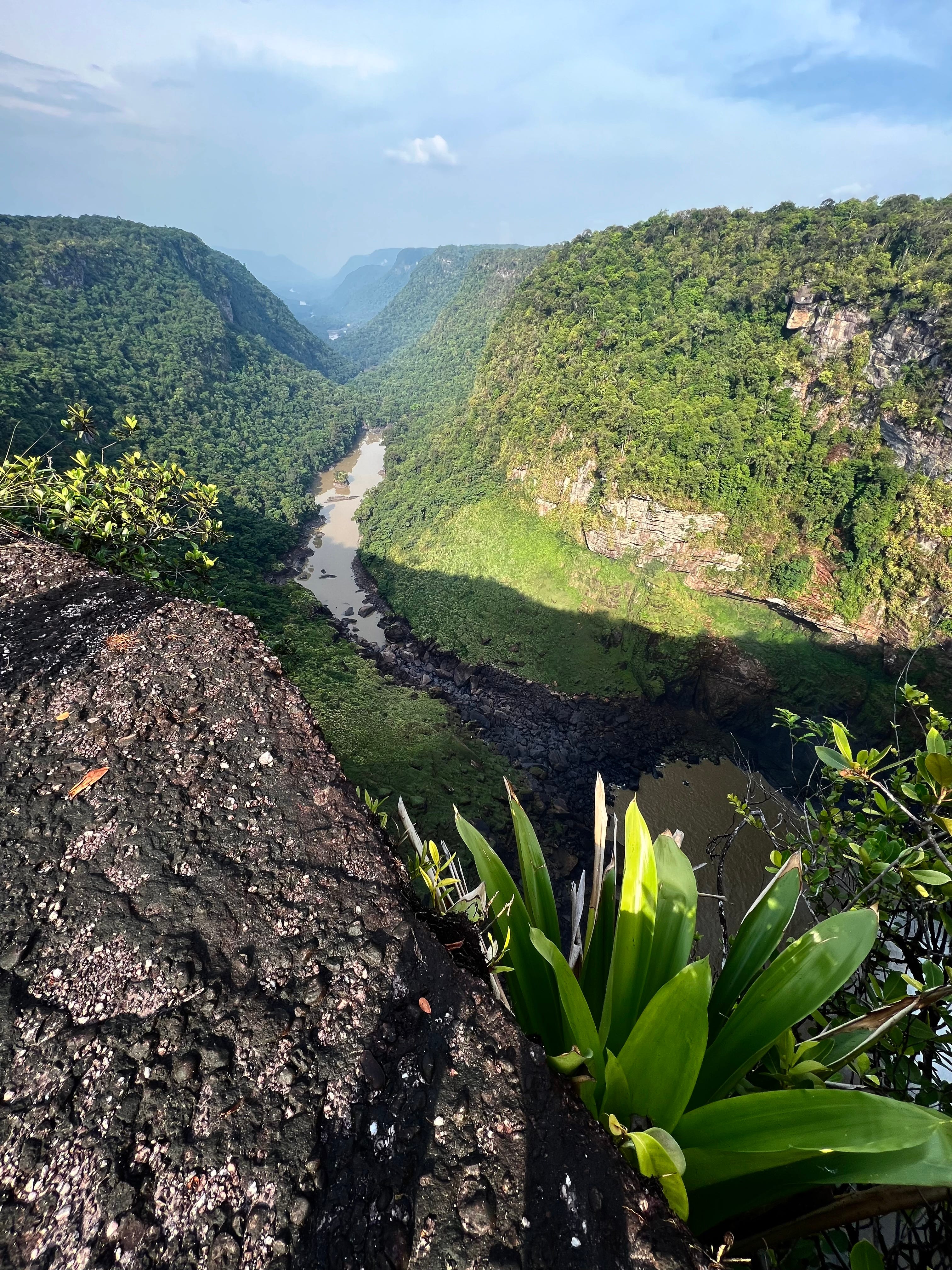
There were no barriers here, save for those erected by our own common sense. Those with a head for heights could sit on the edge of the gorge, their feet dangling; others held back, scared of what could happen with a single slip or trip. Regardless, everyone’s gaze flicked between the falls and the canyon; each successive spur was a subtly different shade as the color morphed from emerald green to a washed-out slate blue. Bromeliads, palms and countless species of endemic trees formed a lush, riparian forest.
Despite the impressive nature of the waterfall, it was dry season and the water level was low. Huge boulders had piled up on the riverbed, carried there when the Potaro was in spate and dumped when they became too much to transport. They’d remain there until the river chipped away at them, or floodwater moved them downstream.
Our final stop brought us in line with the edge of the falls’ rocky overhang. Here, the trees parted; erosion from the water as it splashed back on itself had scooped out the rock behind the falls to create a marked undercut. Over time, this faulted cliff would become more precarious and eventually collapse, allowing the falls to retreat upstream. It had been this way for millions of years, a humbling thought that put our own short lifespans into sharp focus.
As we walked back to the airstrip, the guide paused one last time. In this biodiverse space, one bird stands out among more than three hundred species: the Guianan Cock-of-the-Rock. And I mean that literally —the striking orange plumage of the male and its Mohican-like crown make it easy to spot among the trees, and we were privileged to witness a pair. We watched them until it was time to go.
If you liked this, there’s more where it came from. Scott Monaco opens a window somewhere new every week —travel essays, photography, cultural observations, and books worth reading. Once a week, sometimes more. Free to subscribe.
The figure on the park signboard is 136,200 liters per second. Published estimates of Kaieteur's average flow are around 663,000 liters per second (663 cubic meters), and volume varies significantly between the wet and dry seasons.