


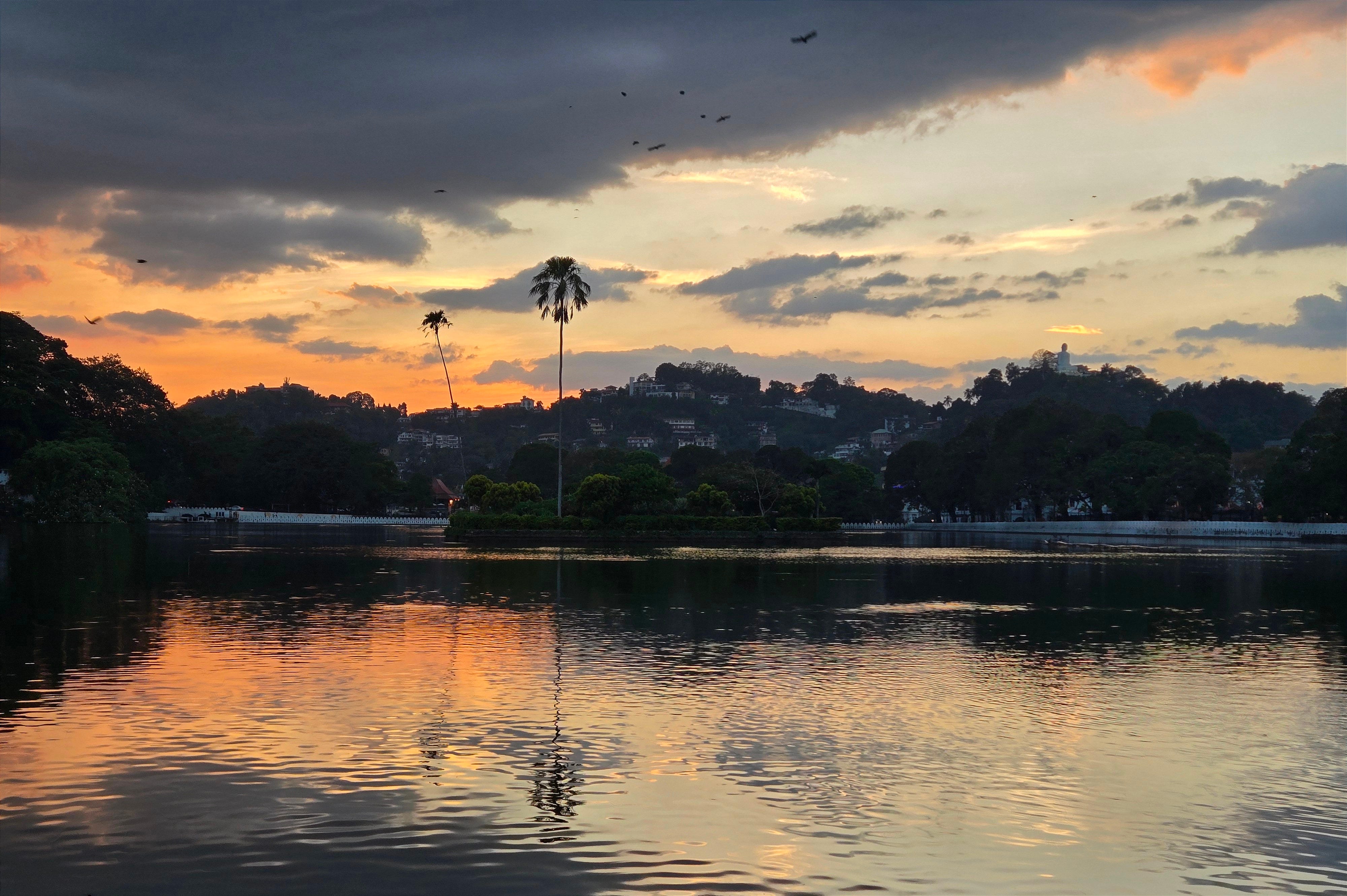
This week's piece is by Brad Yonaka, a geologist, historical researcher, and lifelong traveler whose nonfiction writings have appeared on Medium and Substack. This is the second piece from our open submissions call. All words and lead photograph are his.
Strolling around the circular exterior of the meditation hall, we interrupt a quiet family moment. A teenage boy, dressed in orange robes and sporting a freshly shaven head, leans against the structure as though relying on it to keep him from collapsing. At his side is someone I assume is his mother, her face sad in that enduring way that parents display when sharing a child’s grief. She holds out a cell phone to his ear. At his feet sits an older girl I take to be a sister, touching his leg and looking despondent.
Over the phone, I hear a quavering, old voice. A grandmother, perhaps? The boy’s face is turned away so the wall can hide it, his shoulders sagging. It is one day before the Buddhist New Year, a time when many boys in Sri Lanka are being initiated into the monastic ranks and separated from their families for the first time.
Kandy is a city camouflaged.
It remains hidden until you are already in the middle of it. One moment, you are swerving through deep canyons and verdant cliffs, at your side, the brown river carrying mountains to the distant sea, bit by bit. Concrete buildings with rebar protruding from the top floor decorate the roadside. Signs in loopy, artistic Sinhala script announce food, hardware, and wedding dresses.
Then, suddenly, the urban heart is all around, thick with buses and rickshaws and people. Nowhere on the subcontinent can you just enter a city and stroll peaceably down the street. Pressing crowds, noise, and color smack you in the face the moment you step off the bus and shout, Wake up!
I pose a question to someone standing at a bus stop. He is quick to smile, nodding his head in that characteristic South Asian way as he talks. Almost as though I said something funny.
Kandy is a city that resisted while others fell.
Long after the Portuguese had seized the coastlines of Sri Lanka, the Kandyan kings remained in power from this well-defended, mountainous capital. The Dutch, better suited for land warfare and with the same urge to place the entire island under their domination, also bogged down in the surrounding hills and valleys, succumbing to disease and harried by Kandyan snipers.
It took the stiff upper lip of the British army to finally take Kandy (after two attempts) and officially bring all of Sri Lanka under the colonial regime in 1815. Over 2,500 years of indigenous rule were signed away by representatives of the royal family, while the last king was carted away to exile in southern India.
We are in an open rooftop restaurant. The city, with its footprint contorted by the army of hills that press in from all sides, lies below. This scenic venue is apparently popular for young Sri Lankans, who dress in smart-casual attire to impress their romantic partners and work buddies with rounds of beer and lively, sometimes flirtatious conversation. The feeling of celebration and relaxation is strong. The Buddhist New Year falls on a Wednesday, and I’ve been told that many people have taken the whole week off.
The server approaches the table with our meal. A raven, perched on the patio guardrail, croaks in anticipation. The server wags his finger at the bird and turns to us.
“He knows he can’t go on the tables, and that if he is patient, I will feed him later. We’ve had a talk.”
There is a dance program at the community center on the afternoon we arrive. Each performance is a reenactment of a ritual or historical event. The women are resplendent in deep blues, greens, and purples for the Peacock Dance; the cutting and sifting of grain is simulated in the Kulu natuma, or ‘Harvest Dance’; and the Raban natuma showcases acrobats spinning multiple plates balanced on sticks.
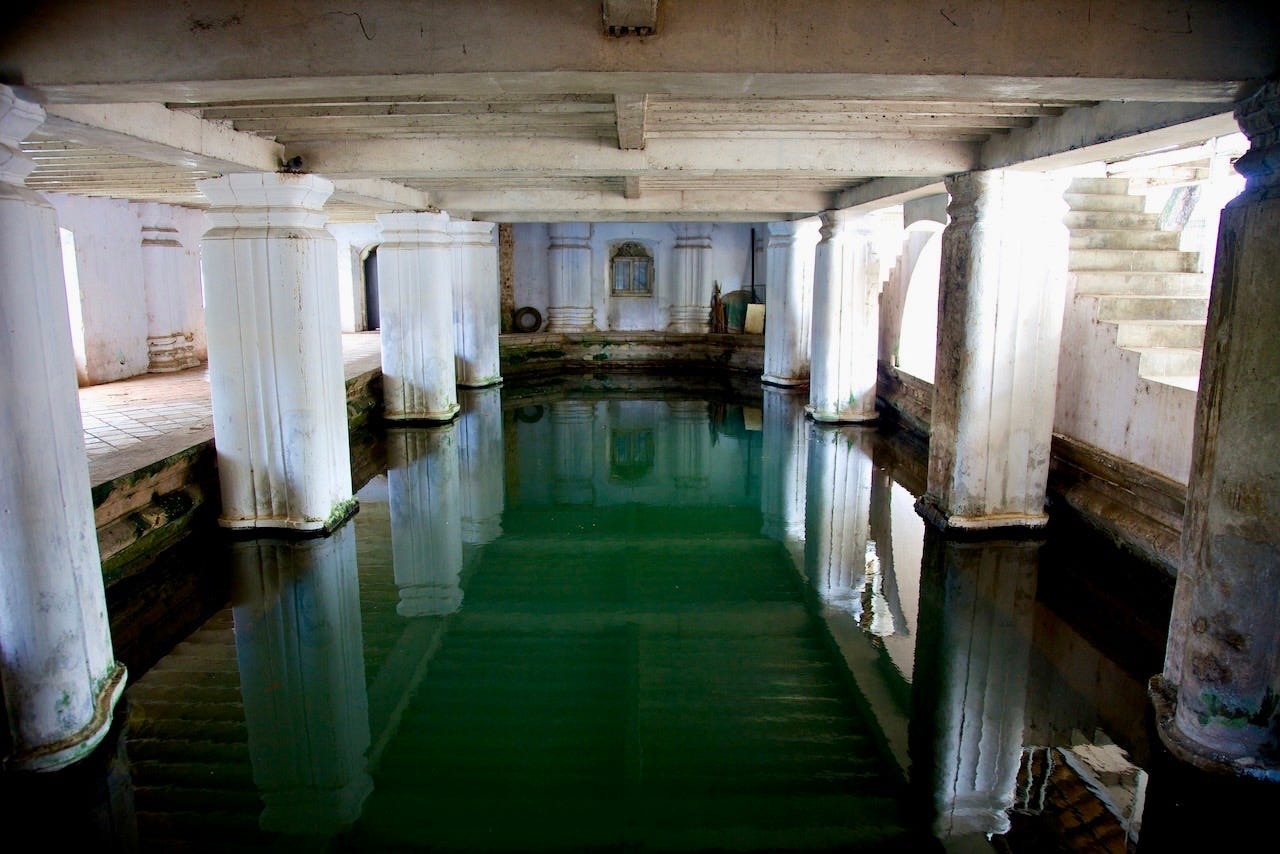
It is difficult, perhaps impossible, not to pause for a moment at the edge of Kandy Lake, known in Sinhala as Kiri Muhada or the ‘Sea of Milk’. This water body frames part of downtown, and the city’s famous Buddhist temples dot its northern side. It is not a natural feature but was constructed by the last king of Kandy in 1807, and seems perfectly suited to complement the valley’s aesthetics. We take refuge here from a rainstorm, sheltering in the covered patio of the now shuttered Ulpen Geya, or old royal bathhouse.
Kandy is a magnet for Buddhist pilgrims.
There is a traveler’s joy in not knowing exactly what to expect from a place. I knew there was a relic of Buddha here, but I was unaware of how important it was.
The Sri Dalada Maligawa, on the north side of Lake Kandy, is the home of the Sacred Tooth Relic. This tooth was recovered from the body of Gautama Buddha after his physical death, and moved several times to avoid capture during wars in India, finally making its way to Sri Lanka. It was said that the governing body that possessed the tooth would rule the entire island, a prophecy that has largely held true since.
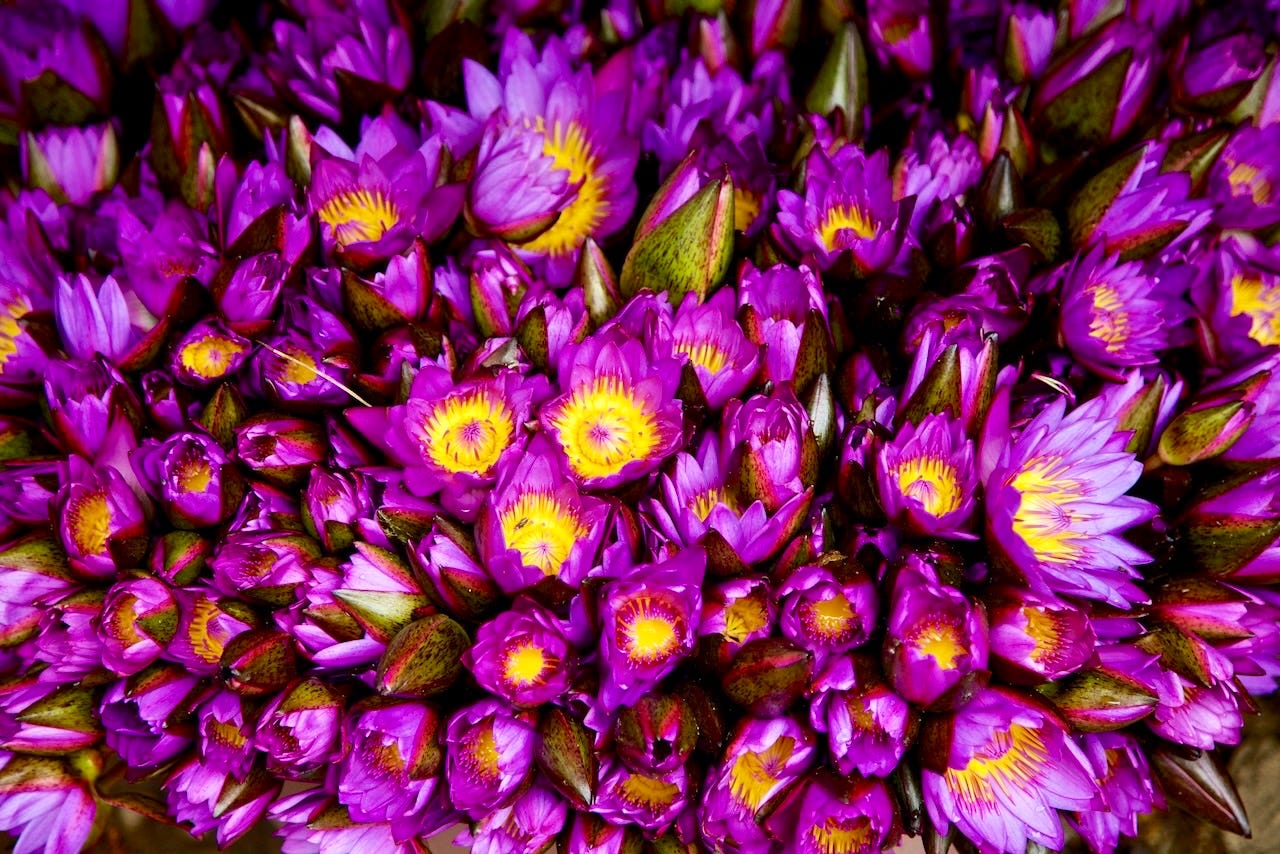
We enter the temple after sundown, when the cleansing rituals are being held. It is the New Year, a deeply auspicious time, and families with newborn babies are here to make offerings and seek blessings for their offspring. We line up with them and other tourists to enter the inner sanctums and circumambulate the regal container holding various relics, including the tooth. There is hushed reverence and no photography or dallying allowed. Then on to a table laden with flowers, candles, and other items, with thick crowds of worshippers and immobile, seated monks.
But it is downstairs where I capture the most human moment. Three men are in charge of drumming, maintaining a constant, slow beat throughout this long ritual. The man I take to be the leader, half hidden behind a pillar, is trying his hardest to break the serious composure of the other two. He makes rude faces and silently mouths words at them. I watch them struggle mightily to maintain the rhythm without laughing. Perhaps he torments them like this every night.
Temples dot the hills around the city. We visit Sri Maha Bodhi Viharaya, a relatively recent construction with the largest Buddha statue in town. From here, the whole valley can be viewed. The air has a freshness to it, a cool mountain atmosphere absent from the humid, low-lying plains and coastal regions.
At Asgiri Maha Vihara Pirivena, where the freshly minted adolescent monk is saying goodbye to his family, the interior of the meditation hall is awash with imagery and color, with its dark wooden wall panels and detailed ceiling art.
Another floor houses a step-by-step user’s guide to the stages of human life, in decade increments. Each is labeled. I decide that I don’t like the look of my own decade, tipping into the ‘aged’ phase, which shows a person slightly stooped over and weak. I prefer the ‘knowledge’ phase from 40–50 years, displaying a person with a strong, upright stance and holding a book. Surely that’ll be me forever.
Just as depressing is the painting on the adjoining wall, which shows the ten stages of a body’s decomposition. Each is labeled with a grisly description. Buddhism never fails to remind us of how temporary and unnoteworthy we are. When I was young and saw such images in religious artwork, I felt safely distant from contemplating my own mortality. Now, there is a vague tug of melancholy. Not because I will fail to secure any real estate in Nirvana. I hope I’ve done enough to mean something to somebody.
We stop to eat a street-food meal that looks like lasagna but tastes like curry —bought more to escape a sudden downpour than because we are hungry. The name of the dish is written on the window in Sinhala, so I never learn what it is called. I wash mine down with a spicy chai, the flavor that unerringly places me in this specific part of the world.
I don’t gush about many cities. Nearly everywhere has a tedious or ugly side. Modern urban development is invariably bursting at the seams, choosing the utilitarian management of an ever-increasing population over aesthetics.
Somehow, little Kandy, nestled in its green valley fortress, has escaped that. Not just parts of it, but the whole thing. Not in the mold of a picture-perfect Swiss village, but in the brash, overstimulating South Asian way, where bursts of noise and color count for everything.
For more cultural experiences worth building a trip around, see Cultural Immersion.
If you liked this, there’s more where it came from. Scott Monaco opens a window somewhere new every week —travel essays, photography, cultural observations, and books worth reading. Once a week, sometimes more. Free to subscribe.

Lovely reading your reflections of Kandy. I, too, have fond memories of the small city, introduced to me by local friends and by volunteering at a children's home.
Although, unlike most, I found Sri Lanka to be one of the tougher places I've traveled, especially as a solo woman taking public transportation. I always put it down to a high level of exhaustion I was feeling at the time, rather than the people or the place.
I wrote about kandy a few months ago. It's a city that marked me. having your perspective was great and such a warming flashback. Also, I can only agree with this quote : " I prefer the ‘knowledge’ phase from 40–50 years, displaying a person with a strong, upright stance and holding a book. Surely that’ll be me forever."