


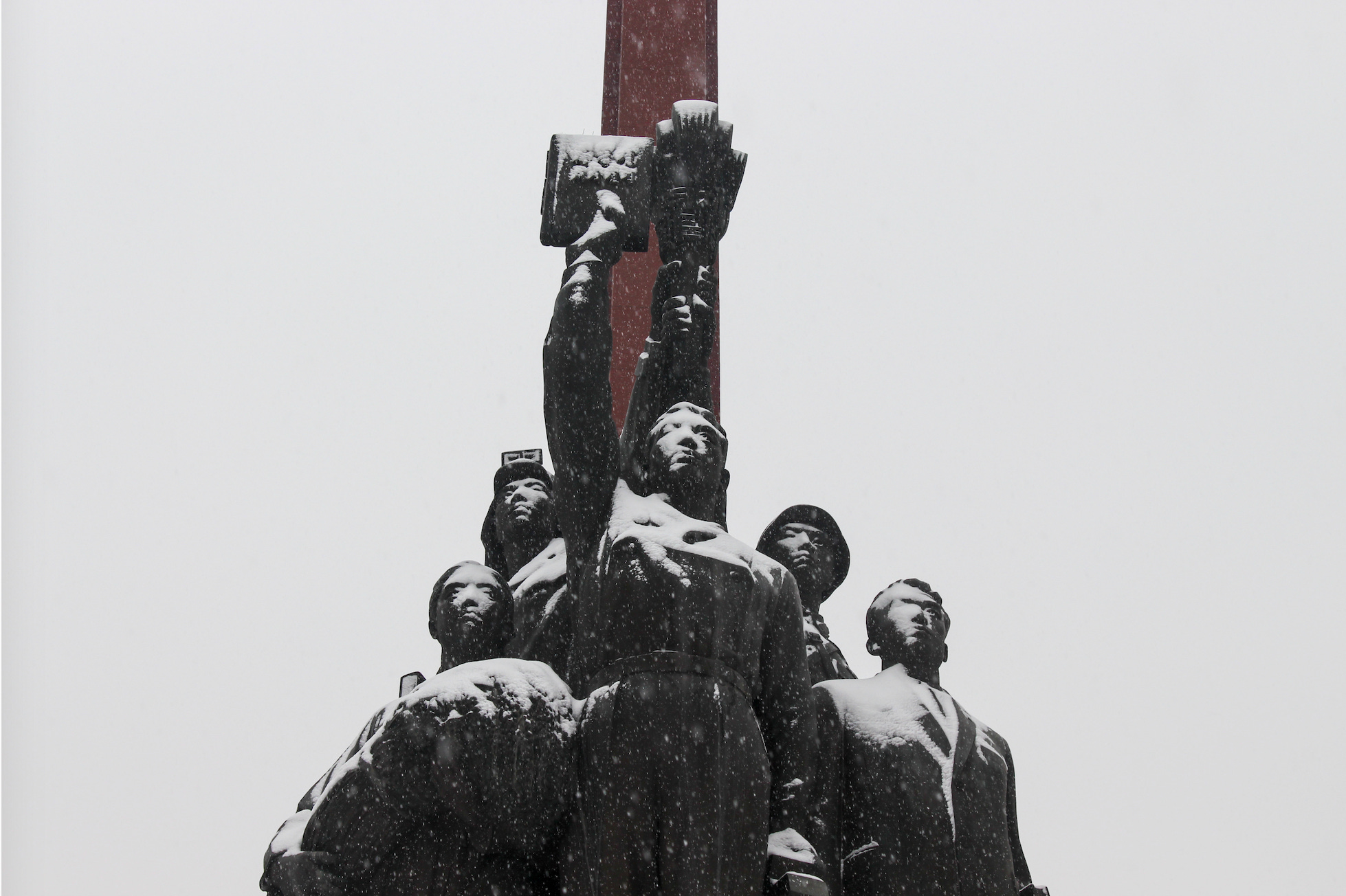
The snow comes down thick enough to erase the city. It crunches underfoot, loud in a way that makes everything else go quiet. I walk with my head angled down, lashes stiffening as flakes catch, trying not to look too far ahead. When it snows like this, you stop seeing clearly and start moving on trust alone.
I live in Sweden now. It is nothing like where I stood ten years ago, and yet this weather returns me there with an efficiency that still surprises me. Whenever the snow thickens enough to close the world in, I am transported to that other place, that earlier moment, when visibility narrowed, and I mistook enclosure for safety.
At the time, I was living in China, still young enough to believe geography was a form of leverage. You could take a gamble on a position in a company you had never heard about, in a place that hadn’t finished inventing itself, and call it ambition rather than recklessness. The world felt open in a way that made restraint seem like a failure of imagination. Why not spend the New Year somewhere very few others would.
Pyongyang was close —closer than it should have been, given what it represented— and it carried the appeal of the unrepeatable. There were places you traveled to for beauty, others for pleasure, and others still for ease. This one promised none of that. It offered the satisfaction of proximity instead: of standing in something sealed off, of seeing a place that resisted being seen. We told ourselves this was curiosity. We told ourselves it was education.
Before we were allowed anywhere near North Korea, we were gathered in Beijing, funneled into a briefing room where the instructions were delivered alongside context. History, geography, and the long inheritance of war and division. Explanations of who we would meet, how people lived, and what made the country distinct. It was presented as a rare cultural encounter —constrained, yes, but meaningful on its own terms.
The rules arrived neatly tucked into a larger story. What you could carry. What you could not photograph. We were tourists, not journalists. The language carried the calm authority of experience. The specificity was comforting. You could feel the group relax as the list grew longer, as if detail itself were a form of protection, not just from danger, but from misunderstanding. Follow the structure, and you would be allowed to see what few people ever saw.
Paperwork followed. We affirmed that we were there for tourism, that we understood the conditions, and could only ever share our story on personal sites like this and not in the mainstream media. I read it carefully enough to know I wasn’t planning to break anything. I wasn’t there to test boundaries or provoke a reaction.
The next morning, we boarded an Air Koryo flight bound for Pyongyang. The boarding pass alone felt strange, an ordinary slip of paper printed with a destination that was anything but. On the tarmac waited an aging Soviet-built Tupolev, narrow-bodied and slightly dated.
Inside, everything felt heavy. When the plane began its takeoff roll, it seemed to require more runway than expected; the engines straining before the wheels finally left the ground. The lift-off was slow, deliberate, as if weight itself had to be negotiated.
We touched down in Pyongyang, the coating of snow already draining the city of color. The airport terminal was new, gleaming, and empty. Passport control came first, then security, its sequencing and polish indistinguishable from any modern Chinese city. The sameness was almost reassuring.
Our phones and laptops were removed from our bags and examined carefully, screens flicked through with practiced fingers. A few rows over, a young man began to object when photographs from a recent trip to South Korea appeared on his phone, along with a PDF guidebook on his laptop he’d forgotten to delete. The items were deleted from his devices, trash emptied. He protested briefly, then stopped. The process continued. No one raised their voice. No one had to.