


This week’s piece is by Kirtana Menon, a travel writer and SEO specialist. Her work has appeared in Islands, Purple Pencil Project, and The India Forecast. (@MenonKirtana) This is the fifth and final piece from our first open submissions call. You can submit now to our second open call through November 30. All words are hers.
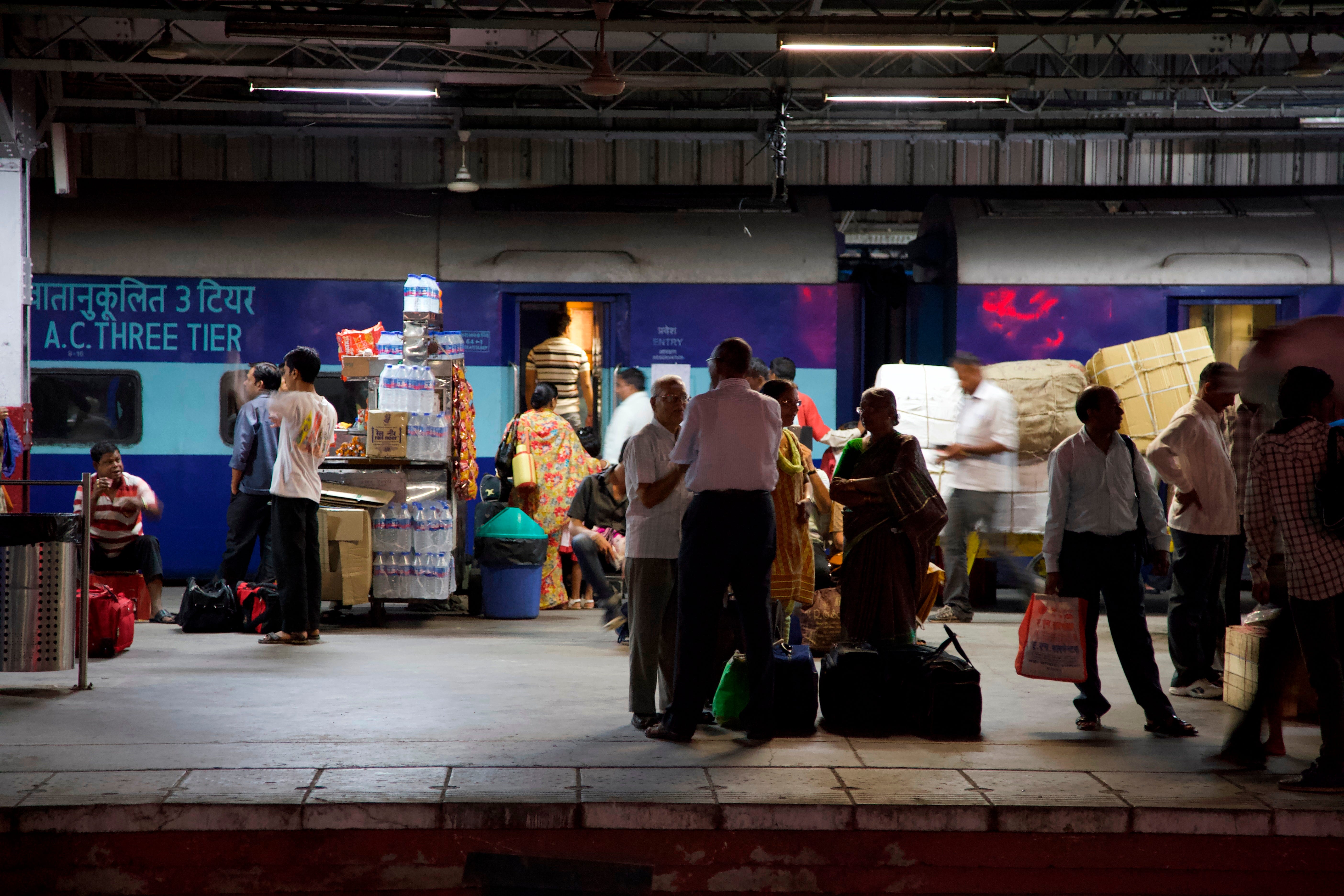
Even at 6:30 a.m., we heard Dadar Station long before we saw it.
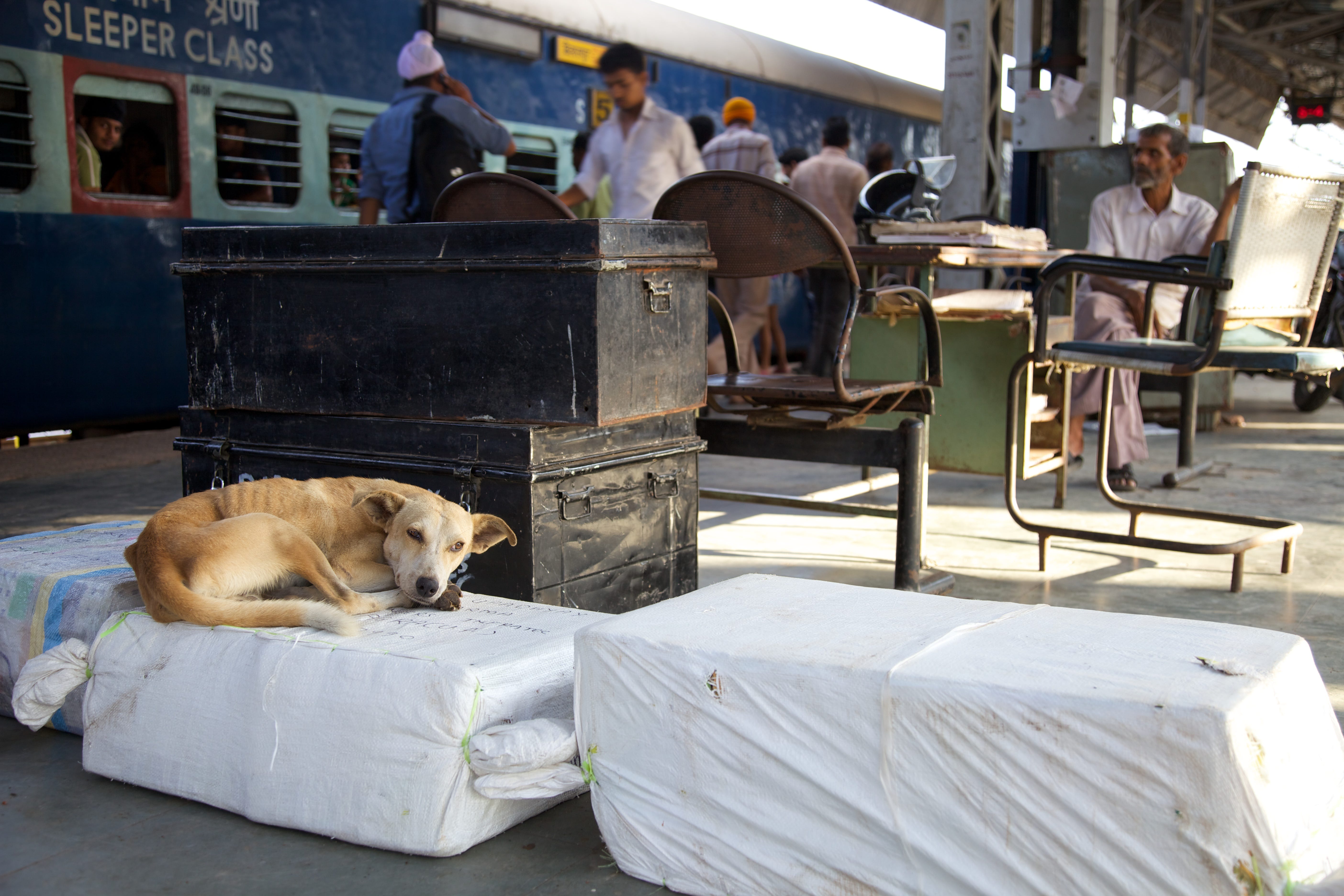
Trains let out shrill, deafening whistles as they pulled into the station. Cars screeched out of the entrance, only to be immediately replaced by more cars with more harried travelers. Daily commuters headed to work or school, their conversations blending as they deftly wove their way through the mass of bodies toward Mumbai’s famous local trains on sheer muscle memory. Somehow louder than the trains and cars combined, the porters bellowed their rates: “Two suitcase 200!” “Four suitcase 350!”
In the middle of the rush, we hurried through, countering each porter’s offer with “no thank you,” “no, really, we can manage,” and “get out of the way, you’ll make us late!” My mother clutched my hands and my brother’s shoulder tightly enough to cut off circulation, while my father wrangled four suitcases onto the platform with all the experience of four decades of train travel. Only a few people had their toes run over in our haste, which is a standard occupational hazard of existing in Dadar Station.
I was ten years old, and summer vacation had begun, which meant it was time for our annual visit to my grandparents in Bangalore. Since we lived all the way in Mumbai, our options were flight tickets for the cost of one kidney each, or a 24-hour train journey. So here we were, waiting on the platform for the Udyan Express, our home for the next day.
Indian Railways has long been the average Indian’s preferred mode of long-distance travel. Indian trains carry some 20 million passengers on an average day, and a record 30 million in a single day in 2024. Coming from Mumbai, I was already familiar with the city’s busy local trains, but long-distance train travel was always a childhood favorite for its relaxed, unplugged nature.
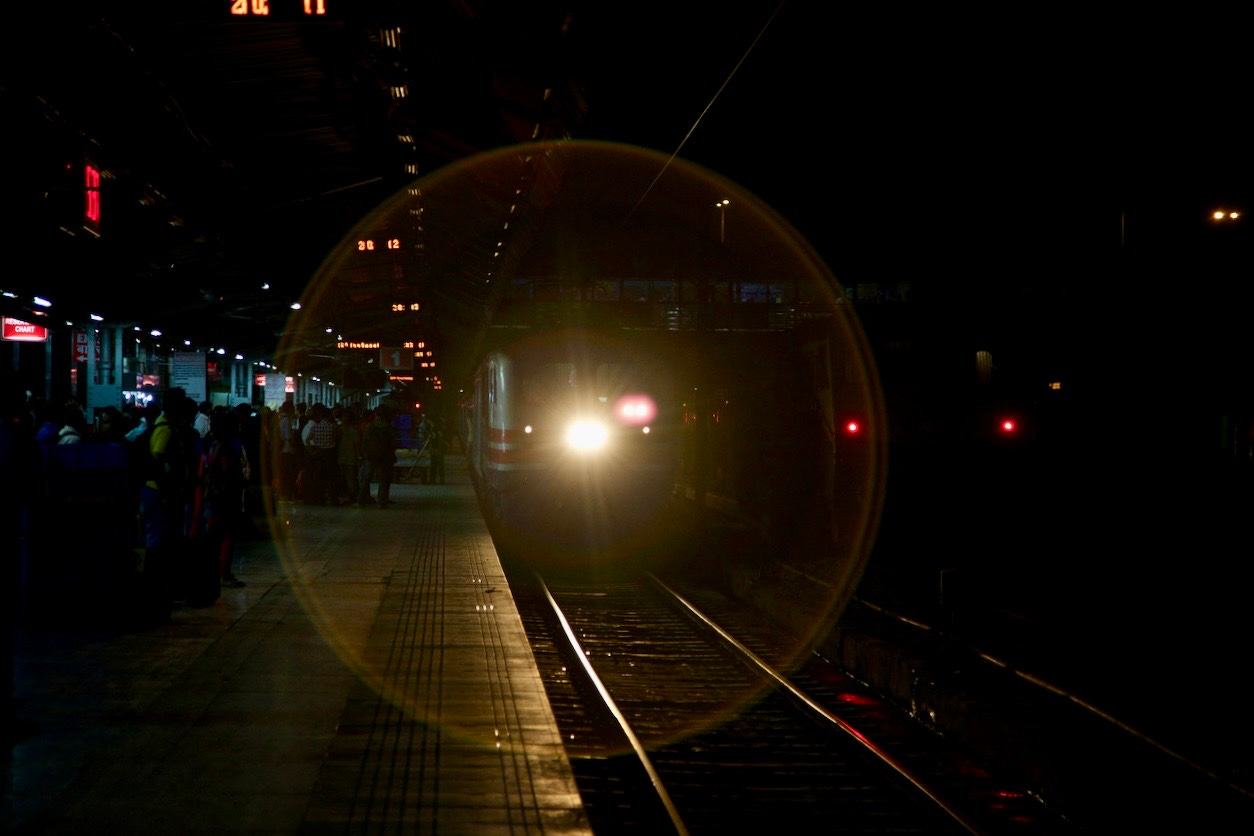
The train arrived on time, throwing everyone who had counted on the Indian Railways’ propensity for delay into a panic. “Which train comes on time, I tell you?!” one lady screamed in disgust. Because Dadar is the busiest junction in Mumbai, the train would halt for only three minutes before leaving the city. In that interval, several hundred passengers had to get themselves and their luggage on board.
Before the train had even fully slowed to a stop, a group of three men appointed themselves to get everyone’s luggage onto the train. One man gathered up everyone’s luggage and tossed it up at the train entrance, where the second wheeled it to the third inside the coach, who shoved it willy-nilly away from the aisle. Meanwhile, all other passengers, including us, were directed to get in from the other side of the compartment so we weren’t in their way.
This “I’ll just do it myself” attitude is typical of Mumbai. In a city where bridges disappear overnight, and traffic lights work only on every third full moon, the people have simply adapted to organizing themselves. Just as ordinary citizens act as traffic cops at busy junctions, or organize cleaning drives to clear the beaches and streets, these three men had decided to solve the problem of a long-distance train stopping at the city’s busiest station for just three minutes. Two of them clapped the third on the back, shrugged off the thank-yous, and got off just as the train began moving, while he disappeared into his own seat.
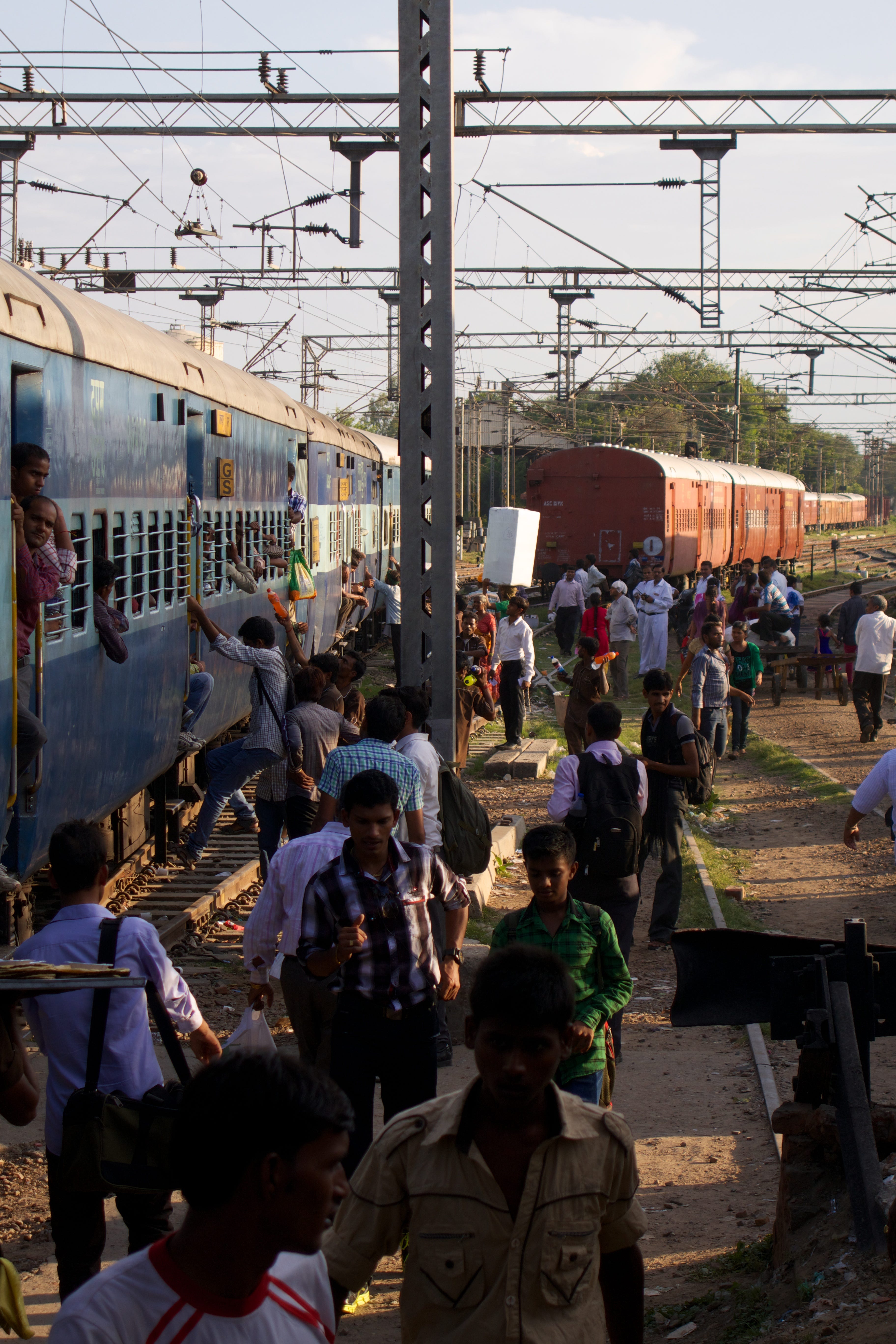
Once inside, my brother and I spent the first few hours climbing onto the top berth and down, then back again. In the process, we interrupted several sleepy passengers on their way to their own seats, and I’m almost certain I used a man’s bald head as a rung on the ladder. Outside the city, the train picked up speed, and we pressed our faces to the window, gawking at cows and trees and grass and all those other things we didn’t normally find in the city. The four of us had seats 25 and 26, while an old couple occupied 29 and 30 across from us. At this point, seats 27 and 28 were unoccupied, so my family had enough room to sit comfortably while we waited for confirmation on the remaining two seats.
In India, securing train tickets is a long and convoluted process that relies equally on luck, the phase of the moon, and a good internet connection, which was a dubious prospect in the late 2000s. Tickets for the AC sleeper class came in three categories — Reserved, Reservation Against Cancellation (generally known as RAC tickets), and Waitlisted. Reserved tickets went to those who clicked on open seats as soon as tickets went on sale 90 days before the journey. These fortunate few had confirmed berths. RAC ticket holders weren’t assigned a berth yet, but could come on board and would be assigned seats once the inevitable no-shows and cancellations were tabulated. Waitlisted ticket holders would be assigned seats only after the RAC tickets, and they weren’t allowed to board the train until their seats were confirmed.
My father had booked four tickets together, yet my older brother and mother had reserved tickets, while Dad and I had RAC tickets. Dad’s number on the list was 45. Mine was 62. The intricacies of railway ticketing were beyond me, though. I was just excited for the journey ahead.
Sometime around 4 p.m., the old couple across from us gathered up their suitcases and got off at a small station after Solapur. At the same station, a family of four and a young woman with her toddler came on board, occupying the remaining seats in our section. The family introduced themselves as Mohammad Uncle, Maryam Auntie, and Asif and Ayaan, the two kids. The other woman introduced herself as Jayashree and her toddler as Gauri.
My brother and the two boys, Asif and Ayaan, immediately took to each other, retreating to the top berths where they clustered around Ayaan’s PlayStation Portable. Mom nudged me toward Gauri. I dug my heels in. Mom nudged me again, this time accompanied by a glare. I glared back. I had no intention of babysitting a toddler when I had already planned a nice evening with the three books I’d packed.
I spent the next two hours playing house-house with Gauri.
Night fell, and Mom pulled out the tin of food she’d packed for our dinner. While some trains have a reputation for offering delicious meals, the Udyan Express was not one of them. Our standard train fare was homemade thairu choru, or curd rice. It’s as appetizing as the name suggests. No matter how often my brother and I tried to remind Mom that thairu choru is sick-people food, she insisted that it was the easiest to prepare, wouldn’t go bad in the heat, and was easier on the stomach than India’s typically spicy fare.
As glum as I was at the sight of the tin, one other person looked even more horrified: Mohammad Uncle.
“What is that?” he asked.
Rather than answering the man’s question, Mom decided to take offense. “I made it,” she replied, narrowing her eyes.
Behind her, Dad frantically drew his finger across his throat.
Noticing Mom’s thunderous expression, Mohammad Uncle realized his mistake. Or maybe it was the sharp elbow to his ribs from Maryam Auntie. Either way, he chuckled nervously and clarified, “I know how bad Udyan Express food is, so my sister-in-law is actually bringing chicken biryani for us at Guntakal Junction. She owns a catering business, and I asked her to bring enough for everyone here.”
I perked up. My brother peeked out from the top berth, suddenly interested in the conversation. Mom looked thrilled and quickly packed away the tin in her hand, which lent credence to my theory that she doesn’t like thairu choru as much as she claims to. Dad stood up and shook Mohammad Uncle’s hand, too touched for words. Gauri was the only one unaffected, tugging at my T-shirt to remind me that it was my turn to clean our “house.”
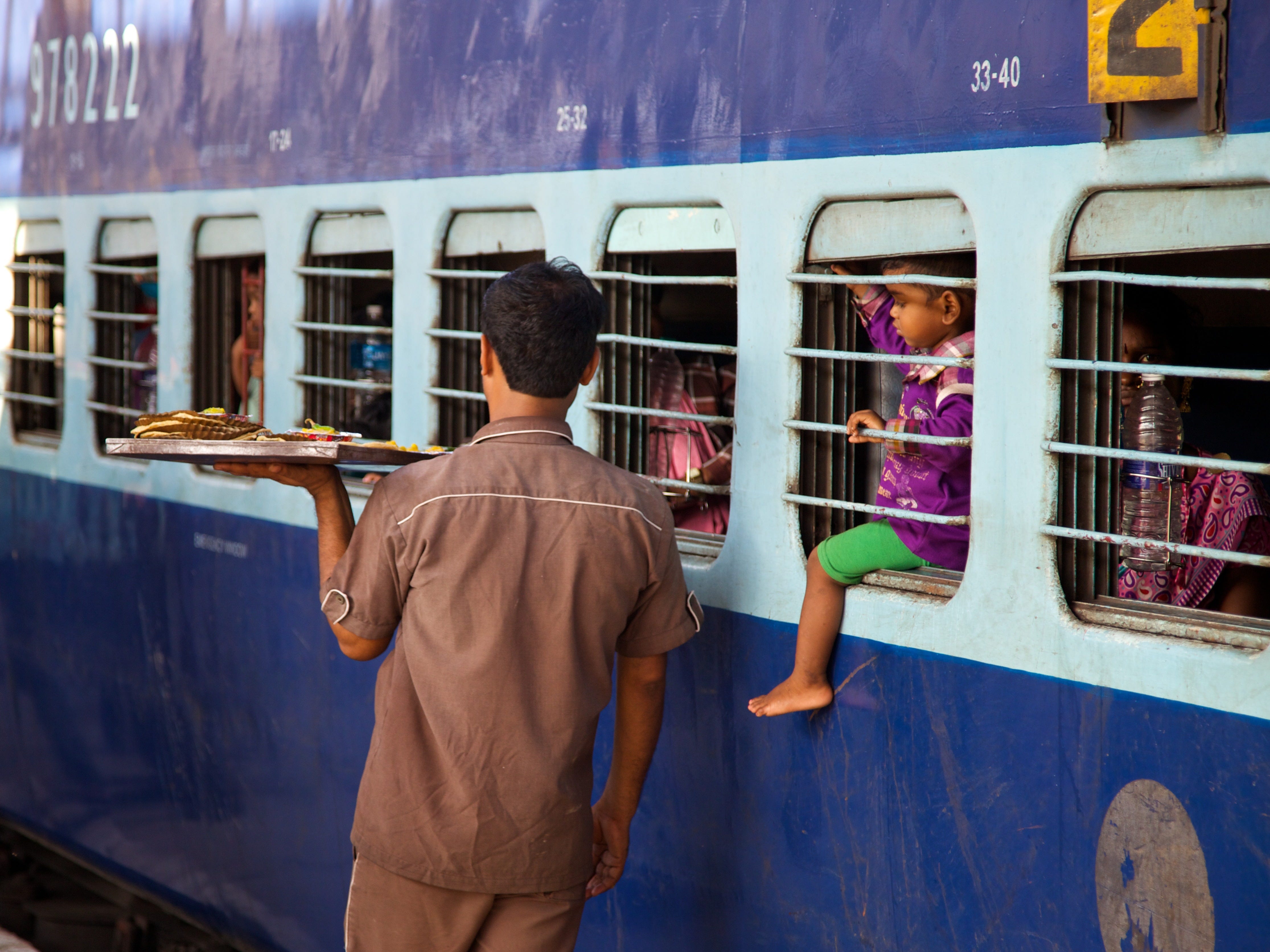
Every train journey I remember has a moment like this. There was the retired army officer who made our beds with military precision when I was six, just because he noticed how tired my mom looked. There was a young couple on their honeymoon who swapped their aloo paratha for my brother’s rice and dal when, as a small boy, he said he wanted their food. There was my dad, pacing around the coach with someone else’s crying baby, soothing him while his exhausted parents took a moment to breathe.
Soon after, my parents started a spirited discussion with Mohammad Uncle. Mom and Dad, both recent converts to Christianity, were arguing that Jesus was the son of God. Mohammad Uncle, a devout Muslim, insisted Jesus was a great prophet of Allah. Jayashree, an equally devout Jain, was fast asleep, secure in the knowledge that someone else (me) was taking care of her rambunctious toddler.
In a country like India, where religion continues to be a sensitive topic, this conversation could easily have turned ugly. Yet, there’s something about a train journey that defuses one’s reactive instincts. The conversation continued, Jayashree slept, and an old man showed up from elsewhere to remind everyone that Jesus and Allah were obviously just two of several million gods. The biryani arrived, and everyone quickly agreed to disagree.
After dinner — during which Jayashree had to repeatedly remind Gauri that Jains don’t eat meat while Gauri staunchly ignored her and tried to steal a chicken leg — the lights winked out as more people turned in for the night. The steady chatter of hundreds of concurrent conversations faded, replaced by the sound of rustling sheets as everyone valiantly attempted to make their beds while on all fours in their berths. Every AC coach provides a standard bedding kit of two white bedsheets, a pillow, and a thick blanket of wool and synthetic fabric that itches uncontrollably against bare skin. Passengers freely exchanged the sheets with each other, giving the thick blankets to the children and those sensitive to the cold. By then, Dad’s RAC ticket had come through for one of the side berths, but I still did not have one, so I planned to squeeze in beside my mother for the night. Then Jayashree offered me Gauri’s berth, arguing that Gauri was small enough to sleep with her and that I was too big to share with my mother.
With our sleeping arrangements settled, I sleepily brushed my teeth at the sink outside our coach and went to the toilet without incident, unless you count the lady inside the toilet with the broken lock. In fairness, she did the finest impression of Lata Mangeshkar (or perhaps Barry Gibb?) I’ve ever heard when I accidentally opened the door with her still inside.
By unspoken consensus, everyone said their goodbyes before sleeping. Mohammad Uncle and his family would get off at Bangalore Cantonment, a station before ours. Jayashree, Gauri, and my family would stay on the train until the very last stop at Bangalore City. We would never see each other again, and as the years went by, my family would exchange the warmth of the train for the convenience of a flight.
Sitting in an economy seat today, headphones in, seatbelt on, looking out at the sea of heads bent over their phones or laptops, it occurs to me: I miss the train.
If you liked this, there’s more where it came from. Scott Monaco opens a window somewhere new every week — travel essays, photography, cultural observations, and books worth reading. Once a week, sometimes more. Free to subscribe.

Beautifully written. Indian train journeys are never dull.
I've never been to India but after now I feel like as if I have. Thanks for sharing your journey with us.