


Why Go to Rwanda?
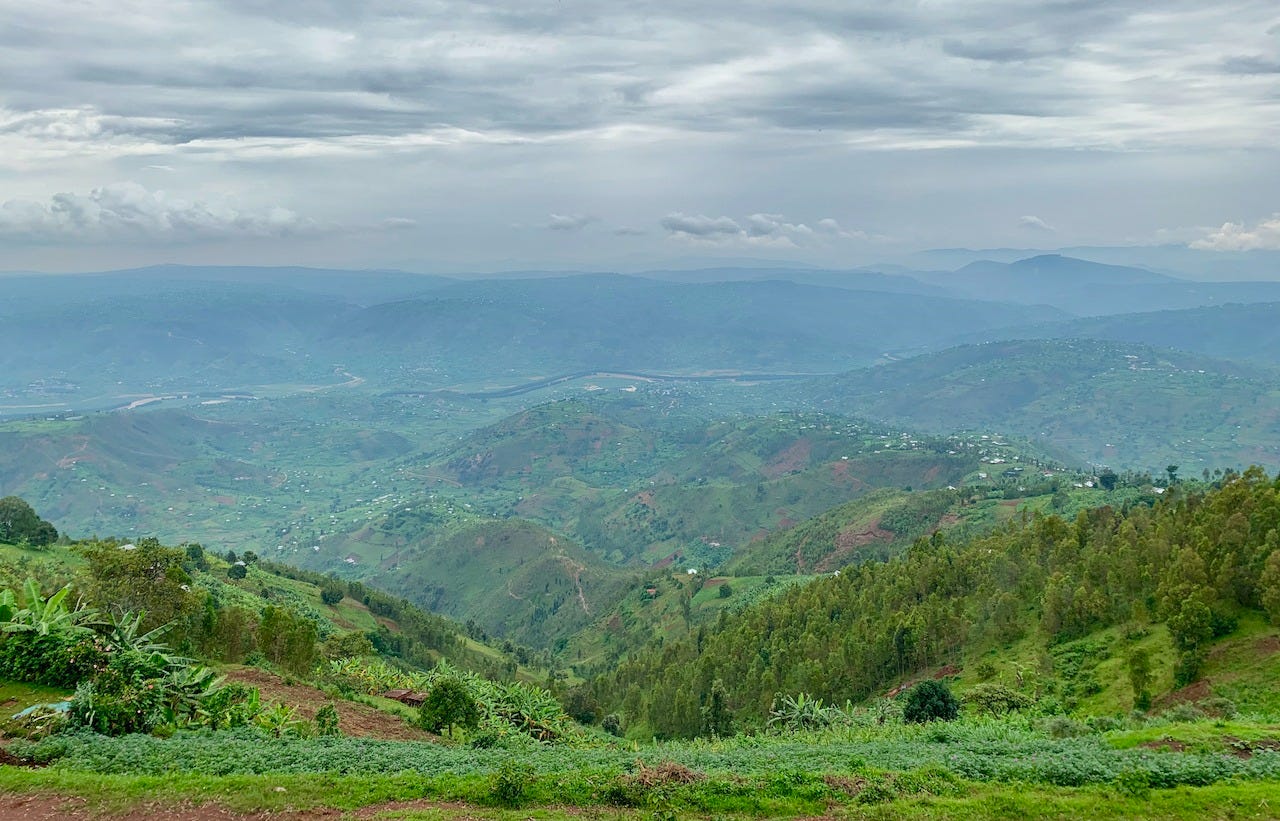
Though small in size, my former home Rwanda carries a richness that far outweighs its headlines. Known as the “land of a thousand hills,” the country combines breathtaking scenery, remarkable wildlife, and a rapidly modernizing capital. From gorilla trekking in misty volcanoes to vibrant café culture in Kigali, Rwanda rewards visitors with a mix of natural wonder and cultural resilience.
If you only have three days:
Take a day in Kigali for cafés, markets, and hillside views.
Visit the Kigali Genocide Memorial to ground yourself in the country’s history.
Add a trip to Volcanoes National Park for a once-in-a-lifetime gorilla trek (if budget allows).
Maps
Places to Know
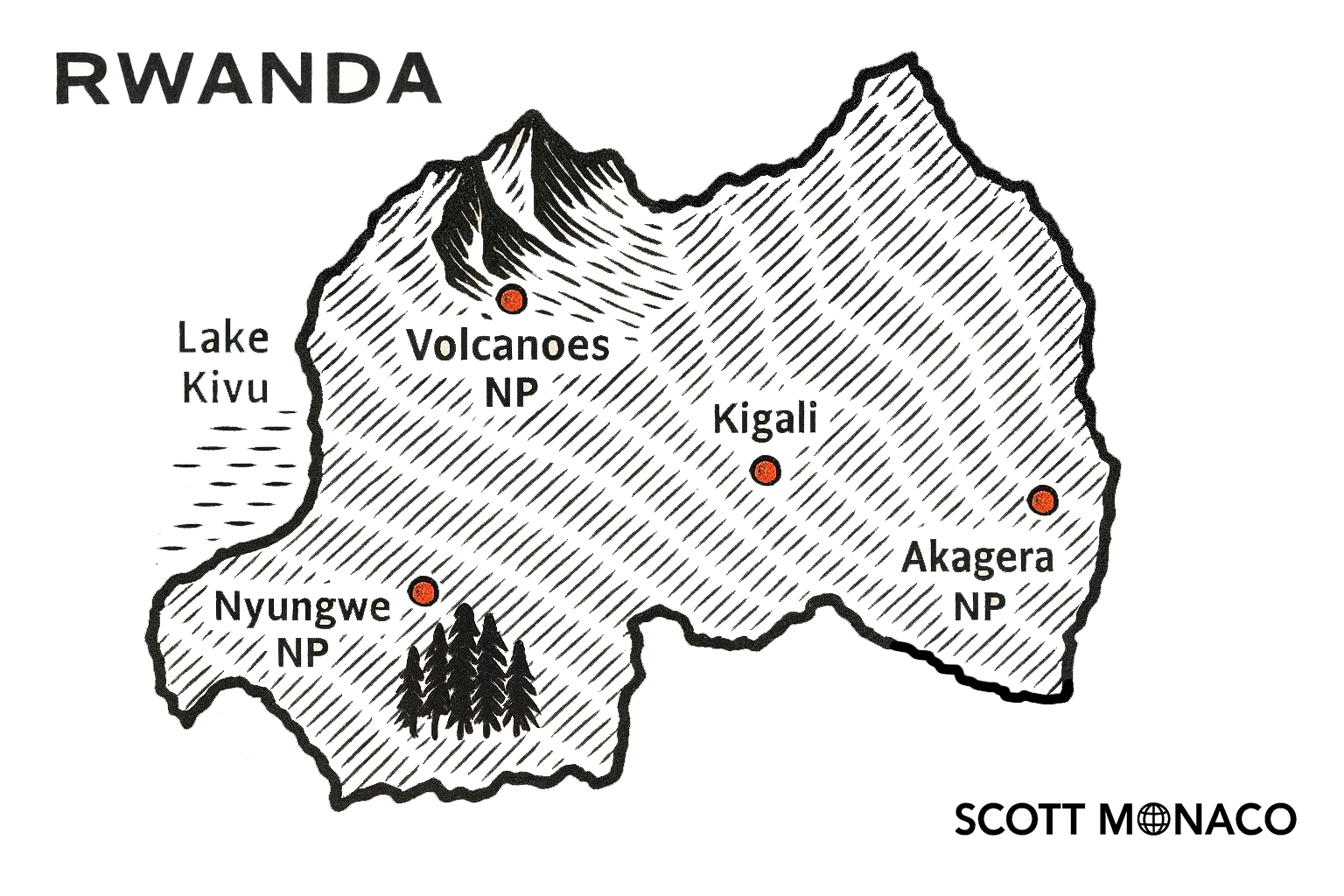
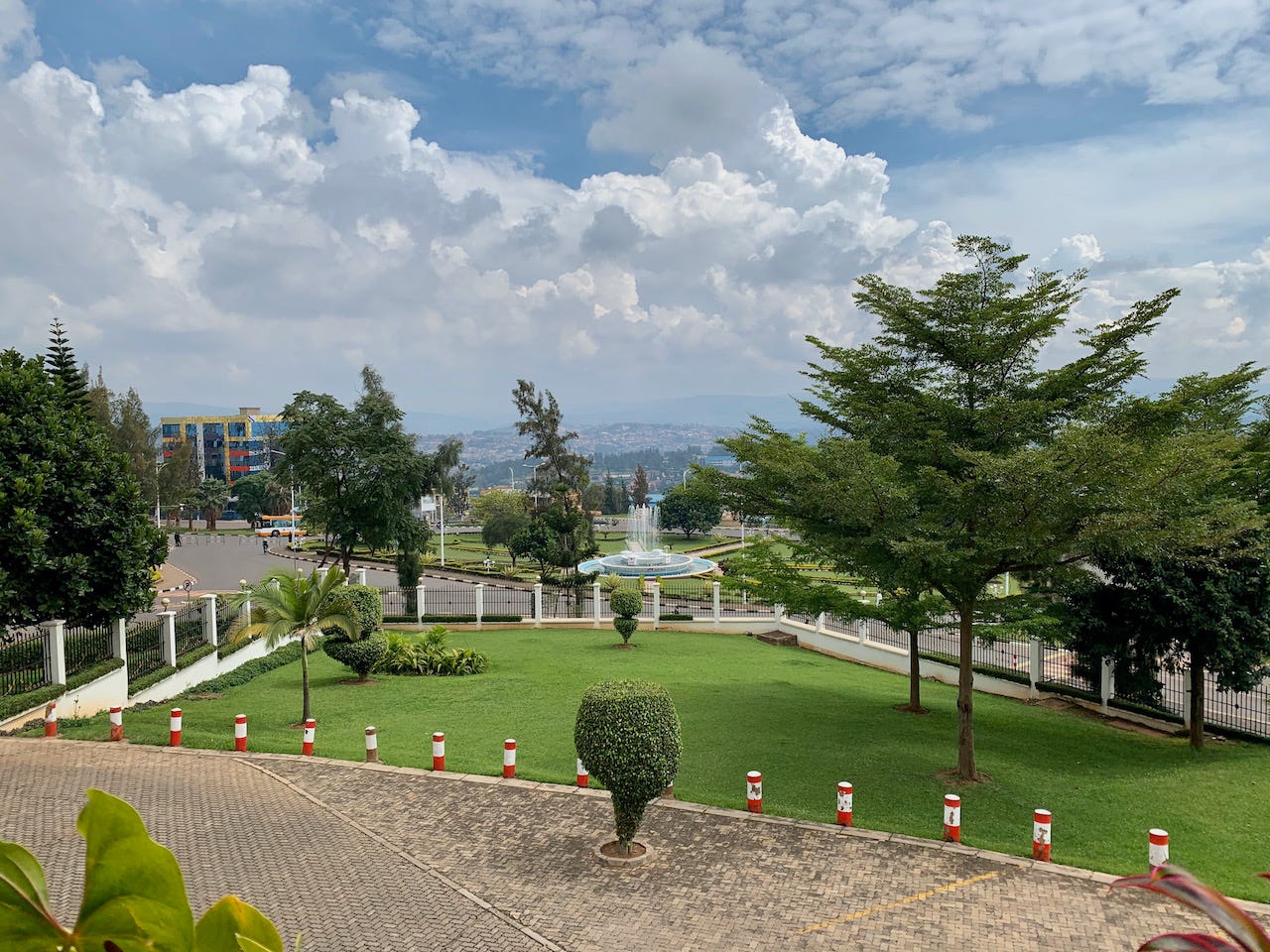
Kigali – The capital: leafy hills, lively cafés, markets, and history.
Volcanoes National Park – The famous gorilla-trekking hub in the northwest.
Akagera National Park – Savanna wildlife and safari experiences in the east.
Lake Kivu – Relaxing shores.
Nyungwe Forest – A biodiversity hotspot, with canopy walks and colobus monkeys.
Practical Guide
Getting There
Rwanda’s main gateway is Kigali International Airport, about 20 minutes from the city center. Direct flights connect Kigali to major hubs in Africa, Europe, and the Middle East. A new Bugesera International Airport is under construction with major investment from Qatar Airways and is expected to open in 2028 as a regional hub.
Getting Around
Public buses connect cities, but most travelers opt for private drivers or tour operators for comfort and efficiency. Renting a car is also a great option if you want to explore independently. In Kigali, moto-taxis are the most common form of transport (helmets are provided and legally required).
Weather & Timing
Rwanda lies just south of the Equator, so daylight hours stay consistent year-round. Thanks to its high elevation, temperatures are mild, generally 60–80°F (16–27°C) throughout the year. The slightly warmer “summer” coincides with winter in the U.S. and Europe. April is the rainiest month and also marks the annual genocide commemoration, beginning with April 7, a national day of mourning. Expect heavy downpours and widespread remembrance events during this period.
On the last Saturday of every month, the country observes Umuganda, a nationwide day of community service. Roads are closed from 8 a.m. to noon, and most businesses pause, so plan your travel around those hours.
Money & Connectivity
Local SIMs from MTN or Airtel are cheap and available at Kigali Airport. eSIM users can also use Airalo, but most plans are data-only, good for browsing and maps, but not for Mobile Money. Coverage is very good throughout the country.
MoMo (MTN Mobile Money) is Rwanda’s go-to way of paying for everyday things (taxis, cafés, markets), and locals now use it far more than cash. To use MoMo yourself, you’ll need a local SIM registered in person with your passport and visa, after which payments run through *182#. If you’d rather not, cash and cards are still widely accepted, especially in Kigali.
Where to Stay
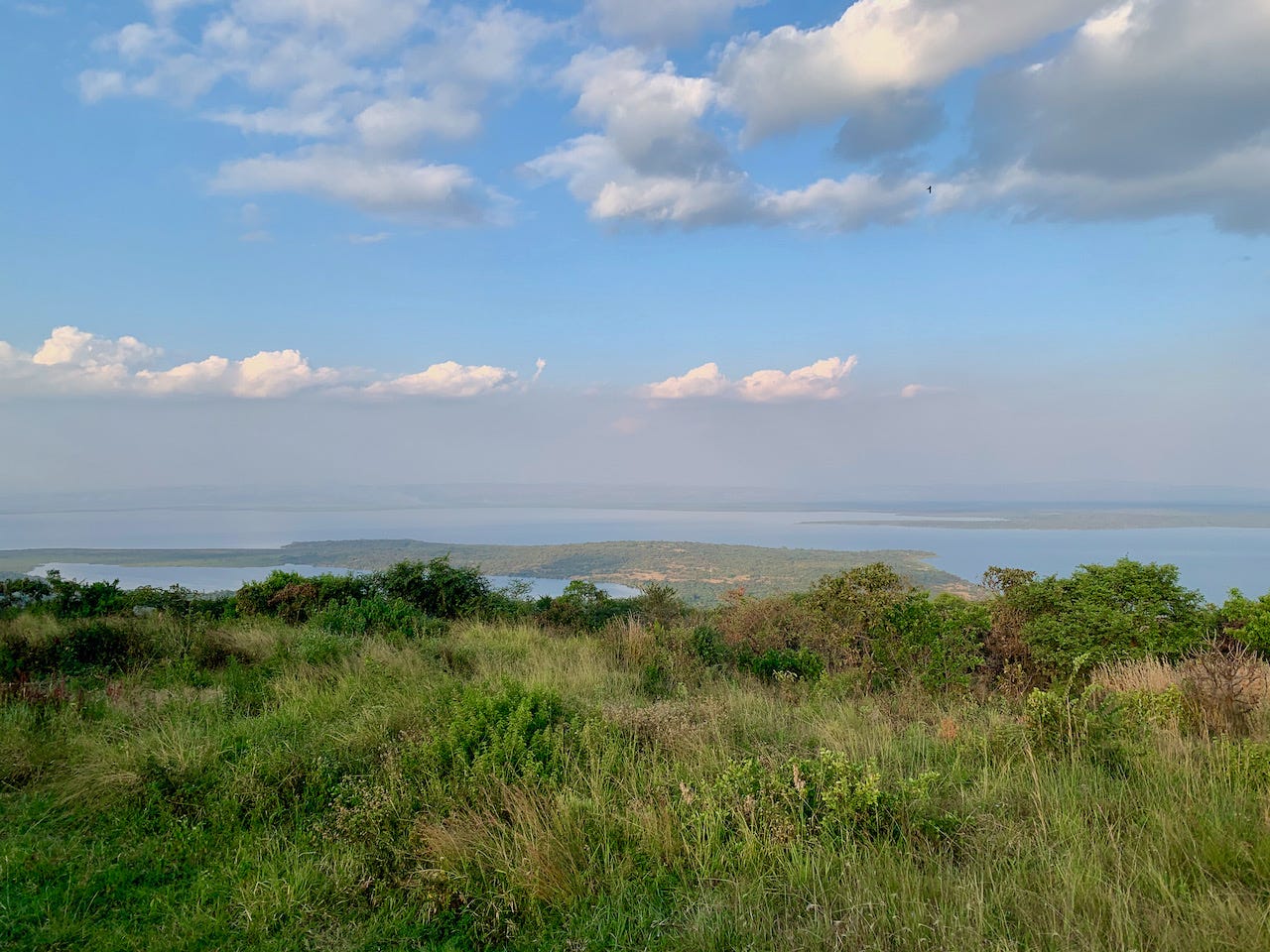
Akagera Game Lodge (Akagera National Park) – Overlooks Lake Ihema with views stretching toward Tanzania, just minutes from the park gates. Book on Expedia
Kigali Serena Hotel (Kigali) – A central, upscale option offering reliable comfort, dining, and a pool. Book on Expedia
Inzu Lodge (Rubavu) – Eco-friendly cabins on Lake Kivu, serving local dishes with sweeping lakeside views. Book on Expedia
Kivu Serena Hotel (Gisenyi) – Lakeside luxury on the border with Goma, DRC. The crossing is within walking distance, though entering the DRC is not advised and may not be possible at the time of travel. Book on Expedia


Food & Drink
Question Coffee (Kigali) – Specialty roaster and café with beans sourced directly from Rwandan farmers. Their pastries, supplied by Baso Patissier, are excellent. They also have tours and tastings, which are highly recommended.
Shokola Café (Kigali) – Relaxed café perched above the public library, ideal for lunch, coffee, or reading.
Khana Khazana (Kigali) – Exceptional Indian cuisine, maybe the best I have ever had outside India.
Now Now Rolex (Kigali) – A casual stop for the beloved Rwandan-Ugandan street snack: chapati wraps filled with egg and veggies.
A-Link (Kigali) – Known for its classic Chinese dishes, hidden in a quiet residential neighborhood.
Sizzling Plates (Kigali) – Delicious and authentic Taiwanese food.
Sole Luna (Kigali) – Italian classics and hearty buffets served in a leafy hillside setting.
Pili Pili (Kigali) – Poolside dining with sweeping views; a longtime favorite among expats.
La Créola (Kigali) – A stylish African-Asian fusion restaurant specializing in tapas, cocktails, and a creative mix of local and international flavors.
Repub Lounge (Kigali) – Cozy, social, and lively; a perfect spot for dinner or evening drinks.
1000 Hills Distillery (Kigali) – East Africa’s first craft distillery, offering gin, rum, and whisky tastings.
Museums & Culture
Kigali Genocide Memorial (Kigali): A powerful site for reflection and learning, especially important if visiting in April.
Inema Arts Center (Kigali): Contemporary Rwandan art in a dynamic collective space.
Campaign Against Genocide Museum (Kigali): A more recent addition, exploring the country’s recovery and resilience.
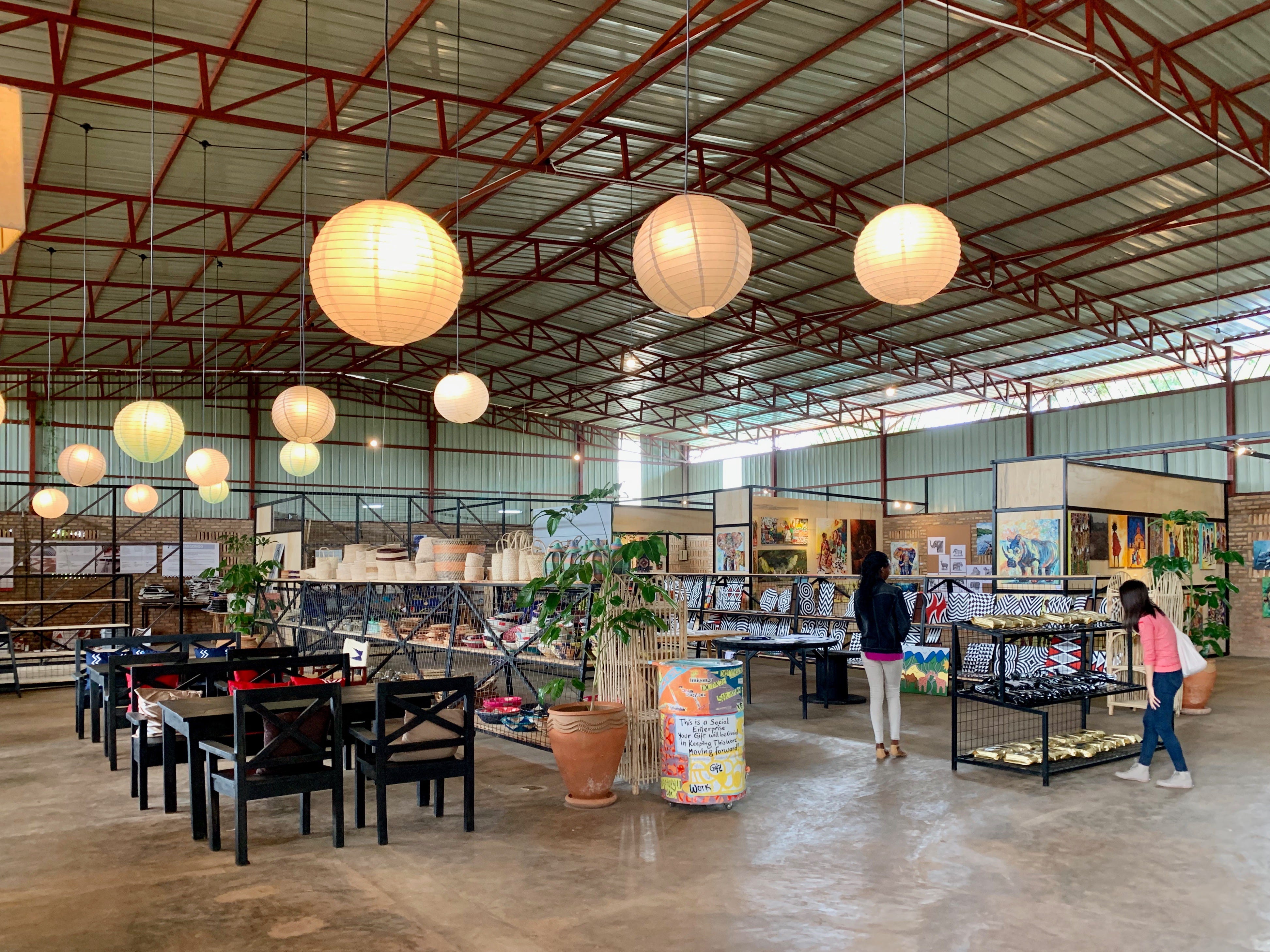
Imigongo Art Center (on the way to Akagera): Famous for geometric, cow-dung–based traditional paintings and local crafts.
Belgian Peacekeepers Memorial (Kigali) – Honors the ten Belgian UN soldiers killed in 1994, a solemn reminder of Rwanda’s turbulent history.
Ntarama & Nyamata Churches (Bugesera District) – Preserved genocide memorial sites south of Kigali, where thousands sought refuge. Both are powerful, sobering visits that provide essential context to the country’s past.
Shopping
You can’t leave Rwanda without stocking up on coffee. Pick up some local roasts from Question Coffee or get Kivu Bourbon or Monkeys, both are affordable and high quality, and available at supermarkets around town. While you’re at it, grab a bottle of Rwanda’s signature Pili Pili hot sauce as well.
Ikirezi Bookstore (Kigali): Excellent books on Africa and carefully curated souvenirs.
Kimironko Market (Kigali): A bustling local market. Colorful, chaotic, and good for produce or crafts.
Imigongo Café & Art Center (Kayonza, en route to Akagera): Best stop for handicrafts, art, and a hearty Rolex (the wrap, not the watch).
R&DA (Rwanda) Clothing Company (Kigali): A pioneering local fashion label blending bold African prints with modern design. Their boutique showcases clothing and accessories designed and produced in Rwanda.
When to Go
Dry seasons (June–September, December–February): Best for gorilla trekking, hiking, and safaris.
Rainy seasons (March–May, October–November): Lush and beautiful, but bring rain gear and expect muddy trails.


I Spy
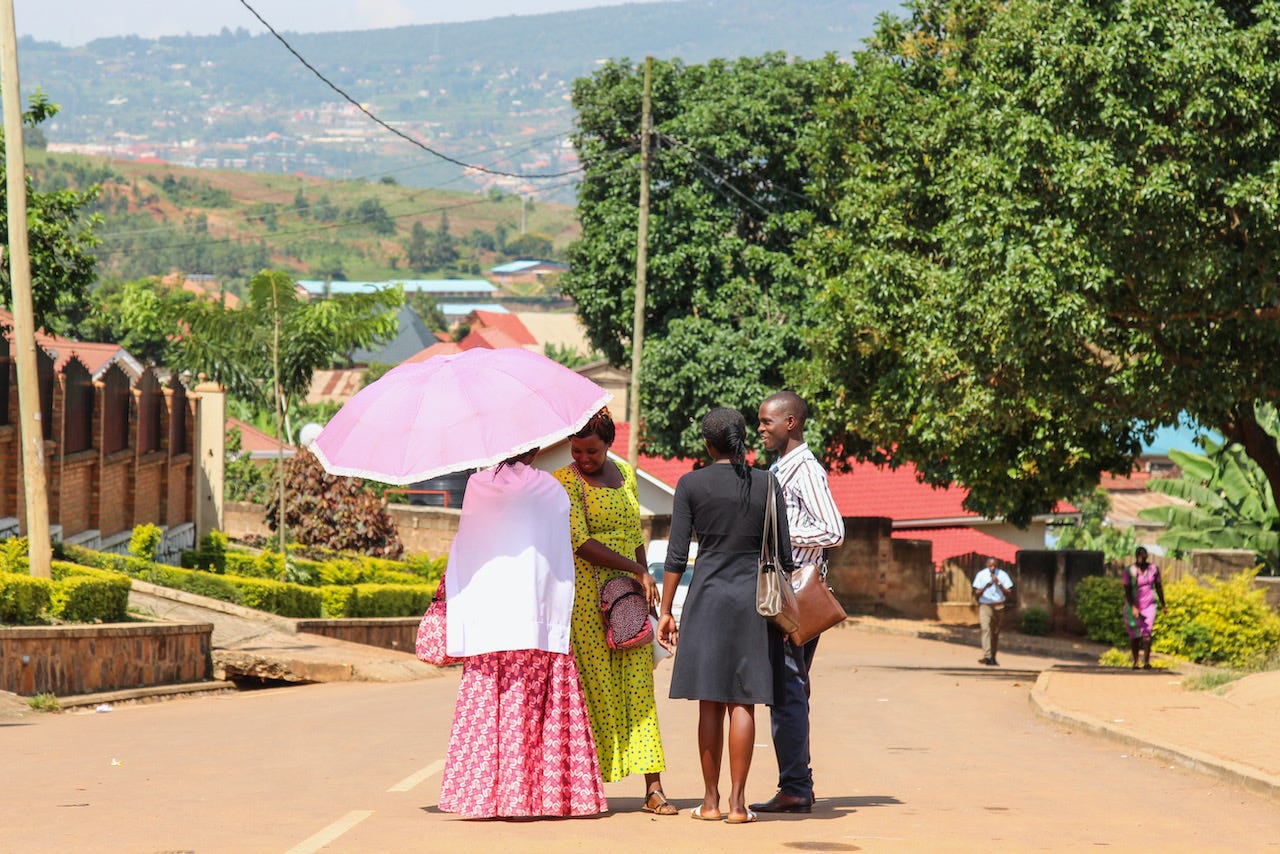
In Rwanda, it’s not just gorillas and coffee beans. Keep an eye out for the small, curious details that make the country feel alive:
Moto-taxis with matching red helmets
‘Banana boys’ flying on single-speed bicycles overloaded with bunches
Kitenge fabrics in bold patterns: worn, sold, and stitched everywhere
Murals and galleries fueling a growing contemporary art scene
Milk at room temperature on shop shelves, a national staple
A Little History & Culture
Rwanda is a small, landlocked country in East Africa, home to about 14 million people. Though sadly remembered for its tragic history in the 1994 genocide against the Tutsi, Rwanda has since rebuilt with remarkable speed, focusing on reconciliation, conservation, and innovation. It is now one of Africa’s cleanest and safest nations—yet its culture remains rooted in community, tradition, and the rhythm of its thousand hills.
Quick Facts
Currency: Rwandan Franc (RWF) — 1 USD ≈ 1,430 RWF (Oct 2025)
• Moto-taxi ride: 500–1,500 RWF (~$0.35–1)
• Cafe coffee: 2,000–5,000 RWF (~$1.50–3.50)
• Simple lunch: 6,000–12,000 RWF (~$4–8)
Language: Kinyarwanda (official), with French, English, and Swahili also used. English is common in Kigali, but Kinyarwanda dominates nationwide (a few greetings like Muraho or Murakoze go a long way).
Population: ~14 million
Fun Facts
Rwanda banned plastic bags nationwide in 2008, years before most of the world.
The last Saturday of every month is Umuganda, a community cleanup day when businesses close and everyone pitches in.
Rwanda is home to some of the world’s best coffee, grown on volcanic soil.
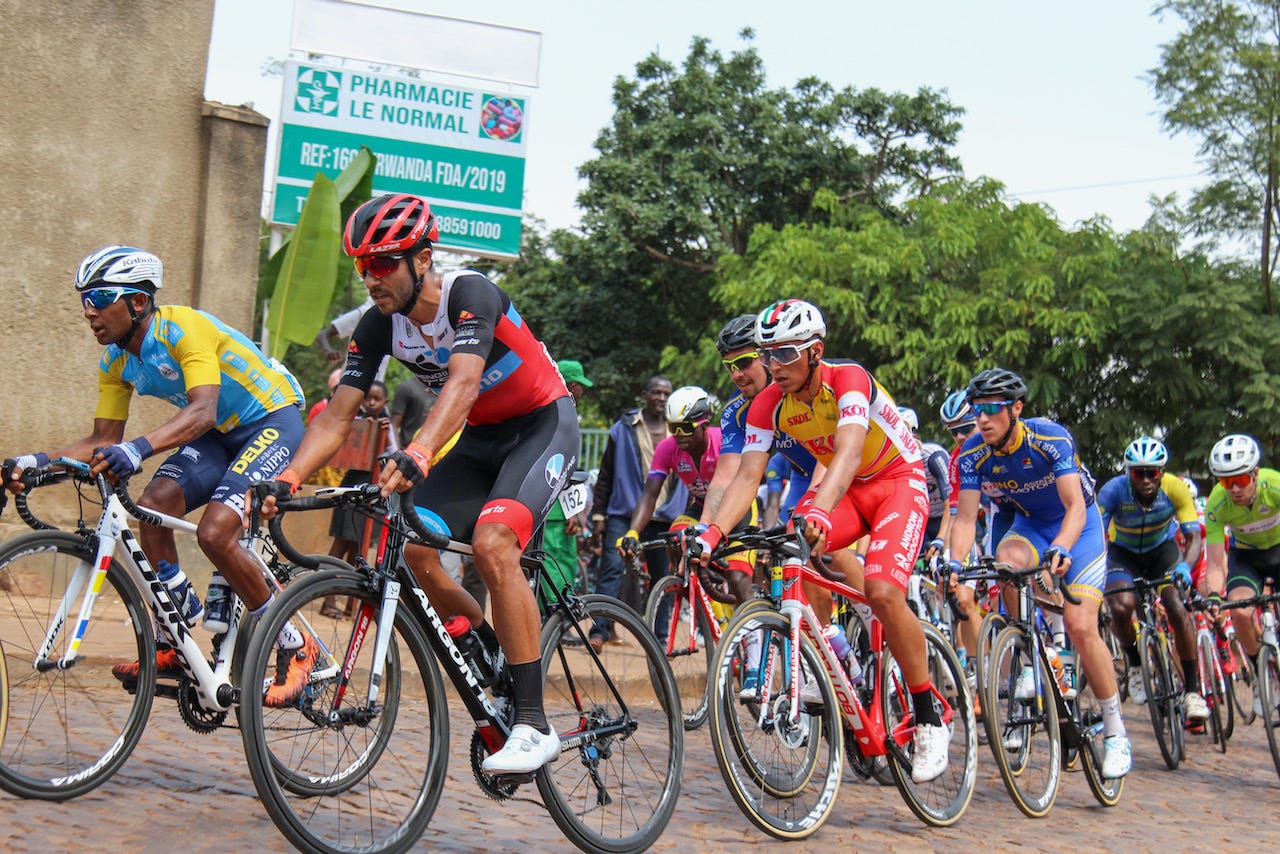
Rwanda hosts the Tour du Rwanda, a multi-stage cycling race that draws international riders and huge roadside crowds every year.
The country is nicknamed “land of a thousand hills” (Pays des Mille Collines), but the real count is far higher.
Final Thoughts
Rwanda isn’t just a gorilla trek. It’s a country best discovered slowly: sipping coffee in Kigali cafés, wandering through tea and coffee plantations along Lake Kivu, spotting wildlife in Akagera National Park, or pausing to reflect at the Genocide Memorial. Whether you spend a weekend in the capital or venture deep into the hills, you’ll likely leave with far more than you expected.
For a deeper glimpse beyond the guidebook—into the chaos, humor, and resilience of daily life—read my companion essays below. The stories may be messy, but visiting is better. Trust me. Go! 🇷🇼


If you liked this, there's more where it came from. Nothing to Declare opens a window somewhere new every week —travel essays, photography, cultural observations, and books worth reading. Once a week, sometimes more. Free to subscribe.
If you’d prefer to support through photography, I also sell prints. And if you spot a photo in a story that you like and isn’t listed, just reach out. I’m happy to do special runs at no extra cost.
I had the chance to visit Randa last year and it was fantastic! This country has incredible resilience and strength. I would sincerely recommend that anyone who has the opportunity go and see it
Rwanda has been on my "list" for a long time—I'm thoroughly convinced to make a visit happen. Thank you!