


This week's piece is by Stina Gustafsson, a Swedish travel writer with a passion for exploring overlooked destinations and telling stories about the people behind them, who publishes on Substack. This is the fourth piece from our open submissions call. All words and photographs are hers.
The air is thick with pollution. The sweet smell of apple-flavored shisha and jasmine is sickening and intoxicating in equal measure. Like so many times before, Cairo greets me with honking car horns, unbearable heat, and a couple of men trying their luck with catcalls. The call to prayer echoes across the city and drowns out even my own thoughts. It’s absolute chaos.
I know more than a handful of people who swear that, despite being deeply impressed by Egypt’s cultural heritage, they will never set foot in the Egyptian capital again. The City of a Thousand Minarets doesn’t try to be a good girl.
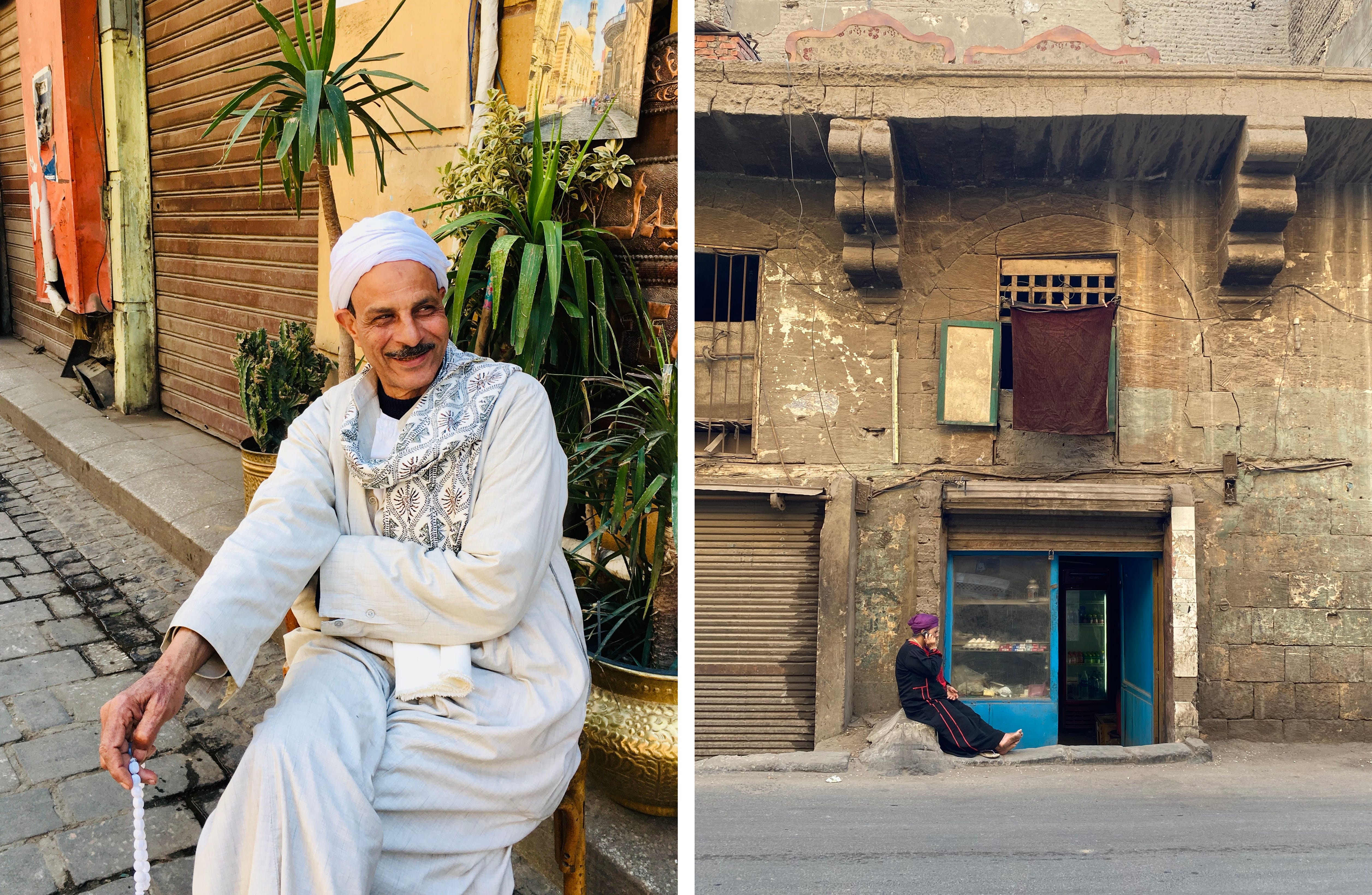
The soul of Cairo is its people, and a day trip to the pyramids, capped by dinner at a mediocre restaurant, rarely leaves time to meet them.
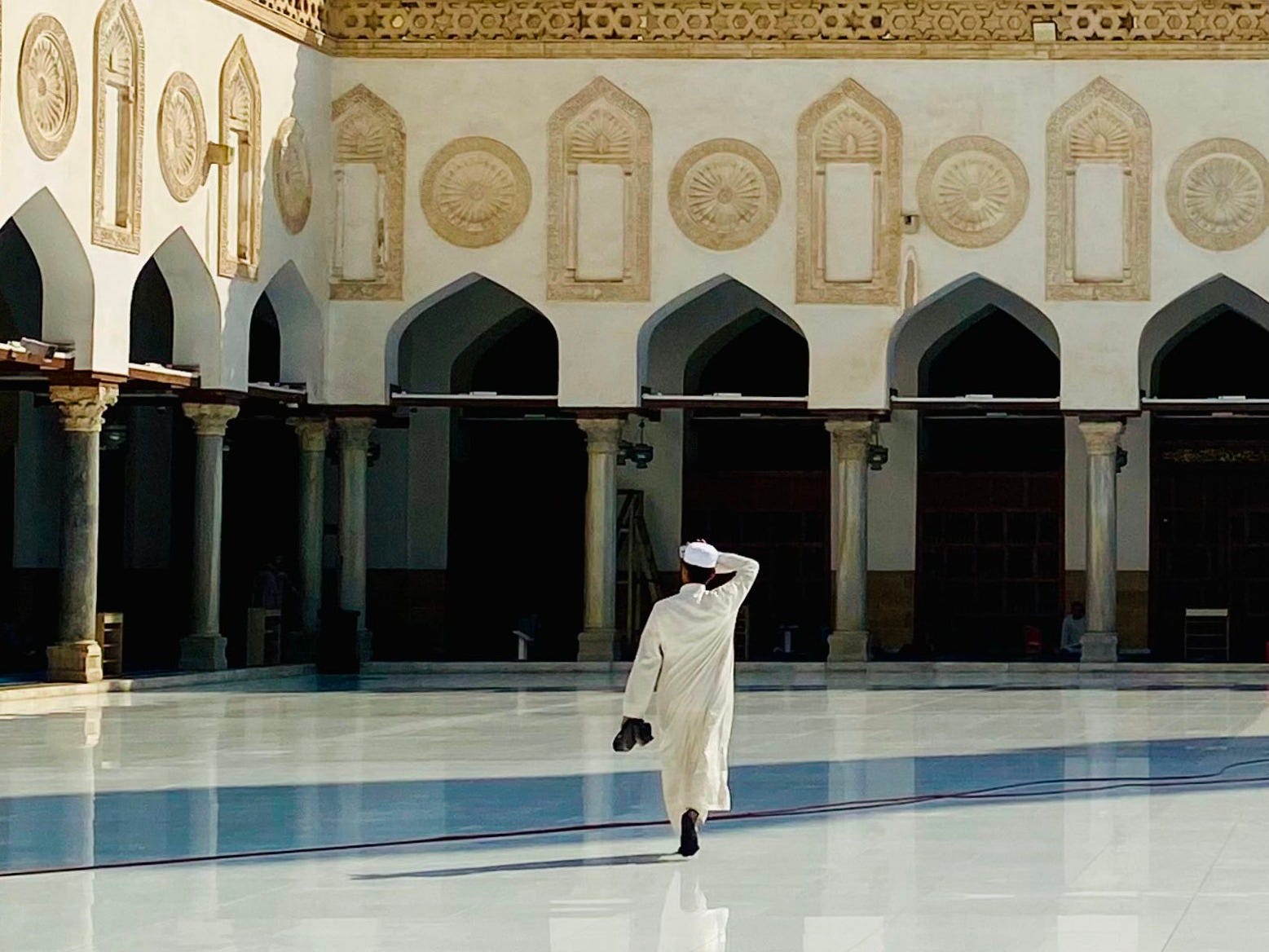
It’s 11 a.m., and the sun is already merciless when I pull up to Al-Azhar Mosque. I’m in the medieval district known as Islamic Cairo, home to landmarks such as Al-Muizz Street, Khan el-Khalili Bazaar, and countless mosques. This predominantly working-class neighborhood is crowded, run-down, and wonderfully friendly.
Inside the mosque, I’m immediately stopped by a young man with a big smile.
“Welcome to Al-Azhar, isn’t it beautiful here?”
His name is Ali. He is a student at Al-Azhar University, one of the world’s oldest continuously operating centers of learning in Sunni Islam.
He likes to practice his English, he says. Ali wants to know if I’m religious, and before I get a chance to reply, he tells me what it’s like to dedicate his life to religious studies. He hopes to become a good man, stay close to God, and make a special girl happy. “It won’t be you, sorry, woman,” he says.
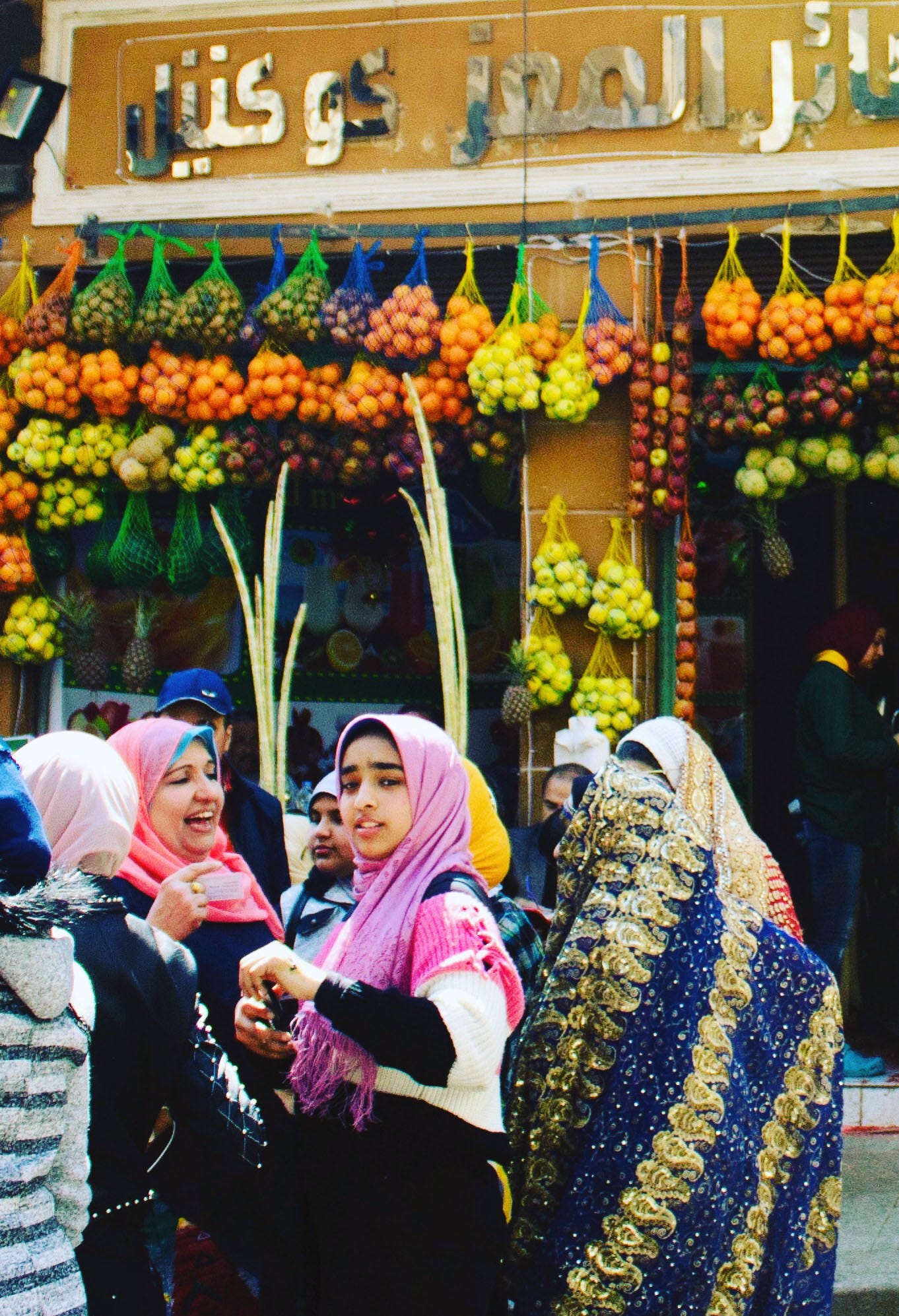
Walking through Islamic Cairo toward downtown, I come across a group of women and girls of different ages outside a juice bar. This alone is refreshing; usually it’s men who occupy spaces like this. The women notice me within seconds and start chatting and giggling. They push the girl with the best English skills to the front. They want to know if my red hair is real or dyed. “Dyed,” I admit. “It’s to cover up my grays.”
“You need to put color for the rest of your life, then,” says the girl.
Then she tells me they’re celebrating their friend’s birthday.
“We’re going to do fatla and have our hair done at the salon,” says another girl. “No boys allowed. Alhamdulillah.”
“It’s mango season, ya habibi!” yells one of the men at the juice bar. I order a fresh mango juice from one of the juice masters. It’s apparently his sister’s birthday, so I get a whole mango for free.
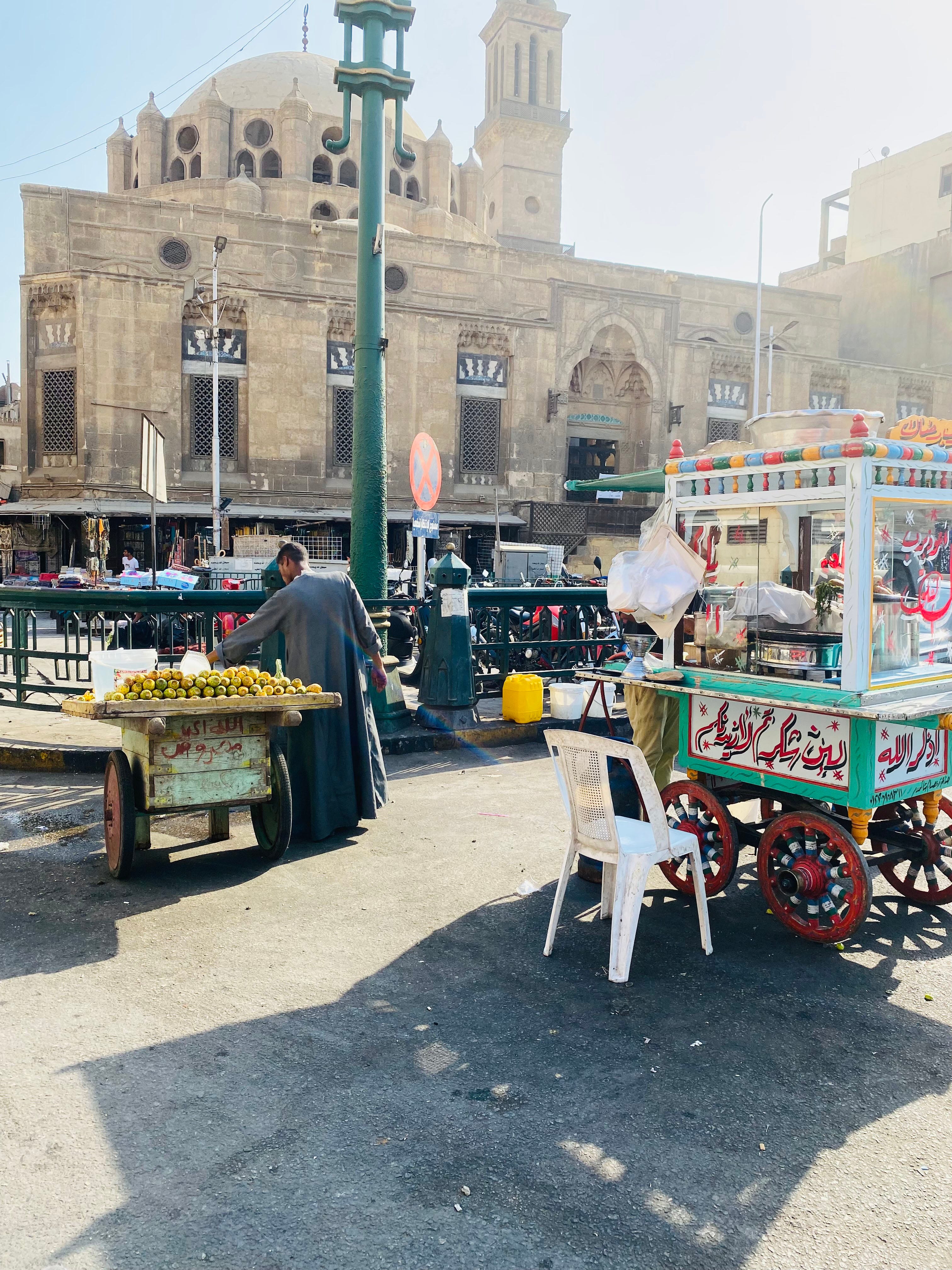
The area between Islamic Cairo and downtown is intense. Traffic goes from bad to worse. Street vendors shout at the top of their lungs, trying to drown out the shops’ prerecorded sales pitches for cheap T-shirts and toys.
Then the city changes, almost without my noticing.
Walking along Talaat Harb Street is a bit like stepping into another era. Beautiful European-style façades line the boulevards. It’s easy to see why Cairo was once dubbed the Paris of the Middle East. Today, though, these buildings are in desperate need of restoration. What used to be whitewashed is now coated in a permanent layer of Cairo’s dust. On Kasr el-Nile Street, lawyers and bank employees emerge from office buildings, lining up alongside police officers to buy strong coffee in paper cups.
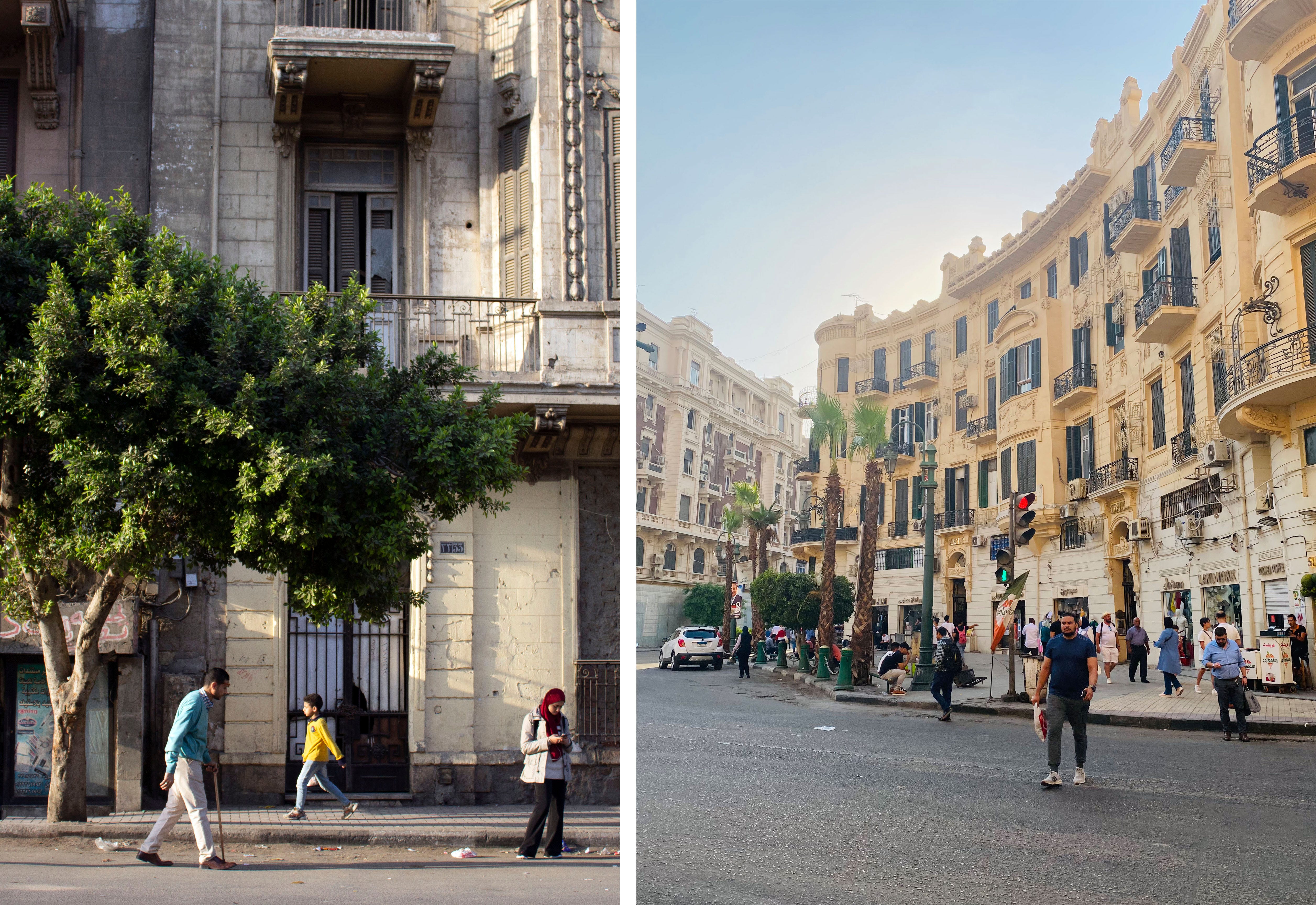
Still, downtown is changing. I walk past chic concept stores, bookstores with international titles, and boutique hotels. None of these were here a few years ago. Outside a small gallery, a group of art students ask me where I’m from, then invite me to an exhibition opening the following evening.
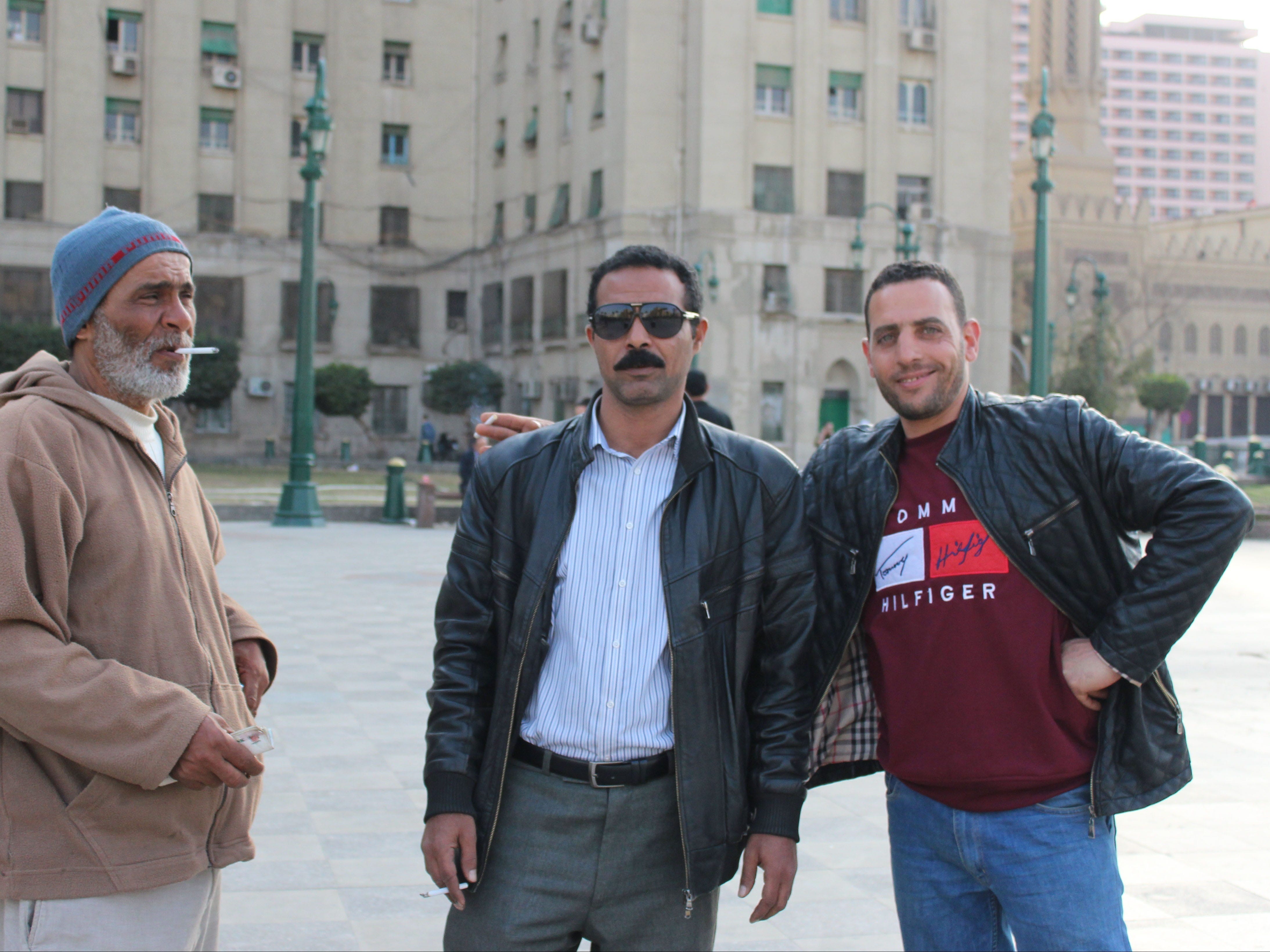
Reaching Tahrir Square, Cairo’s pulse and the epicenter of the 2011 revolution, I sit down outside the Mogamma, the old government building. I share the bench with three middle-aged men who pass their time smoking cigarettes and teasing each other.
All three camped out in the square during the revolution. The most talkative of them, sporting the classic Cairene look of aviator sunglasses and a black leather jacket, drives a taxi for a living.
“Life is only a little better than when Mubarak was in power,” he says with a shrug.
Then he smiles. “But at least we have fun.”
I cross the Nile into the affluent neighborhood of Zamalek. This is where the rich and famous live, along with a few homeless people who sleep under the 26th of July Corridor, which runs across the island. It’s home to the good restaurants, the cool coffee shops, the advertising agencies, and the embassies.
I finally sit down for coffee at my favorite café, where I decide to step out of my comfort zone and try a few Arabic phrases. I realize too late that I’ve ordered dog instead of cake. The guys behind the counter double over with laughter. So does the cool girl in the line behind me.
“Would you like it cooked or fried?” the cashier shoots back.
An elderly couple starts giggling too.
I end up sitting next to the cool girl. Like me, she’s a freelance graphic designer who works from home and pops down to the café for some fresh air and company.
“Zamalek is the best area,” she says. “In many ways, it’s like Europe, but with an Egyptian vibe to it. Plus, you can apparently get fried dog for lunch.”
The most fascinating thing about Cairo is that conversations often follow the same rhythm regardless of social background. The Egyptian capital is a city of staggering inequalities, yet the people I meet on my walk seem to share the same attitude to life: a quick wit, an ability to laugh about life’s hardships, and a willingness to engage with strangers. Worlds apart in circumstances, but connected by the same humor, curiosity and way of navigating life. That is why I come back to Cairo again and again.
If you liked this, there’s more where it came from. Scott Monaco opens a window somewhere new every week —travel essays, photography, cultural observations, and books worth reading. Once a week, sometimes more. Free to subscribe.

Wonderful story! I've also heard people say Cairo is too much for them, but I've always enjoyed it. People there are so quick to humor, it can be so much fun.