


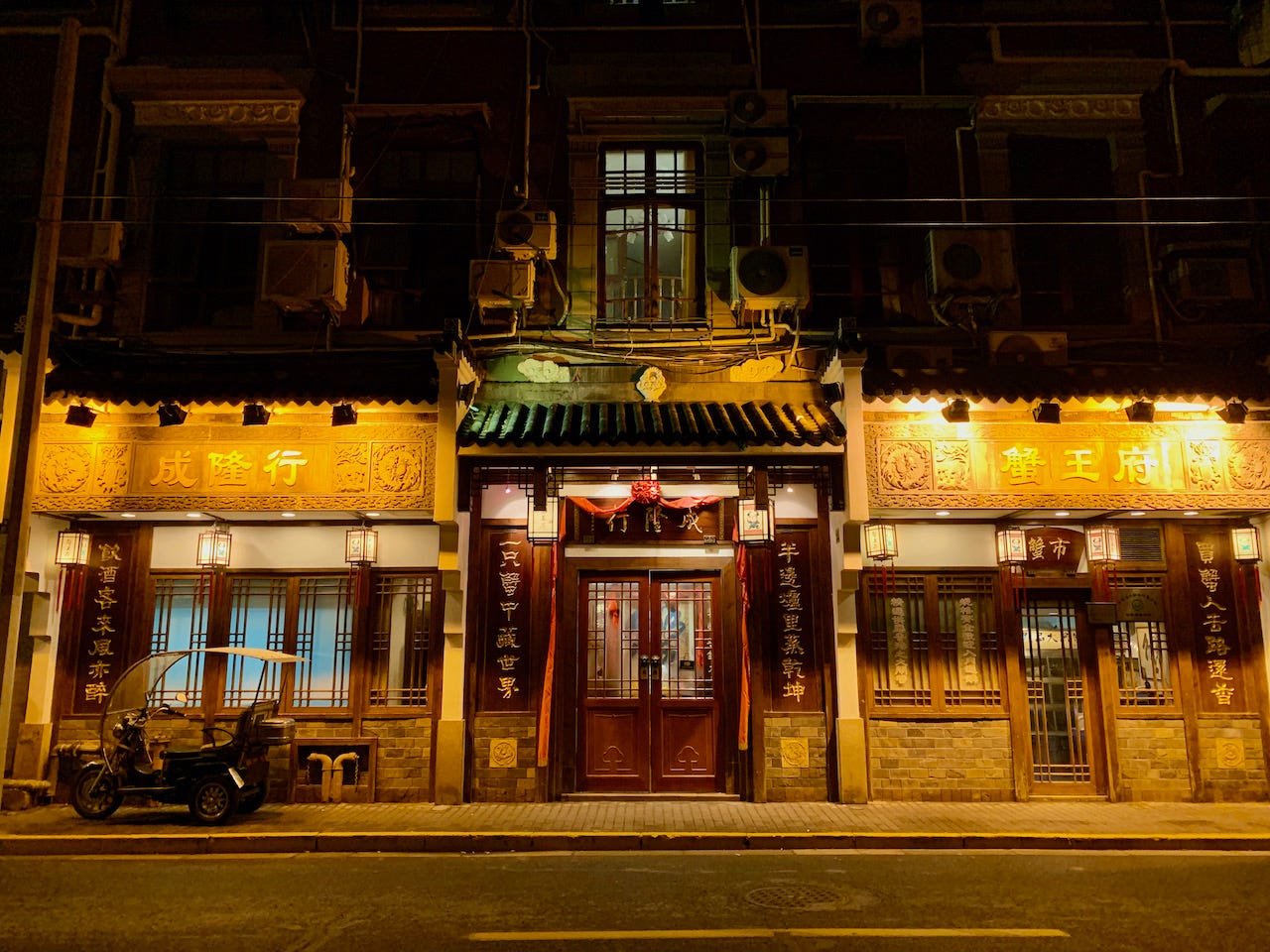
It’s hard to say where Shanghai ends and I begin. That’s how much she shaped me.
The city was never still. Not in its streets, not in its people, and certainly not in its skyline. Skyscrapers rose like time-lapse footage, and entire blocks disappeared overnight beneath bamboo scaffolding. In some ways, it felt like the city and I were on parallel tracks: constantly being built, knocked down, and reshaped again.


I arrived with ambition and uncertainty, camera in hand, ready to explore a place I couldn’t yet name home. But it pulled me in —street by street, noodle by noodle— and by the end of my time there, I had become someone else entirely: more adaptable, more resilient, and a bit more hardened too.
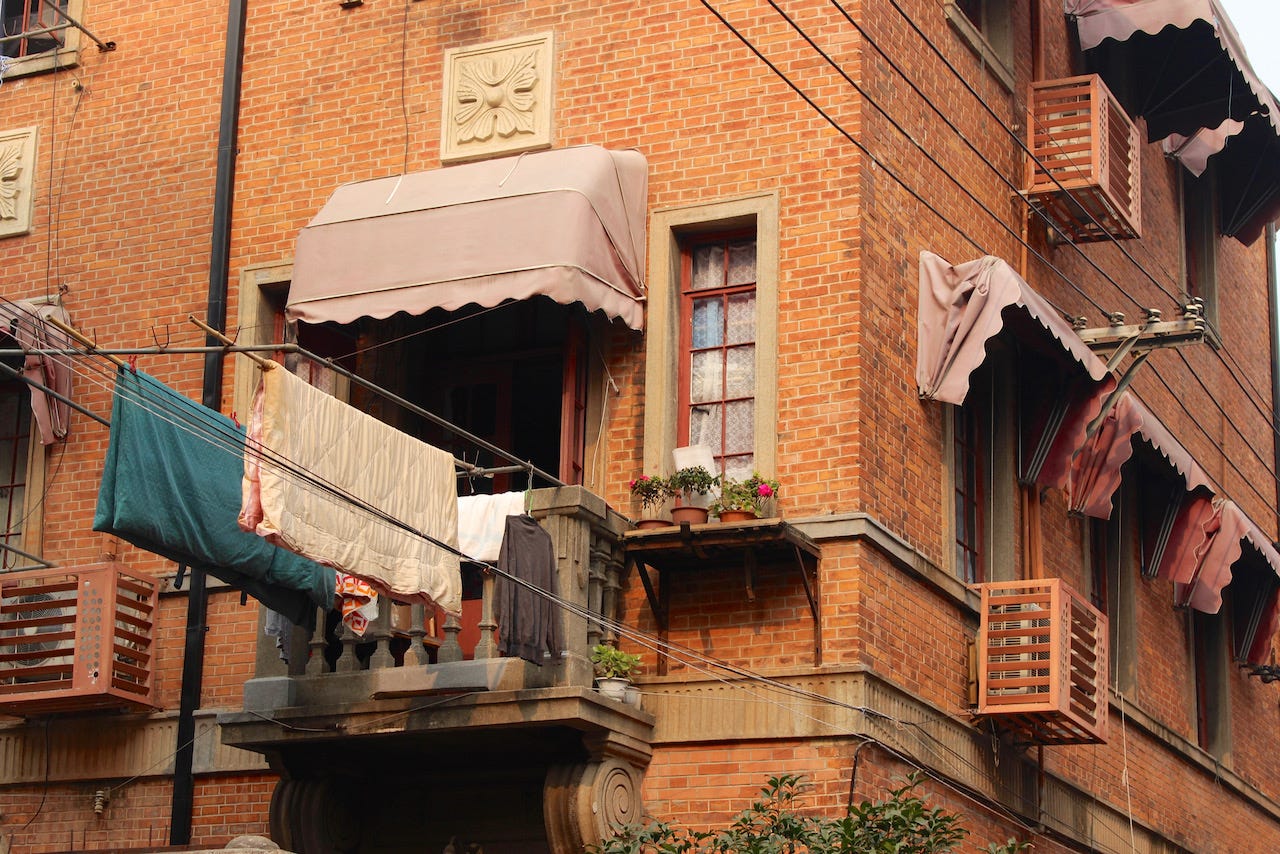
My Shanghai wasn’t found in glitzy new shopping districts. I preferred its backstreets, especially the old shikumen neighborhoods: crumbling lanes of orange-brick homes and clotheslines that stretched like prayer flags from one window to the next. These were the lungs of the city, where people played mahjong in the alley, where you could smell dinner before you saw the kitchen, and where the rhythms of life —arguing, bargaining, repairing bikes— never paused, even as bulldozers waited just around the corner.
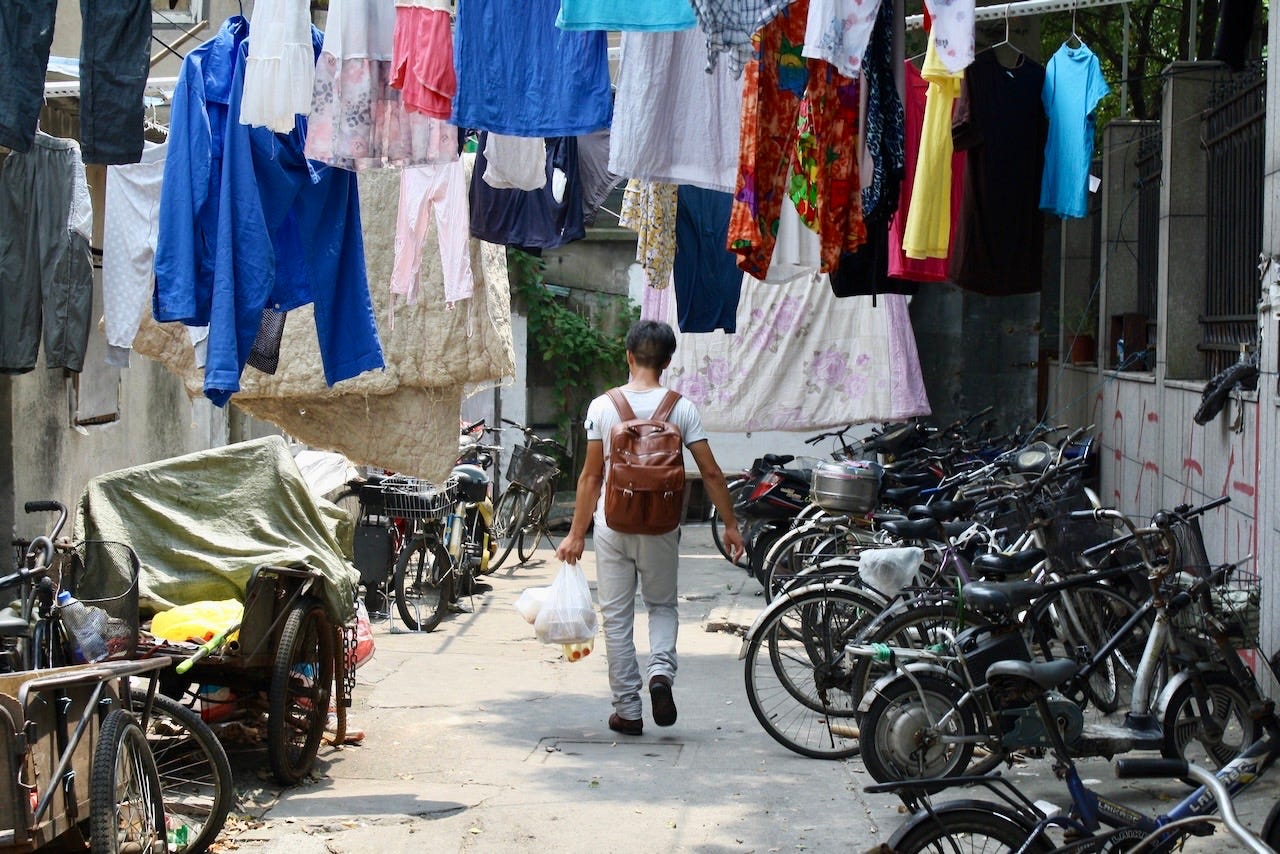
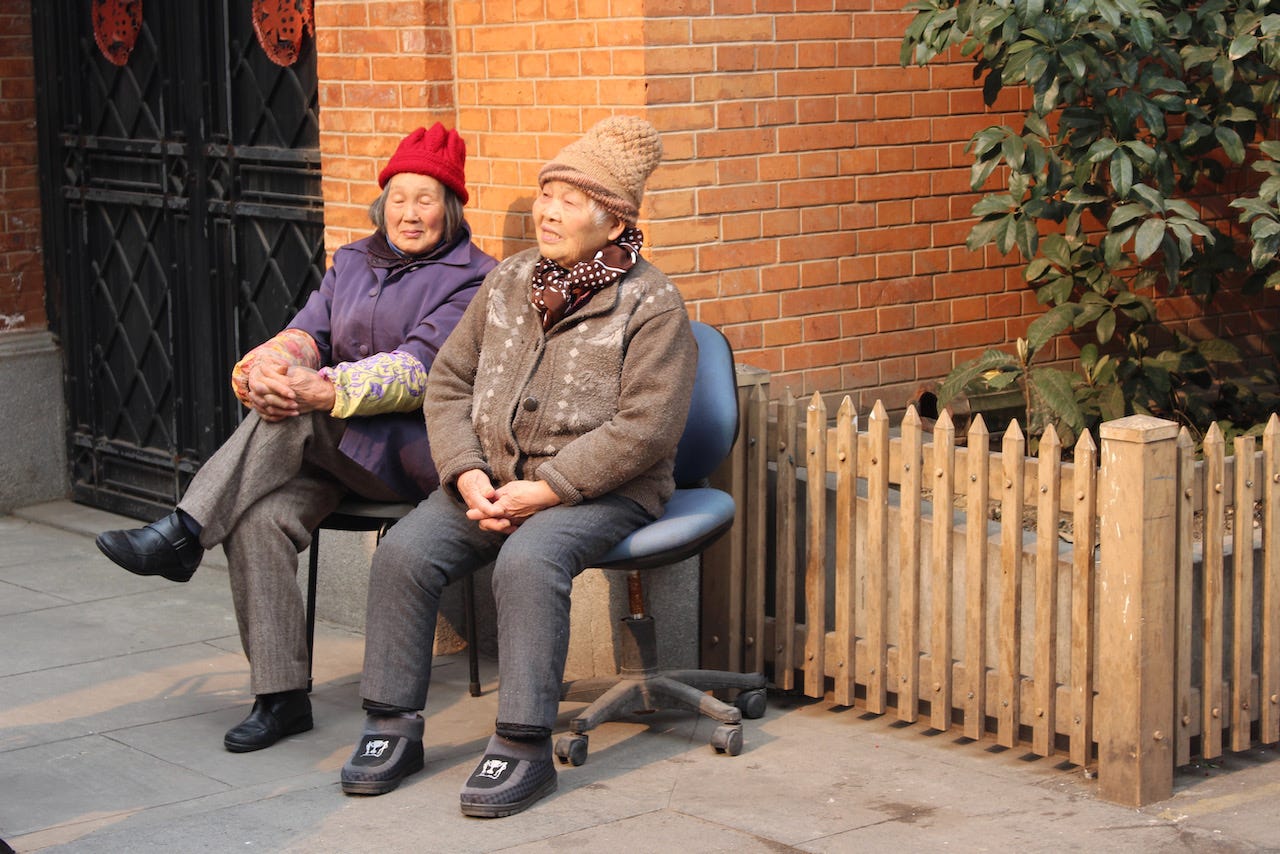
Each walk felt like an act of preservation. I’d photograph the aunties sitting on plastic stools outside their homes, the storefronts selling baijiu and cigarettes from booths barely large enough to stand in, the spray-painted phone numbers of men looking for construction work: faint reminders that what was there was vanishing faster than anyone wanted to admit. It wasn’t nostalgia. It was a kind of witness-bearing.
I often wondered why I felt more at ease in these neighborhoods than in the design studios or sleek apartments my industry peers preferred. Maybe it was because I saw what was coming. Maybe it was because I knew, deep down, that no matter how refined the skyline became, some of the best stories were slipping away.
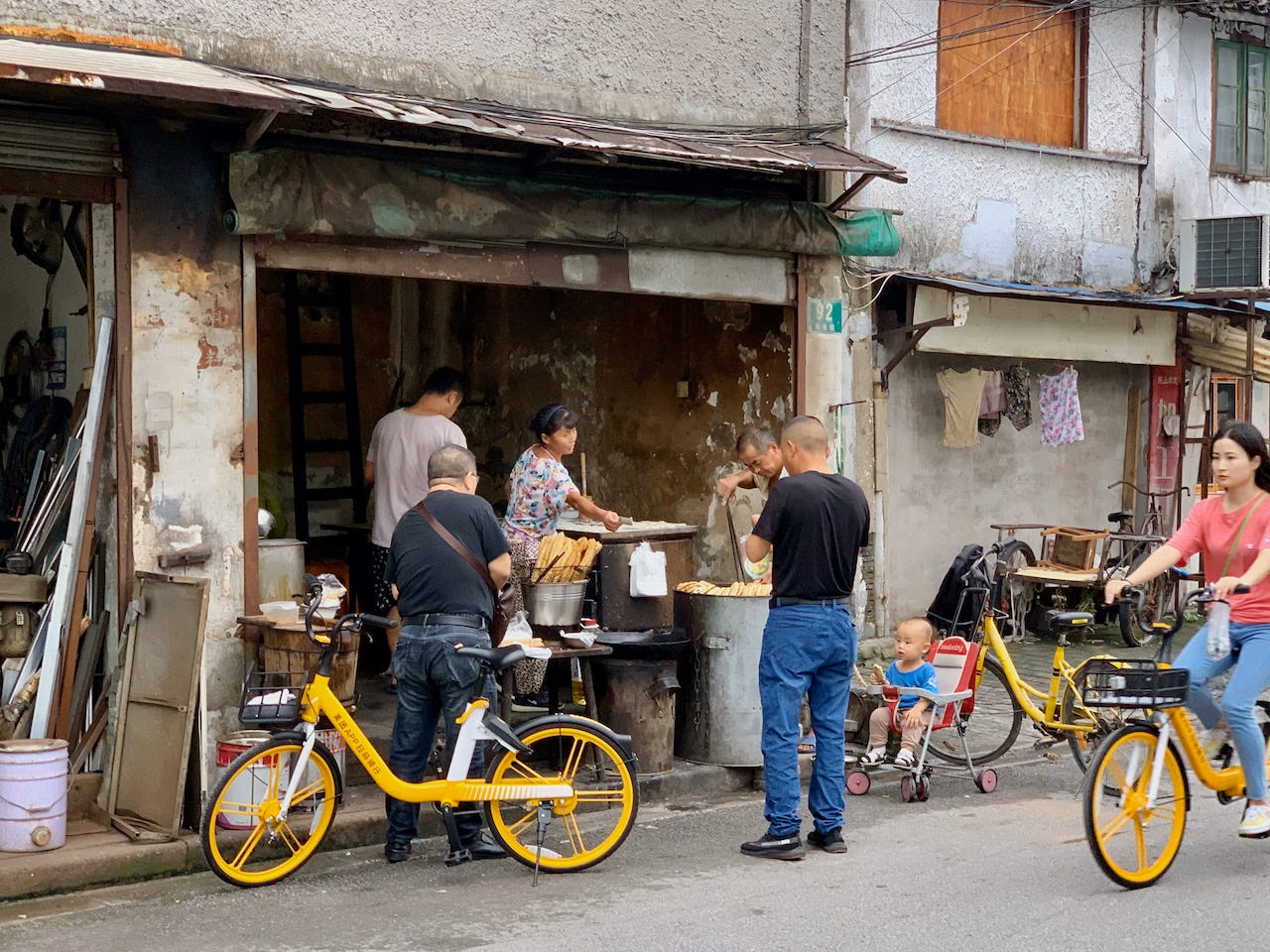
My bicycle was my passport. In the mornings, I’d ride it along Suzhou Creek to work, where vendors steamed dumplings beside shops bending metal into anything you needed. After work, I’d swerve through alleyways, mentally noting which local restaurants were full. In the evenings, I’d walk through my neighborhood, composing photos in my mind of moments others didn’t seem to notice: a man asleep on a cot in a closed grocery store, a family sharing a meal behind a window glowing with Christmas lights.


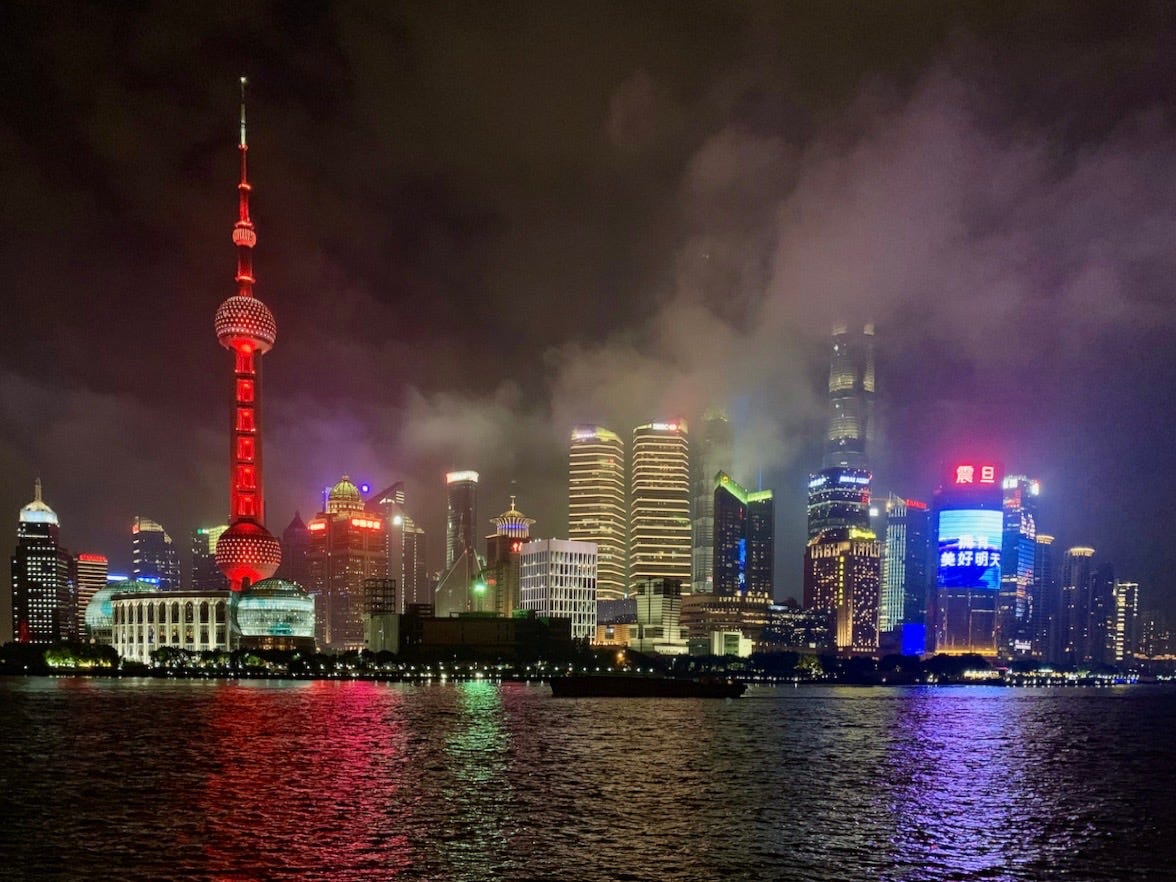
Some nights, I’d ride twenty or thirty miles along the Huangpu River, passing the old Expo site as it waited for reinvention after the crowds just a year or two prior. I’d pause to take in the skyline —Oriental Pearl, Shanghai Tower, and my personal favorite, the Jin Mao. But I realized that my Shanghai was more horizontal than vertical. Ground-level. Tactile. Human.
There’s a different kind of intimacy that grows when you’re constantly observing the same streets under new light. When you see how the same old man shifts his chair to catch the morning sun. When you notice the baozi vendor’s daughter growing an inch taller each season. This city didn’t give me stillness, but it gave me depth.
As the years passed, the streets I loved began to vanish. Brick by brick, Shanghai devoured itself. I watched entire communities displaced, replaced by condos and sterile plazas that gleamed but said nothing. The antiques market on Dongtai Lu was leveled and repaved into a manicured compound. My favorite noodle stalls and dumpling counters were shuttered by rising rents and relentless churn.
Losing those places felt personal. I wasn’t just watching a city redevelop; I was watching my memories be repaved.
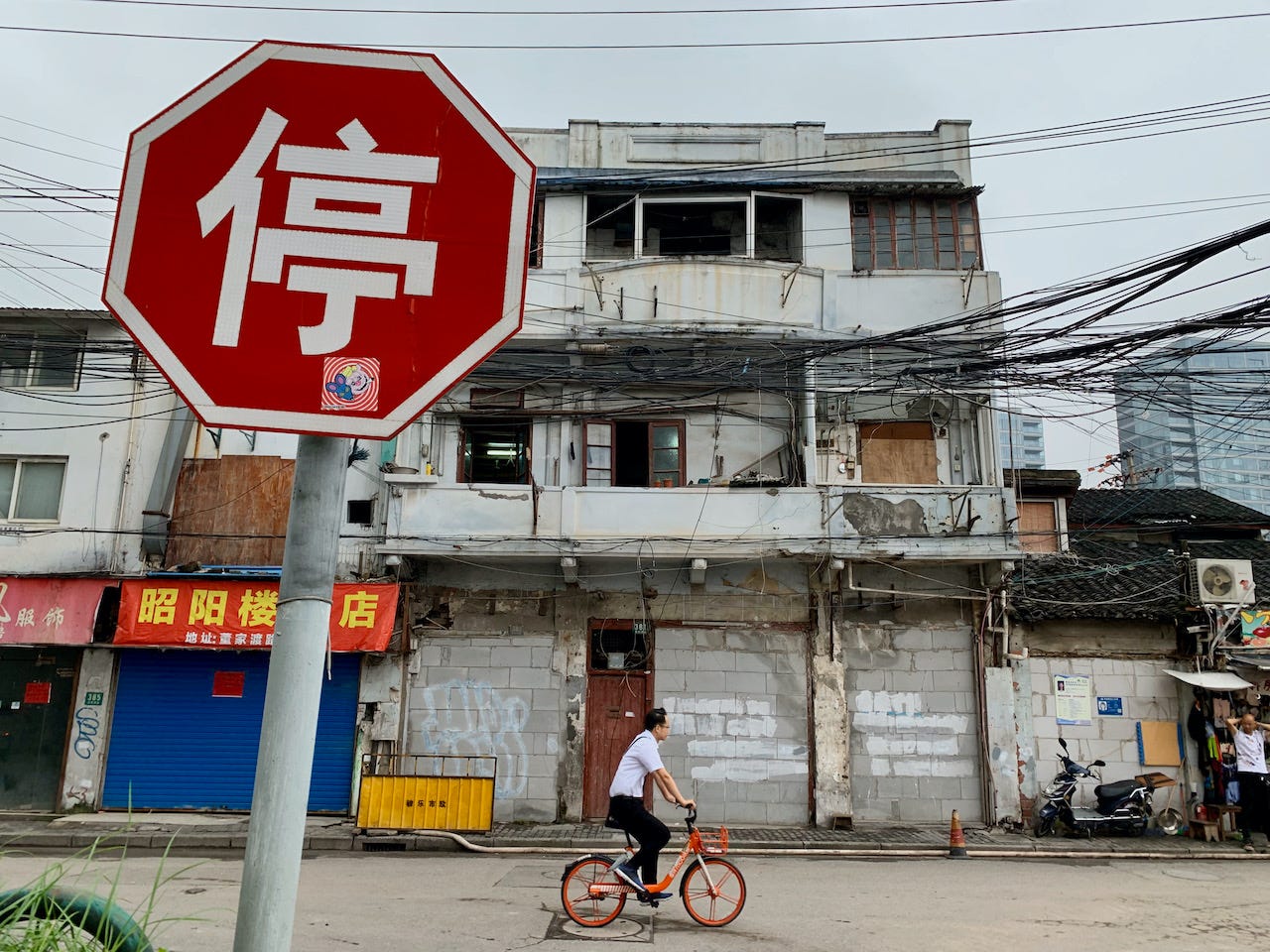
I’m not naïve. I understand development has its reasons, especially being in the design field. But Shanghai’s changes were never subtle. It taught me what it means to live in a place that’s always preparing for its next act, even if it means erasing the last one before the curtain falls.
And in that relentless motion, I found a reflection of my own evolution. Job titles changed. Apartments shifted. Social circles rotated as people came and went. Each version of me lived in a slightly different Shanghai. And like the neighborhoods, I sometimes barely recognized the last version before it was gone.
But not everything disappeared.
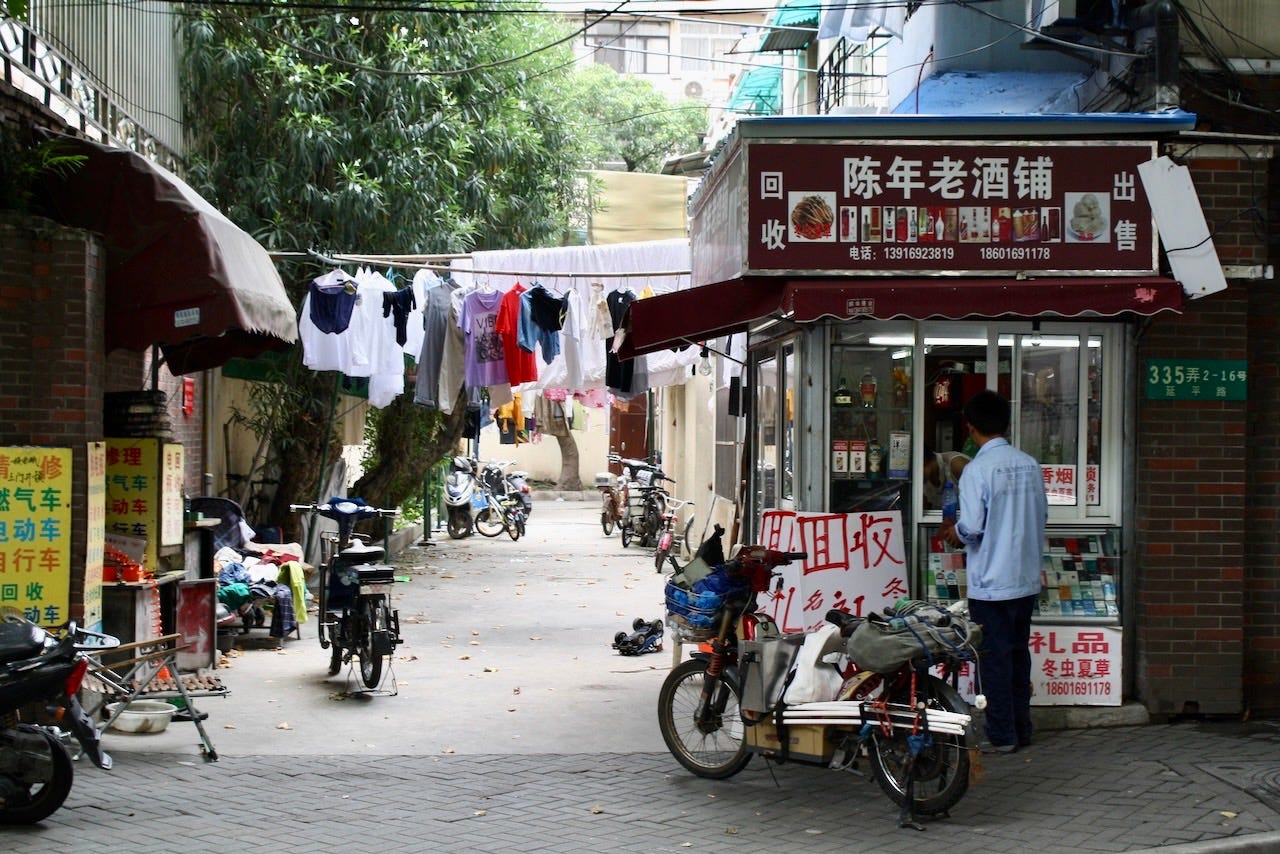
Some mornings, I’d greet the woman who ran the dry cleaner near my building. I’d still grab the same vegetable tofu bao for two RMB from the stall on the corner. Those moments remain vivid. Maybe because even as Shanghai changed, those small human rituals —a familiar face, a favorite snack— stayed constant.
Even now, I think of Shanghai like a great love. One that shaped me, held me close, and then moved on before I was ready. I scroll past new skyline shots and new restaurant openings on SmartShanghai and wonder what had to be torn down to make space. But I also see resilience in the people who remain, adapting, surviving, and carrying on with quiet pride.
Shanghai taught me how to move forward, even when you’re not sure what the next block looks like. It taught me that the best stories come from listening, observing, and being willing to get a little lost.
In a city that never stayed the same, I found the tools to become who I needed to be.
And I long for her still. I think of her often. I miss her embrace.
The Briefing
Shanghai has more coffee shops than any other city in the world (9,000+), and in my biased opinion, some of the best food you’ll ever eat. Here are some hotels I’d recommend. Frank Langfitt’s The Shanghai Free Taxi captures the city through the lives of the people he met driving across it, and Nina Mingya Powles’ Tiny Moons is a memoir about eating her way through Shanghai for a year.
Like this? Subscribe for more dispatches and photo essays from around the world.
If you’d prefer to support through photography, I also sell prints. And if you spot a photo in a story that you like and isn’t listed, just reach out. I’m happy to do special runs at no extra cost.
“This city didn’t give me stillness, but it gave me depth.” - Brilliant. And relatable. I have a city in mind that means about the same to me, too.
Also, that’s a banger of a subtitle!