


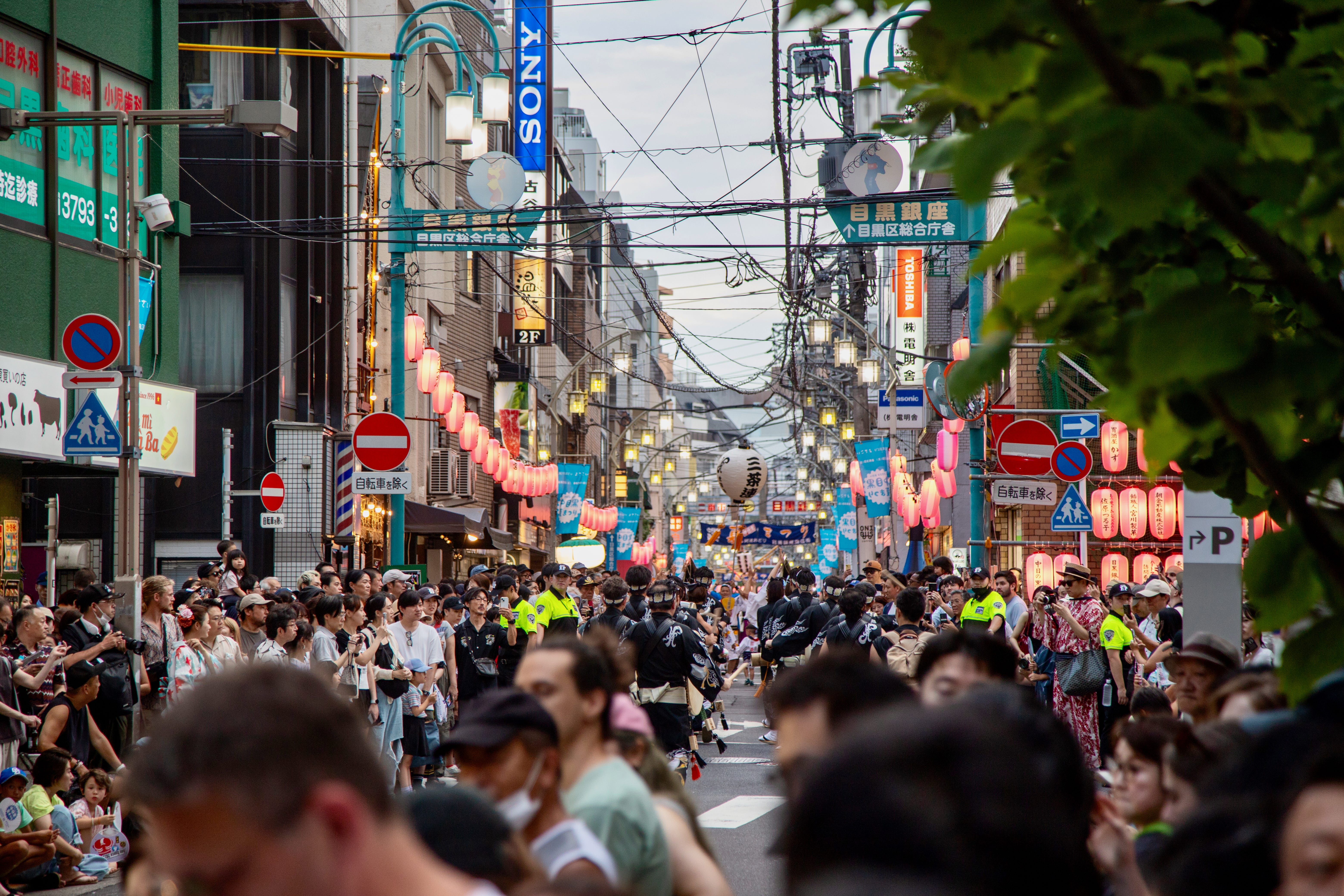
You don't plan for this kind of night. You don’t write it in a notebook or pin it on a map. No one tells you to follow the sound of a drum echoing off concrete walls or to follow the sounds of children squealing with joy.
But sometimes, you don’t need a plan. The city just pulls you in.
Tokyo wears order on the surface. It's efficiency wrapped in etiquette, a machine of precise timing and polite detachment. But tucked between all that structure are moments of collective joy. And sometimes, in the heat of summer, what’s usually held back comes out to breathe.
You follow the sound and find the festival just getting started. Lanterns, drums, people packed tight and moving together. Nobody looks at you twice. You're just another body in the crowd, and honestly, that's the best part.
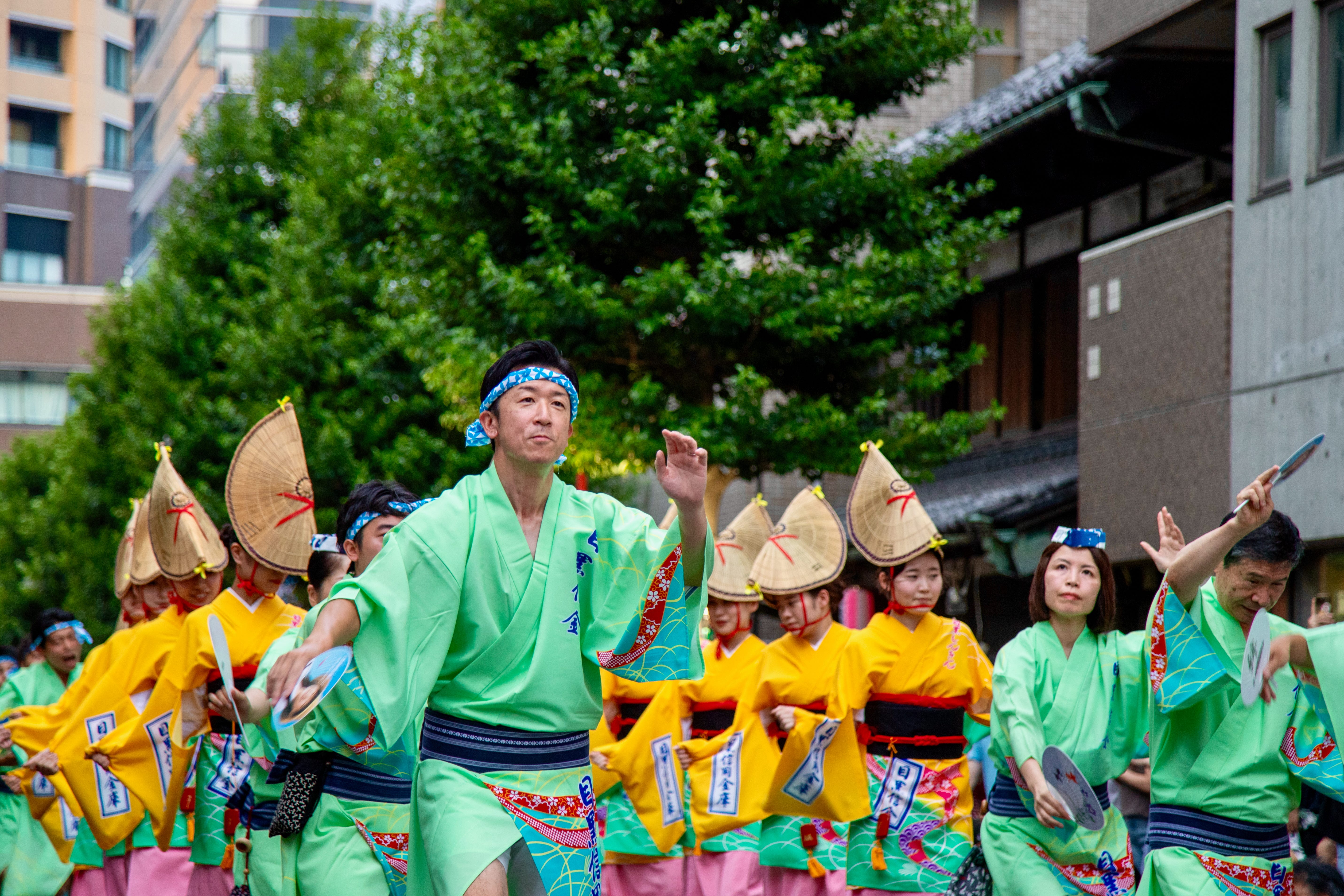
I was headed nowhere in particular. Just a Saturday night in Tokyo, riding a city bus toward Nakameguro with a camera and a loose idea to wander the backstreets and see what turned up. Just a question of: what’s out there tonight?
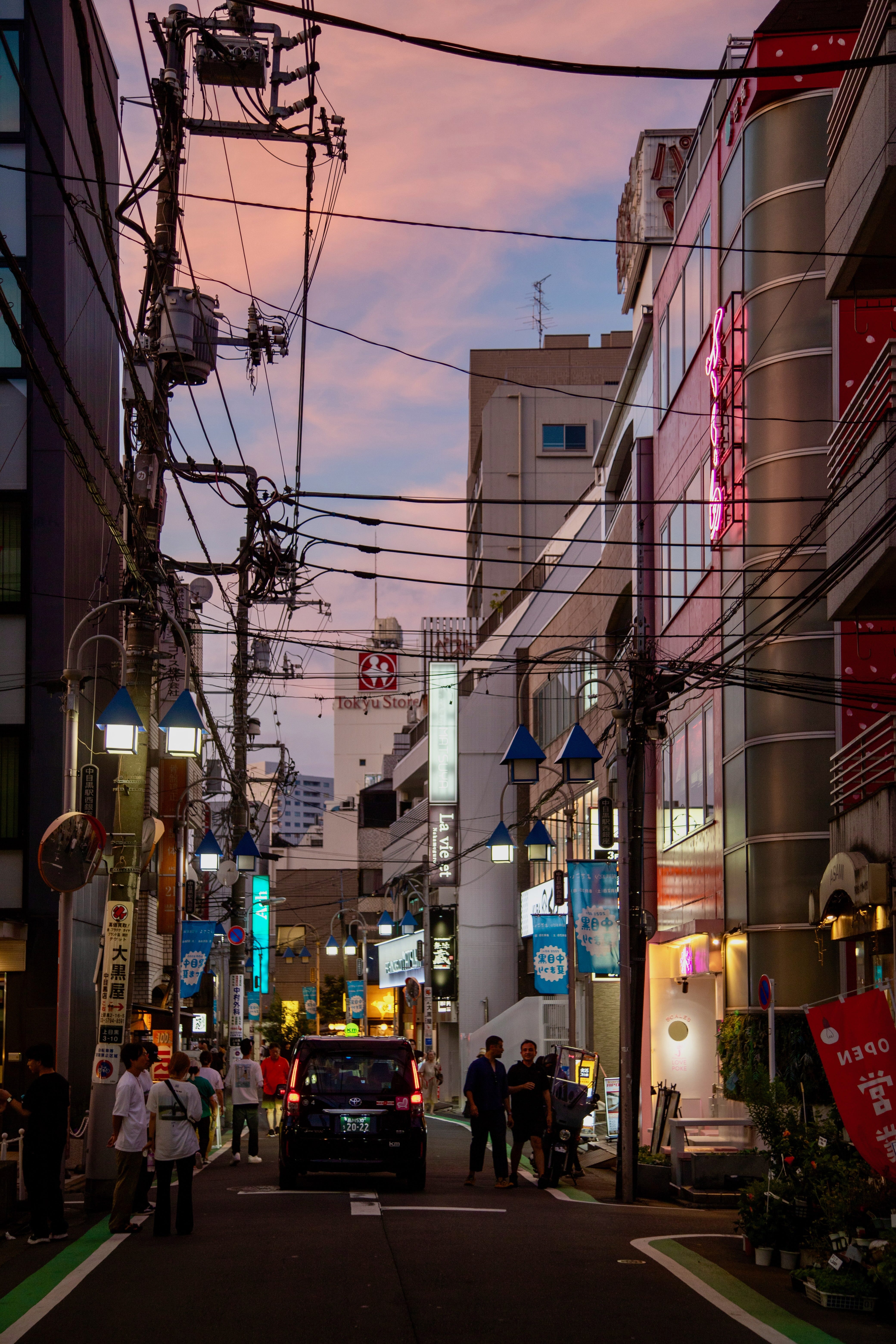
That kind of aimless wandering might sound romantic, and often it is —especially in Tokyo, where even a short walk can deliver more than you expected. Light spills from second-floor windows. Neon signs bathe the alleyways. You pass silhouettes of people drinking, eating, and laughing. Whole stories are always unfolding here just out of reach.
I stepped off the bus and instinctively turned right, following my original plan. But after only a few blocks, the sound stopped me mid-step. It pulsed again, somewhere behind me now, that unmistakable buzz of something happening. Children’s laughter echoed. I turned sharply, the way animals do when they catch the scent of something unexpected.
A few blocks later, the street opened wide. Lanterns strung overhead with crowds packed shoulder to shoulder. The Nakameguro Summer Festival had begun.
The best things you’ll find in Tokyo never make it to your itinerary. They’re too busy happening.
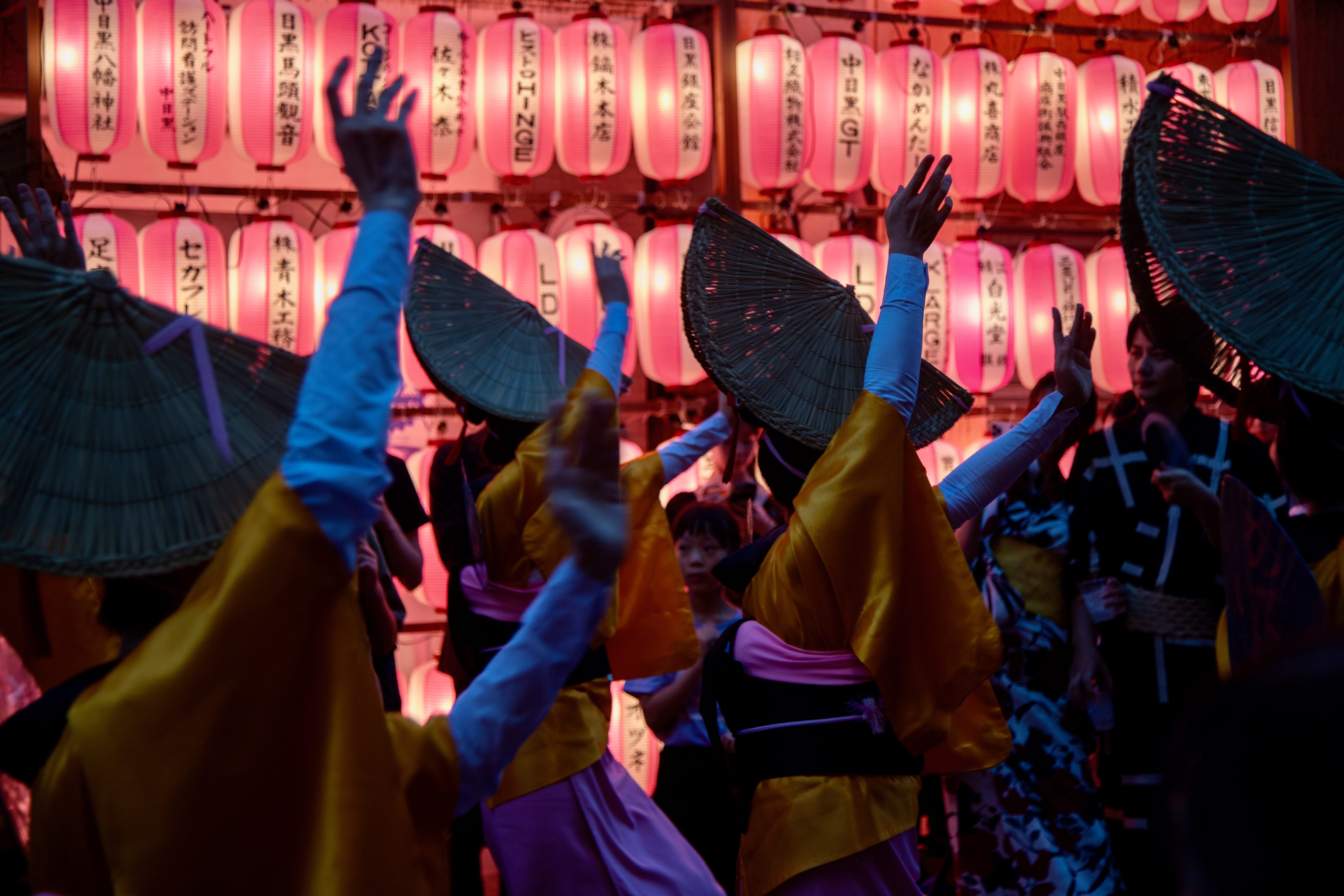
The festival has been running for sixty years, though you'd be forgiven for not knowing. It's not on most tourists’ radars, not unless you live here or know where to look. But that doesn’t make it hidden. I felt small in the best way, like I’d wandered into something important that I did not understand, and because I kept following the feeling that there might be more.
I wouldn’t learn until later that there are two main dances: Awa Odori —wild, playful, full of syncopated spins— and Bon Odori, slower, steadier, circular. One calls the living to move. The other honors the dead. Together, they turn the streets into something communal and unshakably alive.
Locals train for months. Neighborhood teams move in matching yukata, some laughing, others locked in deep focus. On the sidelines, people stand with beers in hand, squatting on curbs or perched on folding stools. Neighbors and relatives call out names. Even the children have their own group, their movements loose but proud. It’s a performance, but also, it’s memory made physical.


And me? I was completely swept up in it. The sound, the motion, the heat. I didn’t know the chants or the steps, but it didn’t matter. I just kept moving.
Most of us travel with a script in hand... But in doing so, we often edit out the one thing that makes travel unforgettable: chance.
Most of us travel with a packed itinerary. We build these to keep uncertainty at bay and as a hedge against wasted time, awkward moments, or anything too unfamiliar. We want our travels to be beautiful, meaningful, and efficient, but not too messy.
But in doing so, we often edit out the one thing that makes travel unforgettable: chance.
I hadn’t planned to find a festival that night —I didn’t even know it existed. But that’s the point. Had I mapped my night more carefully, I might’ve walked right past it or stayed on the bus one stop longer.
Discovery requires looseness and the willingness to miss something in order to find something else.


I stayed until the last round of drums faded into the dark, until the streets returned to ordinary.
I could’ve taken the train back to my hotel. But my legs kept moving, as if they owed something to the city and its people and the joy that had poured out so freely. For seventy minutes through the humid Tokyo night, my heart was full and the rhythm was still humming in my chest.
Travel loves to reward control. But the best parts, the parts that actually change you, almost always come when you’re off-script.
So remember: leave room for the unknown. Be flexible. Be vulnerable. And most importantly, be wrong about what you thought you came for. 🥁
The Briefing
Tokyo has more Michelin-starred restaurants than any other city in the world, and most neighborhood spots that will never earn a star are just as good. Here are some hotels I’d recommend. Jake Adelstein’s Tokyo Vice is the best window into Tokyo's criminal underworld, and Sayaka Murata’s Convenience Store Woman is a sharp, funny novel about the rituals of ordinary Japanese life.
If you liked this, there’s more where it came from. Nothing to Declare opens a window somewhere new every week —travel essays, photography, cultural observations, and books worth reading. Once a week, sometimes more. Free to subscribe.
If you’d prefer to support through photography, I also sell prints. And if you spot a photo in a story that you like and isn’t listed, just reach out. I’m happy to do special runs at no extra cost.
I loved every image and word you shared. Couldn’t agree more.
Chance is the magic that happens between high-level plans - the part no itinerary can hold, but every great story remembers.
The boy and the dog in matching floral shirts? That’s the kind of unscripted gold you miss if you’re too busy trying not to miss anything.
Couldn’t agree more. Wherever I am travelling I always follow the sound of music. Currently interrailing. Last night in Dresden there was an orchestra with waltzing in the square behind our hotel. 2 weeks ago little boys carrying crosses walking behind a drum in Bergen !