



Scan the headlines about China this week and the themes are predictable: five-year plans, tariff negotiations, state visits. Semiconductors and rare-earth export controls imposed by the Party.
That’s the China we think we know—centralized, strategic, unmistakably top-down. When we talk about China’s global influence, we reach for examples like Huawei networks or TikTok, because those are the issues we’re told matter most.
I’m not here to argue whether they do or don’t. But the most successful Chinese export isn’t any of those things.
It doesn’t come from the Party. It comes from the people.
The Chinese restaurant —family-run, essentially unbranded, endlessly adaptable— has spread farther, lasted longer, and embedded more deeply than any official project. They’re not just eateries. They’re an invisible infrastructure: a grassroots network built from migration, memory, and survival.
And they may be the most powerful example of bottom-up globalization in the modern world.
In Rwanda, my wife and I would often walk to a place in our neighborhood —a strange mashup of functions that defied every category we tried to assign it. On paper, it was a Chinese restaurant. But it was also a corrugated steel supplier, a karaoke venue, a grocery store, and by the middle of our time there, a mahjong parlor. Mahjong tiles clacked and spun on a motorized table in the corner. The ubiquitous child bent over their math homework by the register. Sounds and smells wafted from the kitchen.
No one had drawn up a formal business plan for this place, that much I am sure. It had accumulated function by function, each addition a response to whatever gap needed filling. What may have started as improvisation soon became, to our little Rwandan neighborhood, critical infrastructure. This was not globalization handed down from a boardroom or a Party office, but built from the ground up, families inventing as they went.
They may be the most powerful example of bottom-up globalization in the modern world.
I spent years living in China. My wife is Taiwanese. Somewhere along the way, Chinese food stopped being something I enjoyed and became something I depended on. After well over a decade abroad, it’s become the closest thing I have to home cooking, and I look for it in every country I visit. That doesn’t make me Chinese, and it doesn’t give me the right to speak for the diaspora. But it does shape the way I see these places: not just as restaurants, but as proof of how people carve out a life wherever they land.
That’s how the story of Chinese restaurants abroad begins. Not with branding or soft power, but with survival.
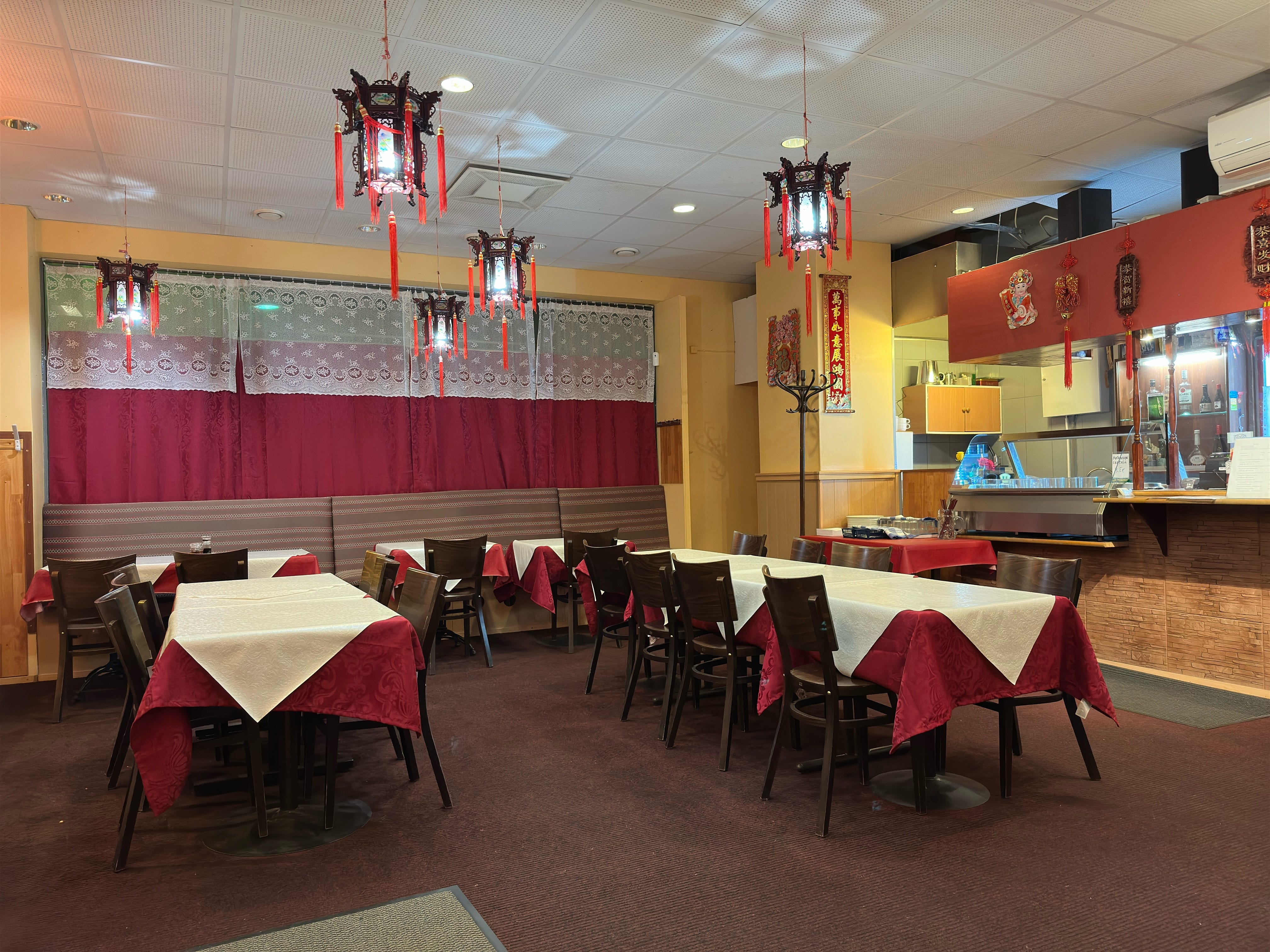
In the mid-19th century, when Chinese immigrants first arrived in places like California, Vancouver, and London’s East End, they weren’t opening restaurants because they dreamed of hospitality. They were doing it because they were shut out of nearly everything else. Racist exclusion laws made it nearly impossible to join trade guilds, buy land, or take up white-collar professions. So immigrants did what was left: they washed clothes and cooked food. Hand laundries and eating houses became the fallback economy of people locked out of the mainstream.
Historian John Jung describes the early Chinese restaurant not as a culinary experiment, but as “the engine of economic survival.” In California’s Gold Rush towns, Chinese miners who couldn’t keep prospecting began cooking for their compatriots. In the U.K., early Chinese eating houses cropped up around the Limehouse docks to serve seafarers longing for home. It was only later that Westerners trickled in, intrigued by cheap, “exotic” meals. What began as a comfort for their community soon became a bridge to the outside.
And unlike other immigrant cuisines that struggled to travel intact, the Chinese restaurant was designed to flex. With just a wok, a cleaver, and a few foundational flavors — ginger, garlic, soy — a family could create something recognizably Chinese yet tuned to local tastes and ingredients. The guiding principle was simple: adapt to the environment, not the other way around. That ethos became a playbook.
This is the part of globalization that rarely gets told. We’re trained to think of global spread as corporate blueprints and state strategies. But the Chinese restaurant diaspora is the inverse: no logo, no headquarters, no rules —just families adapting in real time, making it up as they go along. And yet, somehow, the result looks like a system. The menus aren’t the same, but the presence is. Chinese food, everywhere. Not uniform, but there.
That’s their power. Not because they replicated a “pure” cuisine, but because they proved that a fractured, decentralized effort could still cohere. They didn’t spread through branding. They spread because survival demanded it.
You don’t need to read the menu to know you’ve found a Chinese restaurant. The clues announce themselves before you even step inside: red lanterns bobbing in the breeze, dragons coiled in gold on the windows, New Year’s banners curling at the corners, their good fortune characters (福) half-faded by the sun. It’s a visual vernacular as global as the golden arches, only without a franchise manual. No corporate office ships oversize calendars with red text to Johannesburg or Buenos Aires. And yet, the effect is the same: you look up, see the symbols, and know, This is Chinese.
What those signs create is not uniformity imposed from above, but a kind of grassroots code. No one in Beijing dictated whether a menu should list three cup chicken (三杯鸡) or mapo tofu (麻婆豆腐), or what shade of red should glow in the window. And yet the pieces echo one another across continents, forming a shared signal: what’s inside will feel familiar, even if it isn’t.
That’s why the names matter too. They follow a loose grammar instantly legible across borders: Golden Dragon, Lucky Star, Panda Garden, New China. Journalist Frank Shyong notes that English names for Chinese restaurants often come from a narrow set of tropes: precious metals, powerful animals, and vague boasts (#1, Supreme, Express). To outsiders, the repetition can feel unimaginative. But sameness is part of the strategy. In towns where immigrants were outsiders, a “Golden Dragon” wasn’t a brand so much as a beacon. And often the dullest names hide the best cooking. Comedian Ali Wong has a joke about Vietnamese pho shops: if the name includes a pun, like Pho Real, it’s probably bad. The good ones, she says, are numbered: Pho 21, Pho 79. Chinese restaurants follow a similar rule: the flashiest names often perform for outsiders, while the most ordinary ones feed the community.
That tension between legibility and specificity, between coded symbols and real food, is where the magic lies. These restaurants aren’t just about cuisine. They’re about recognizability. They function like unofficial embassies, broadcasting signals that make even strangers feel a little less lost. For the diaspora, they offer continuity. For outsiders, they offer a welcome. You don’t need to know the dialect or the region. You just need to recognize the signs.
Sociologists sometimes call these places “third spaces”: neither home nor work, but places where community comes together. In immigrant neighborhoods, the Chinese restaurant becomes the hub. Somewhere you can speak your language, eat something that tastes like childhood, and not have to explain yourself. But even outside diaspora zones, the signals still hold. It tells travelers: here, you might find a version of comfort.
There’s an old saying in Chinese: Better to wear torn clothes than eat poor food. It captures something essential: no matter how lean times get, good meals are non-negotiable. For the diaspora, that value travels too. However far from home, however improvised the kitchen or altered the menu, the food must still nourish and must still be worthy. That belief is what keeps these restaurants alive, and why so many of them end up being better than you expect.
Step inside any of them, and the menus will rarely match. The flavors vary, the dishes morph, but that is the point. Each restaurant is a bricolage: whatever the season or supplier makes possible, whatever tastes local customers will tolerate, whatever a cousin back home suggests over WeChat.
Each restaurant is a bricolage: whatever the season or supplier makes possible, whatever a cousin back home suggests over WeChat.
In that way, the food mirrors the people who make it. Immigrant lives are improvised: children interpret for parents at schools and banks, cooks translate memory into whatever ingredients are nearby. From small compromises comes something larger that endures.
And this mutability matters because it reveals something globalization rarely admits: sameness is not the only path to spread. McDonald’s builds its empire on replication; the fries in Stockholm taste like the fries in New York. Chinese restaurants work in the opposite direction: they survive through difference. They don’t promise the same meal every time, only something recognizably Chinese.
In that sense, Chinese restaurants abroad aren’t just proof of cultural resilience. They model it. They show how to live in translation, how to change without letting go.
What’s astonishing is not just how Chinese restaurants have adapted to their locations, but the sheer scale of their presence. In the United States, there are more than 45,000, which is more than McDonald’s, KFCs, Pizza Huts, and Taco Bells combined. Even in the smallest capital city or remote port, the odds are good that one will appear, lanterns faded with the sun. This is infrastructure that far surpasses that of multinationals, achieved by many.
That presence matters because it has become a window, not just for the diaspora but for outsiders. For millions who will never visit China, the restaurant is the most direct encounter with it. The flavors may be altered and the names mistranslated, but together they form the enduring image of Chinese culture abroad. For better or worse, this is where imaginations of “China” take root.
For millions who will never visit China, the restaurant is the most direct encounter with it.
In this sense, every restaurant tells a story. Sit down at a table in, for example, Bamako, Mali, and you are served quickly, with huge portions, at an affordable price. What does that say? Efficiency, generosity, reliability. In Mauritius, the menu leans toward seafood, dishes that feel approachable across cultures. In Peru, chifa restaurants fuse soy sauce with local ají peppers, showing that Chinese food is not just an import but now a collaborator in national cuisine. These adaptations communicate values, whether or not anyone names them.
That is an extraordinary form of soft power precisely because it isn’t managed. The Party can invest billions in Confucius Institutes or cultural expos that struggle to attract lasting attention. Meanwhile, family-run restaurants accomplish it daily, with no coordination, in every corner of the world. For many, the most consistent impression of China is not the news headlines, it is the taste of braised pork belly (红烧肉)at the place down the street.


When I lived in Shanghai, there was a restaurant called Fortune Cookie. The concept was almost a parody of itself: American-style Chinese food brought back to China. It served General Tso’s chicken, orange chicken, chop suey —the inventions of 20th-century Chinese immigrants that had little to do with the dishes of Sichuan or Guangdong. The restaurant was packed every night, a novelty for young professionals and curious expats. I absolutely loved it. And then, as happens so often in China, it vanished. One week it was booming, the next it was gone.
But that brief existence told a larger story. Fortune Cookie wasn’t just a gimmick. It was proof that the diaspora doesn’t only carry memories outward; it sends them back, reshaped. The immigrant creations had become cultural artifacts in their own right, now returning to the homeland as exports. Diaspora cuisine isn’t a one-way transmission. It transforms abroad, and those transformations can fold back into China itself.
The symbols travel the same way. Fortune cookies were invented in California. The white paper takeout box with its red pagoda was an American design. Yet both have circled the globe, becoming shorthand for “Chinese food” everywhere, even in countries where no one has ever seen them in China itself. They are mistranslations that stuck, artifacts of misunderstanding that became permanent. And maybe that’s the point: globalization doesn’t just connect; it distorts, reinvents, misremembers. But out of those mistakes, something enduring emerges.
That endurance is the story. In a world where fast-food franchises promise the same everywhere you go, Chinese restaurants promise continuity without sameness. They are never identical, but they are always recognizable.
And it is everywhere. I’ve eaten at Chinese restaurants in more countries than I can count. Sometimes chasing nostalgia, sometimes just chasing dinner. If I return to that place in Rwanda, I know I won’t be served the same meal as before. Maybe new dishes will appear on the menu. Maybe they will have branched into another business sector. That uncertainty isn’t failure, it’s the essence.
These places endure not by staying the same, but by adapting, shifting, surviving. Sit down, and the ritual begins again: the clatter of plates, the pot of tea, the faded red décor. Always different, yet recognizably Chinese. Never the same as last time. Never meant to be. And that is exactly enough. 🥢
This essay is part of a bigger project I’ve been working on—a multi-part guide to Chinese restaurants around the world, a true labor of love (and appetite). The first installment is now live and is your passport to finding Chinese food anywhere on earth. Subscribe to get the updates as new restaurants are awarded and added to the map.


If you liked this, there's more where it came from. Nothing to Declare opens a window somewhere new every week —travel essays, photography, cultural observations, and books worth reading. Once a week, sometimes more. Free to subscribe.
If not, you can still support by subscribing for free and passing this piece to a friend. Every reader counts, and together we can keep opening new ways of seeing the world.
I learned years ago that someone telling me 'I even saw a Chinese restaurant in that little African town' didn't mean anything because of course there was one there. I've tried to imagine the tenacity and boldness of a Chinese family, hauling their suitcases into some remote place and saying 'here we will build a restaurant'. And then succeeding.
My favorite pho place in Australia is called 24 Hour Pho, which makes the naming cut, right? It’s overpriced and totally not ‘authentic,’ yet I do not care because the owners are lovely (as are their kids, and their grandkids…), it’s pretty good, plus the perk is in the name.
My favorite pho place in Houston likewise disappeared one day, but used to do the most ridiculous, fully non-voluntary, Vietnamese whiskey shot balanced on chopsticks sat on a pint glass then banging the table til it fell in trick; I’ve been to Vietnam a few times and very much feel this is not a real thing, but do love that the owners invented (presumably) exactly what they knew drunk Houstonians would love.
Long live unintentional, adaptable soft power channeled through food!